Species / Zygophyllaceae
Zygophyllum atriplicoides
Zygophyllaceae · Shrub · Uzbek: chashma tuzbarg; Russian: Галимифиллум лебедовидный
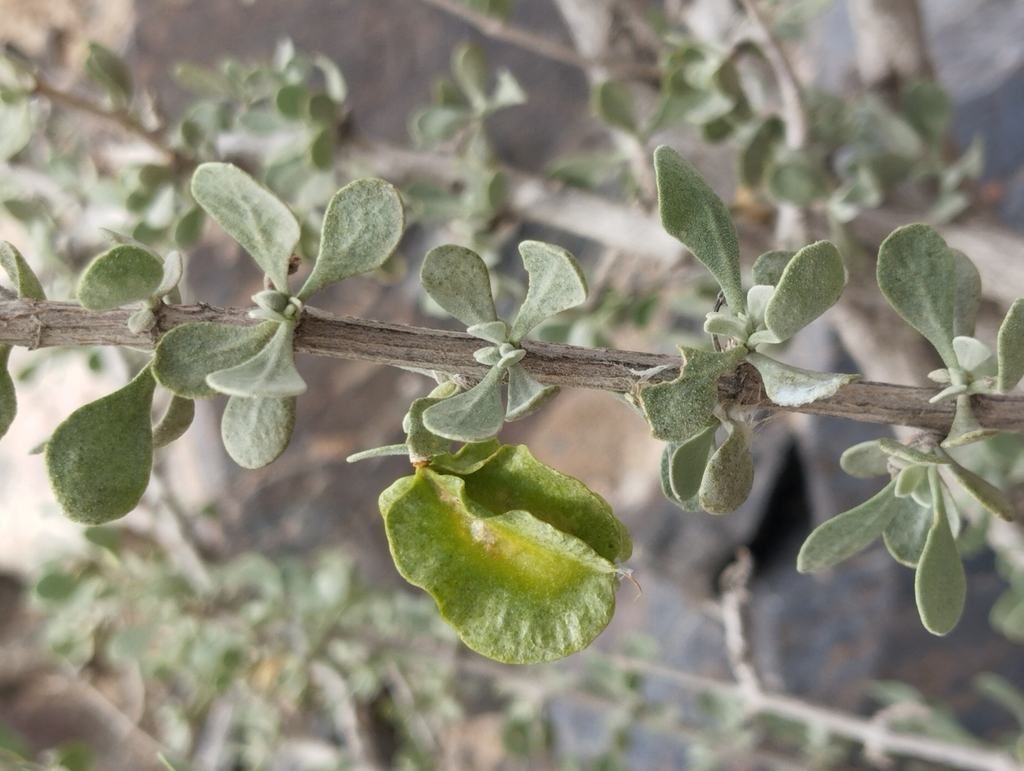
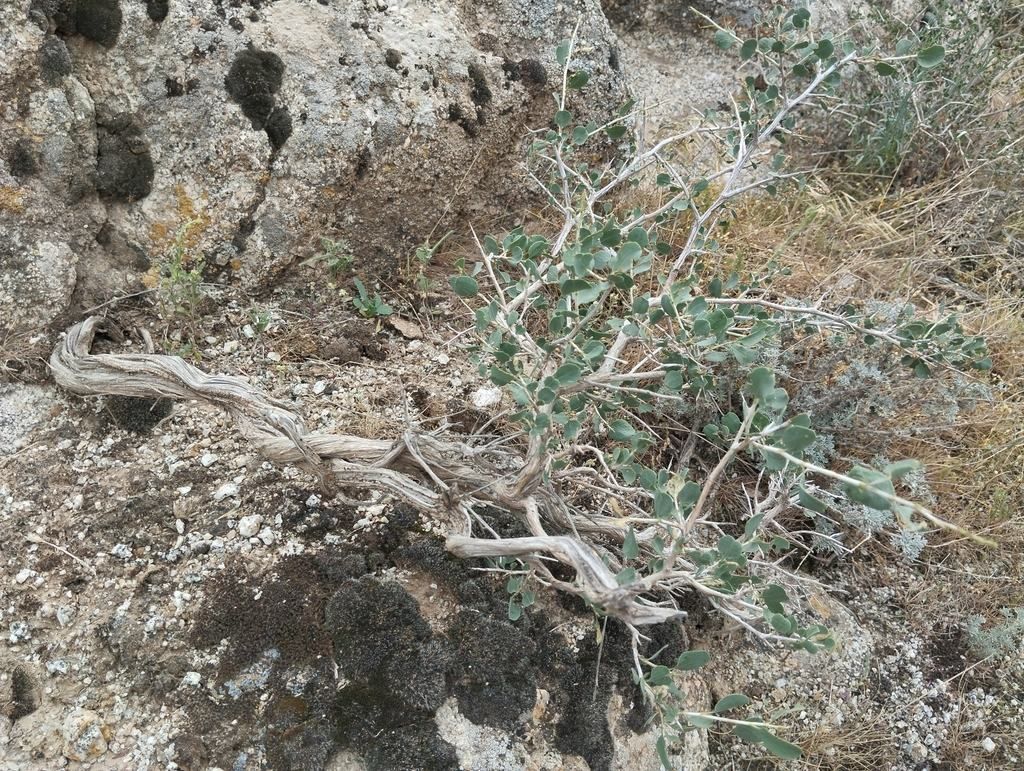
Restoration use by landscape
Kugitangtau Pilot score 73 · rank 67 of 100 shortlisted · rank 78 of 1 208 scored
- Succession role
- Nurse / intermediate shrub
- Suited to
- Eroded slopes; Rocky slopes; Landslide-prone areas; Overgrazed rangelands; Degraded pistachio–almond woodland
- Establishment
- seed; little propagation experience
- Why this category
- Strong: drought tolerance, erosion control potential; Weak: nursery propagation feasibility, restoration cost-effectiveness; -> promising but propagation/supply or field performance not proven at scale: pilot plots
- Cautions
- propagation protocol to develop
- Local habitat
- Artificial terrestrial, Desert, Grassland, Rocky areas · Frequent
Criteria scores
Propagation
seed; little propagation experience
Planting combinations
- Kugitangtau: Degraded pistachio woodland (foothills and low mountains, ~600–1,400 m) (Phase 2)
Planting material and suppliers
No commercial offer found in November 2026: material has to come from wild seed collection or contracted propagation. See Nurseries & supply.
Description
- Morphology
- Shrub, 50–15(120) cm high, strongly branching, with angular trunk 1–1.5(2.5) cm wide, branches thick, whitish, the older flexuose, with pale cinereous bark, wood yellowish; stipules very short, broader than long, acute, sometimes obtuse; leaves covered with stellate opposite hairs when young, spatulate-oblong, obovate or ovate, 1.5–3(4) cm long, 8–12mm wide, gradually tapering to petiole one -third as long as blade, in young opposite, clustered when old, hardly acute at apex. Pedicels ca. 1 cm long, nearly as long as or slightly longer than calyx; sepals obovate or suborbicular, obtuse, broadly membranous at margin, dorsally grayish, 5–6 mm long; petals 1.5–2 times as long as sepals, obovate, obtuse; stamens exserted; staminal scales small, oblong, serrate-dentate at margin and apex; capsules 1–1.5(2.5) cm long, 1–1.5(3) cm wide, globose or slightly broader at cross-section, 5-winged, wings 1.5–2 times as broad as cell, herbaceous-coriaceous; seeds 6–7 mm long, 1–2 in each cell, brown, covered with numerous gray papillae. Fl. April— May, Fr. May— June. [Flora of the USSR (Tree of Life)]
- Habitat
- Residual low mountains, foothill plains, fine-earth, stony, gravelly slopes, outcrops of variegated rocks
- Altitudinal belts
- Plain, foothills
- Phenology
- Flowering Mar–Apr, fruiting May–Jul
- Distribution
- Kyzylkum (Kokcha, Agitma), Fergana valley, Karnabchul (mountains Karatag, Malik), Tian Shan (mountains Kavak-tau, Dzhumgol-tau, Shamsikak, Kakumeren, Ming-kush, ranges Chatkal, Kurama, Fergana, Mogoltau), Pamir-Alai (ranges Turkestan, Zarafshan, Alai, Hissar, Darvaz, Kugitang, Babatag, foothills of southern Tajikistan), Kopet Dag, small and Greater Balkhan
- Uses
- forage, medicinal
- Conservation
- IUCN NE