Species / Amaranthaceae
Bassia prostrata
Amaranthaceae · Subshrub · Uzbek: o‘rmalovchi koxiya, izen; Russian: Кохия стелющаяся
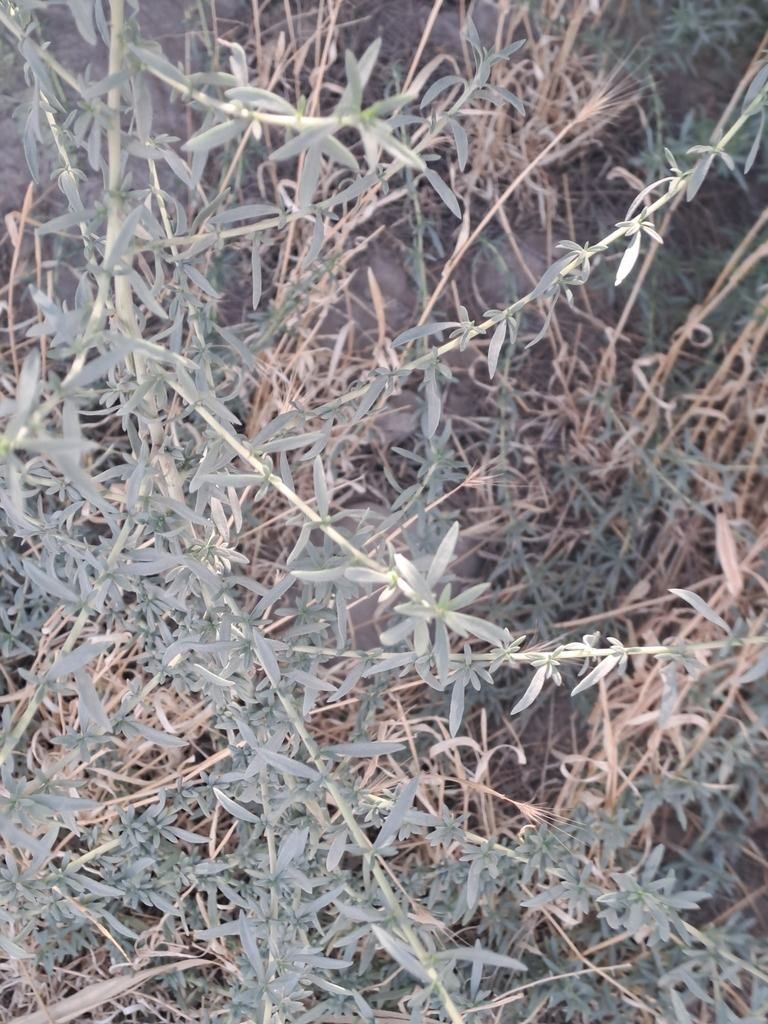
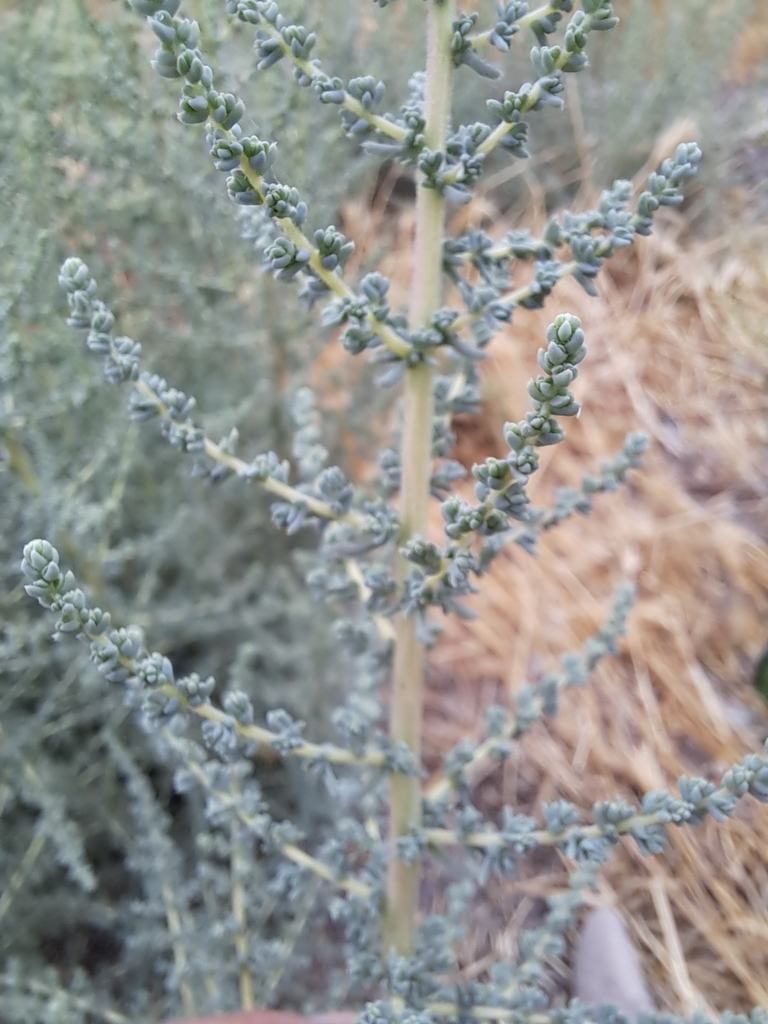
Restoration use by landscape
Nuratau Immediate score 83 · rank 5 of 80 shortlisted · rank 5 of 640 scored
- Succession role
- Pioneer (ground cover)
- Suited to
- Eroded slopes; Rocky slopes; Overgrazed rangelands; Degraded juniper woodland; Degraded pistachio–almond woodland
- Establishment
- direct seeding (fresh seed, viability ~1 yr); seed islands
- Why this category
- Strong: drought tolerance, climate resilience, nursery propagation feasibility, restoration cost-effectiveness; in documented forestry/nursery use (D1); -> routine propagation and available material: use now
- Local habitat
- Desert, Shrubland, Rocky areas · Occasional
Criteria scores
Kugitangtau Immediate score 88 · rank 1 of 100 shortlisted · rank 1 of 1 208 scored
- Succession role
- Pioneer (ground cover)
- Suited to
- Eroded slopes; Rocky slopes; Overgrazed rangelands; Degraded pistachio–almond woodland
- Establishment
- direct seeding (fresh seed, viability ~1 yr); seed islands
- Why this category
- Strong: drought tolerance, climate resilience, seed, nursery propagation feasibility, restoration cost-effectiveness; in documented forestry/nursery use (D1); -> routine propagation and available material: use now
- Local habitat
- Rocky areas, Grassland, Desert · Frequent
Criteria scores
Propagation
direct seeding (fresh seed, viability ~1 yr); seed islands
Where it fits in the degradation matrix
- Nuratau: Eroded slopes (pioneer)
- Nuratau: Rocky slopes (pioneer)
- Nuratau: Overgrazed rangelands (pioneer)
- Nuratau: Degraded juniper woodland (pioneer)
- Nuratau: Degraded pistachio–almond woodland (pioneer)
- Kugitangtau: Eroded slopes (pioneer)
- Kugitangtau: Rocky slopes (pioneer)
- Kugitangtau: Overgrazed rangelands (pioneer)
- Kugitangtau: Degraded pistachio–almond woodland (pioneer)
Planting combinations
- Nuratau: Pistachio–almond woodland (foothills, ~600–1,400 m) (Phase 1)
- Nuratau: Foothill and low-mountain rangeland (Phase 2)
- Kugitangtau: Degraded pistachio woodland (foothills and low mountains, ~600–1,400 m) (Phase 1)
- Kugitangtau: Overgrazed rangeland (foothill and low-mountain pasture) (Phase 2)
Planting material and suppliers
Wild seed collection needed. No supplier confirmed in the landscapes Action: Collect seed in October–November and sow in the same winter; the seed does not keep
Rangeland use
- Grazing tolerance
- High. Regrows from the woody base; browsed mainly in autumn and winter
- Forage value
- High. Autumn and winter forage, when grasses are dry
- Recovery
- High. Seeds heavily and self-sows around the mother plants; seed is short-lived
- Management
- Core species of seed islands; use fresh seed only
Description
- Morphology
- Undershrub, 10–75 cm high; branches ascending, covered with short crisp hairs and sometimes also with long woolly ones; leaves linear to filiform, flat, hairy; inflorescence spiciform or paniculate; glomerules remote, mostly in groups of 3 or rarely 4; perianth hairy, dorsal appendages of fruiting perianth either red, rounded, flat and tuberclelike, or oblong, winglike, narrowing toward base, scarious, rounded -toothed on the margin, with darker nerves; seed rounded-oval to subrotund, ca. 2 mm in diameter, with a prominent annular embryo, convex at center on both sides, brown, naked and smooth. July— September. [Flora of the USSR (Tree of Life)]
- Habitat
- Sandy, clayey, gravelly deserts, saline-alkaline place, solonchaks, stony, gravelly slopes
- Altitudinal belts
- Plain, foothills, low mountains, mid-mountains, high mountains
- Phenology
- Flowering Jul–Sep (Flora of the USSR)
- Distribution
- Throughout Central Asia
- Uses
- forage
- Conservation
- IUCN NE