Species / Rosaceae
Rosa kokanica
Rosaceae · Shrub · Uzbek: Qo‘qon namatagi; Russian: Шиповник кокандский
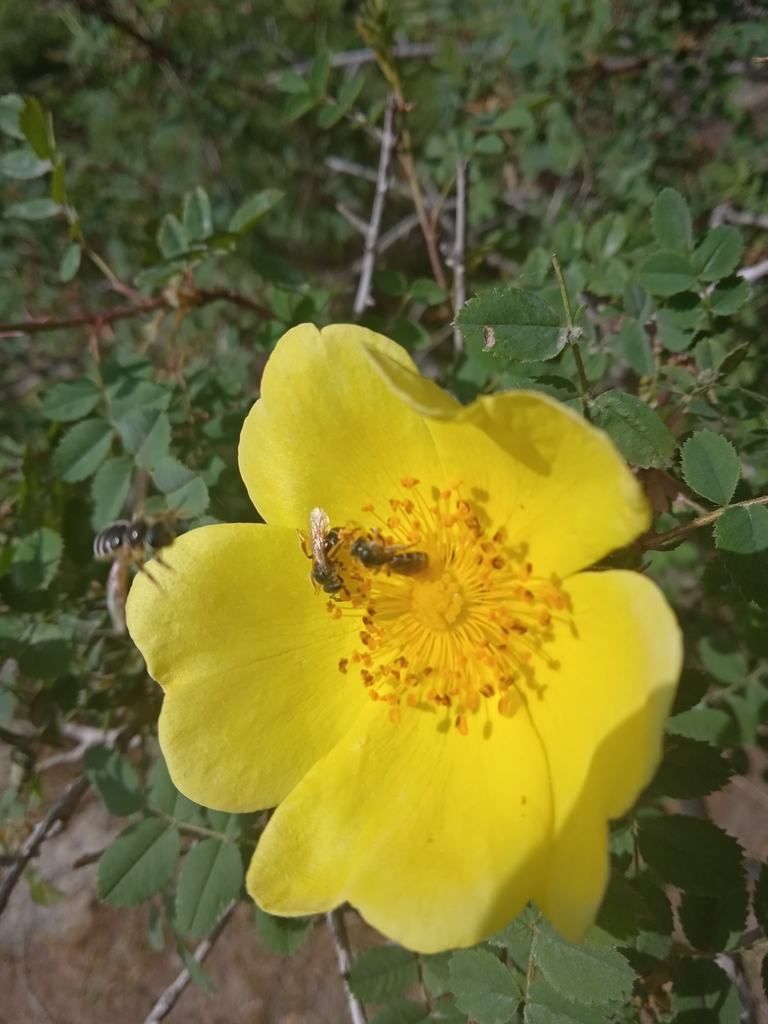
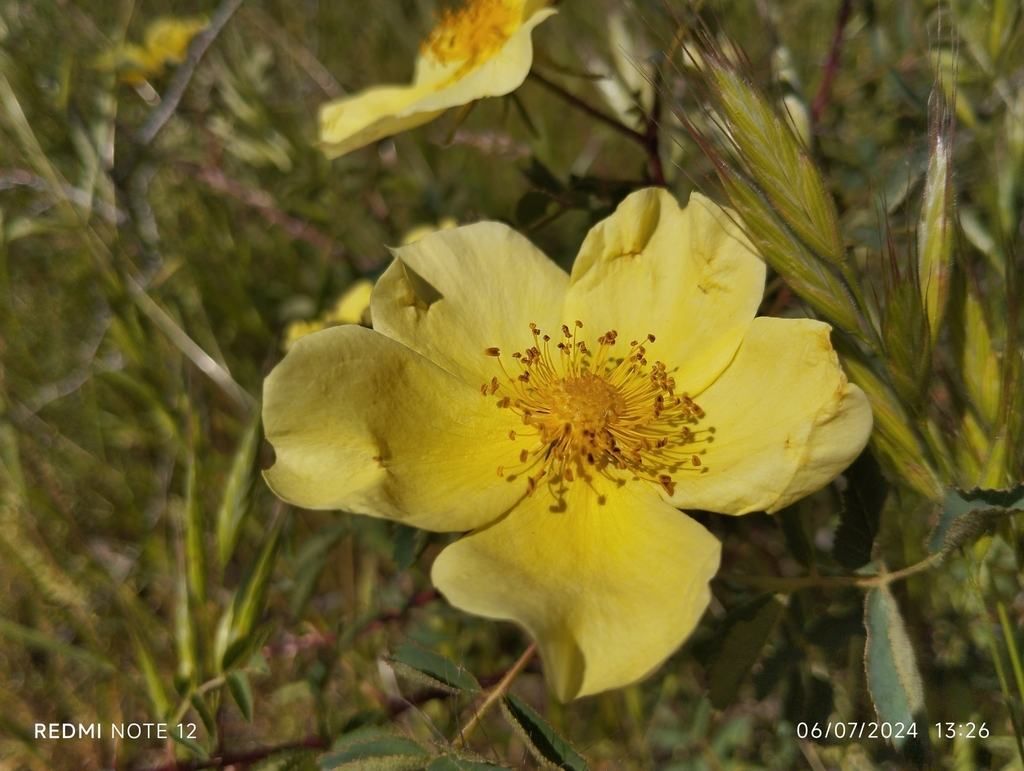
Restoration use by landscape
West Tian Shan Research score 81 · rank 6 of 79 shortlisted · rank 8 of 1 194 scored
- Succession role
- Nurse / intermediate shrub
- Suited to
- Eroded slopes; Rocky slopes; Landslide-prone areas; Gullies & drainage lines; Degraded walnut–fruit and broadleaf woodland (other); Degraded juniper woodland; Degraded pistachio–almond woodland
- Establishment
- stratified seed, root suckers, cuttings; nursery
- Why this category
- Strong: erosion control potential, biodiversity value; endemic: Kashkadarya; -> key data gaps (propagation, seed, conservation): research/ex-situ trials first
- Local habitat
- Rocky areas, Grassland · Frequent
Criteria scores
Propagation
stratified seed, root suckers, cuttings; nursery
Where it fits in the degradation matrix
- West Tian Shan: Eroded slopes (nurse)
- West Tian Shan: Rocky slopes (nurse)
- West Tian Shan: Landslide-prone areas (nurse)
- West Tian Shan: Gullies & drainage lines (nurse)
- West Tian Shan: Degraded juniper woodland (nurse)
- West Tian Shan: Degraded pistachio–almond woodland (nurse)
- West Tian Shan: Degraded walnut–fruit and broadleaf woodland (other) (nurse)
Planting material and suppliers
No commercial offer found in November 2026: material has to come from wild seed collection or contracted propagation. See Nurseries & supply.
Description
- Morphology
- Shrub, small or medium-sized, with red-brown or brown-violet bark and long, erect branches; prickles on turions abundant, dense, of uniform length, firm, erect or lightly curved upward, markedly flattened, strongly and abruptly broadened at base, brown-violet, on branches smaller and weaker, less flattened, nearly conical, sometimes mixed with isolated acicular,prickles; leaves 2.5–6 cm long, with 7–9 leaflets; leaflets generally small, 8–15 mm long, elliptic or obovate, with orbicular or cuneate base, often orbicular at apex, with remotely appressed hairs above or glabrous towards tip, eglandulose or with few glands, frequently entire surface more or less pubescent beneath with more or less abundant short-stalked greenishandblackishbrown glands, acute, glandular biserrate -bidentate, with 7–12 teeth on each side; petioles more or less (sometimes very densely) pubescent, covered with short-stalked glands, and few short pricklets; stipules narrow, pubescent, with divergent auricles, margin glandular. [Flora of the USSR (Tree of Life)]
- Habitat
- Valley of river, gorge, fine-earth, gravelly, stony slopes, deciduous forest and shrubs, juniper woodlands
- Altitudinal belts
- Low mountains, mid-mountains, high mountains
- Phenology
- Flowering May–Jul, fruiting Jul–Sep
- Distribution
- Tian Shan (ranges Kyrgyz Alatau, Susamyrtau, Uzun-akhmat, Karatau, Talas Alatau, Karzhantau, Pskem, Ugam, Chatkal, Fergana, Kurama), Pamir-Alai (ranges Alai, Turkestan, Zarafshan, Hissar, Darvaz, foothills of southern Tajikistan: Karatau and Rengentau)
- Uses
- forest amelioration / agroforestry, medicinal, melliferous, ornamental
- Conservation
- IUCN NE; endemic to Kashkadarya; endemic: Kashkadarya