Species / Fabaceae
Onobrychis chorassanica
Fabaceae · Perennial · Uzbek: Xurosan zirako‘ti; Russian: Эспарцет хорасанский
Restoration use by landscape
West Tian Shan Pilot score 77 · rank 15 of 79 shortlisted · rank 21 of 1 194 scored
- Succession role
- Pioneer / companion (forb)
- Suited to
- Rocky slopes; Overgrazed rangelands; Degraded pistachio–almond woodland
- Establishment
- direct seeding (scarified)
- Why this category
- Strong: drought tolerance, nursery propagation feasibility, restoration cost-effectiveness; Weak: biodiversity value; -> promising but propagation/supply or field performance not proven at scale: pilot plots
- Local habitat
- Rocky areas, Forest, Grassland, Artificial terrestrial · Occasional
Criteria scores
Nuratau Immediate score 79 · rank 12 of 80 shortlisted · rank 13 of 640 scored
- Succession role
- Pioneer / companion (forb)
- Suited to
- Rocky slopes; Overgrazed rangelands; Degraded pistachio–almond woodland
- Establishment
- direct seeding (scarified)
- Why this category
- Strong: drought tolerance, nursery propagation feasibility, restoration cost-effectiveness; Weak: biodiversity value; -> routine propagation and available material: use now
- Local habitat
- Desert, Shrubland, Grassland, Rocky areas, Artificial terrestrial · Frequent
Criteria scores
Kugitangtau Immediate score 79 · rank 12 of 100 shortlisted · rank 12 of 1 208 scored
- Succession role
- Pioneer / companion (forb)
- Suited to
- Rocky slopes; Overgrazed rangelands; Degraded pistachio–almond woodland
- Establishment
- direct seeding (scarified)
- Why this category
- Strong: drought tolerance, nursery propagation feasibility, restoration cost-effectiveness; Weak: biodiversity value; -> routine propagation and available material: use now
- Local habitat
- Artificial terrestrial, Grassland, Rocky areas · Frequent
Criteria scores
Propagation
direct seeding (scarified)
Where it fits in the degradation matrix
- West Tian Shan: Rocky slopes (pioneer)
- Nuratau: Rocky slopes (pioneer)
- Nuratau: Degraded pistachio–almond woodland (pioneer)
- Kugitangtau: Rocky slopes (pioneer)
- Kugitangtau: Overgrazed rangelands (pioneer)
- Kugitangtau: Degraded pistachio–almond woodland (pioneer)
Planting combinations
- West Tian Shan: Degraded pistachio–almond woodland (Kurama and Chatkal foothills, ~700–1,400 m) (Phase 1)
- Nuratau: Pistachio–almond woodland (foothills, ~600–1,400 m) (Phase 1)
- Nuratau: Foothill and low-mountain rangeland (Phase 1)
- Kugitangtau: Degraded pistachio woodland (foothills and low mountains, ~600–1,400 m) (Phase 1)
Planting material and suppliers
Wild seed collection needed. No commercial seed found Action: Collect seed in June–July 2027; multiply in nursery seed plots
Description
- Morphology
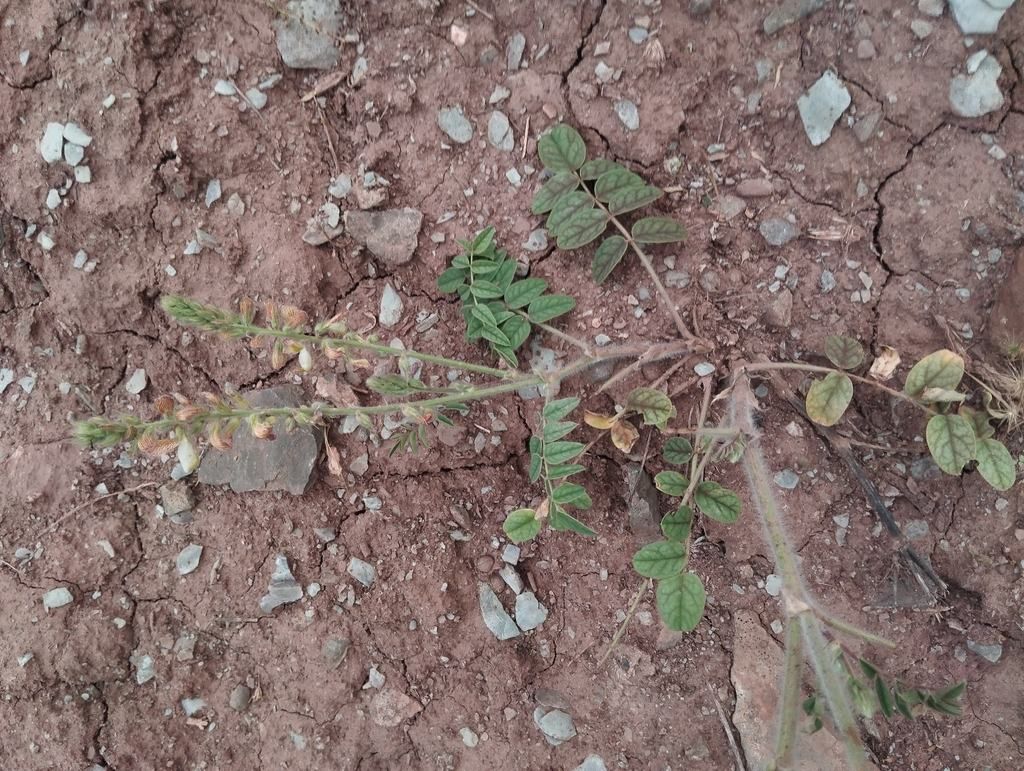
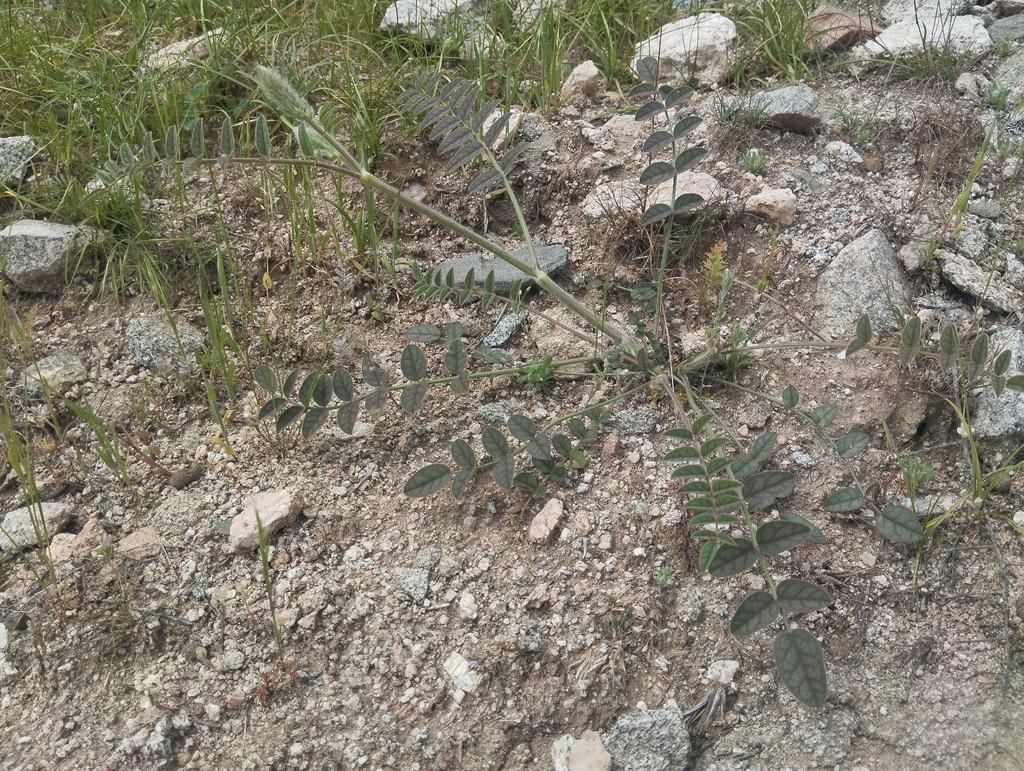
- Perennial; plant 30–60(90) cm high; stems numerous, firm, more or less densely spreading-hairy; stipules free or slightly connate, ovate-lanceolate, acuminate; leaflets (3)5–7(10)-paired, leaflets of lower leaves elliptic or elliptic-oblong, obtuse, usually hairy beneath, glabrous or pubescent above, 2–3 cm long, 8–12 mm wide, leaflets of cauline leaves narrower, oblong to oblong-lanceolate, acute, 2–3 cm long, 5–10 mm wide. Inflorescence longer than leaves, up to 50 cm long in fruit, many-flowered, loose; bracts 5 mm long, linear-subulate; pedicels short ca. 1–1. 5mm long; calyx 8–10mm long, densely pubescent, teeth three times as long as tube, linear-subulate, long-spreading-hairy; corolla 14–17 mm long, yellowish with purple nerves; standard broadly obovate, emarginate; wings usually with two obtuse teeth at apex, more or less ciliate; pods 10–16 mm long, disc densely lanate-hairy, crest short -toothed, marginal pits nearly square, one and a half times as long as wide, or two to three times as long as wide (var. sapoznikovii G. Sir.). May— July. [Flora of the USSR (Tree of Life)]
- Habitat
- Loess, fine-earth, gravelly, stony slopes, outcrops of variegated rocks, fallows
- Altitudinal belts
- Foothills, low mountains, mid-mountains
- Phenology
- Flowering Apr–Jul, fruiting Jun–Jul
- Distribution
- Tian Shan (Chu-Ili mountains, ranges Kyrgyz Alatau, Karatau, Talas Alatau, Chatkal, Fergana, Kurama, Mogoltau), Pamir-Alai (ranges Alai, Trans-Alai, Peter the Great, Turkestan, Nurata, Zarafshan, Hissar, including its southwestern spurs, Karategin, foothills of southern Tajikistan, Kugitang, Pamir: valley. River western Pshart, basin of river Kaindy), Badkhyz, Kopet Dag
- Uses
- forage, melliferous
- Conservation
- IUCN NE