Species / Fabaceae
Onobrychis arenaria
Fabaceae · Perennial · Uzbek: qumli zirako‘t; Russian: Эспарцет песчаный
Restoration use by landscape
West Tian Shan Pilot score 73 · rank 52 of 79 shortlisted · rank 63 of 1 194 scored
- Succession role
- Pioneer / companion (forb)
- Suited to
- Rocky slopes; Overgrazed rangelands
- Establishment
- direct seeding (scarified)
- Why this category
- Strong: nursery propagation feasibility, restoration cost-effectiveness; Weak: biodiversity value; -> promising but propagation/supply or field performance not proven at scale: pilot plots
- Local habitat
- Rocky areas, Shrubland, Grassland · Occasional
Criteria scores
Propagation
direct seeding (scarified)
Planting material and suppliers
No commercial offer found in November 2026: material has to come from wild seed collection or contracted propagation. See Nurseries & supply.
Description
- Morphology
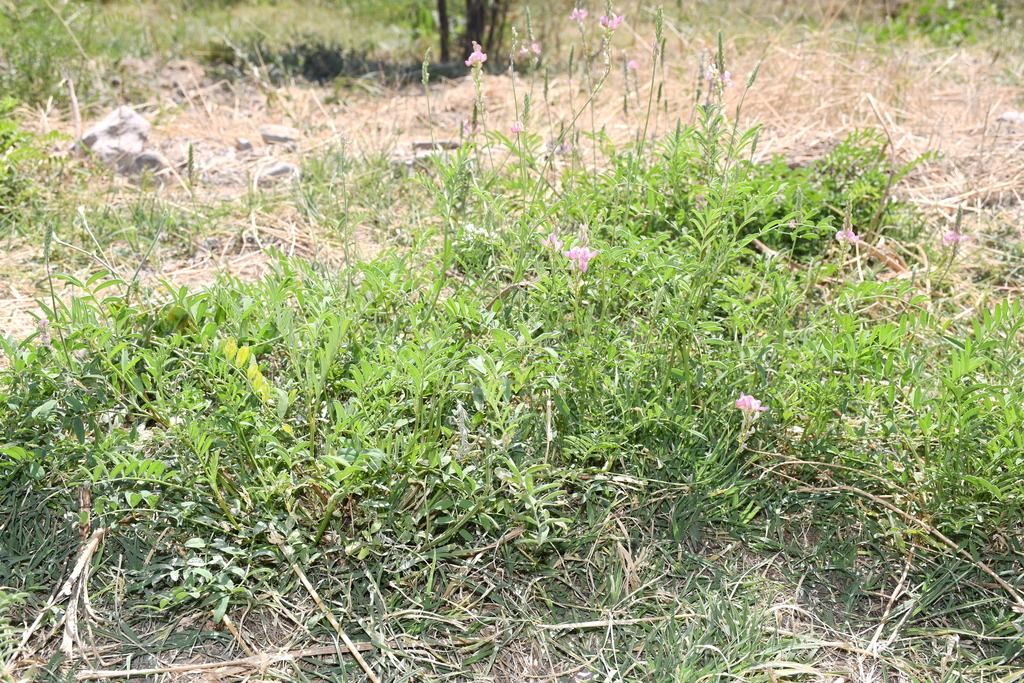
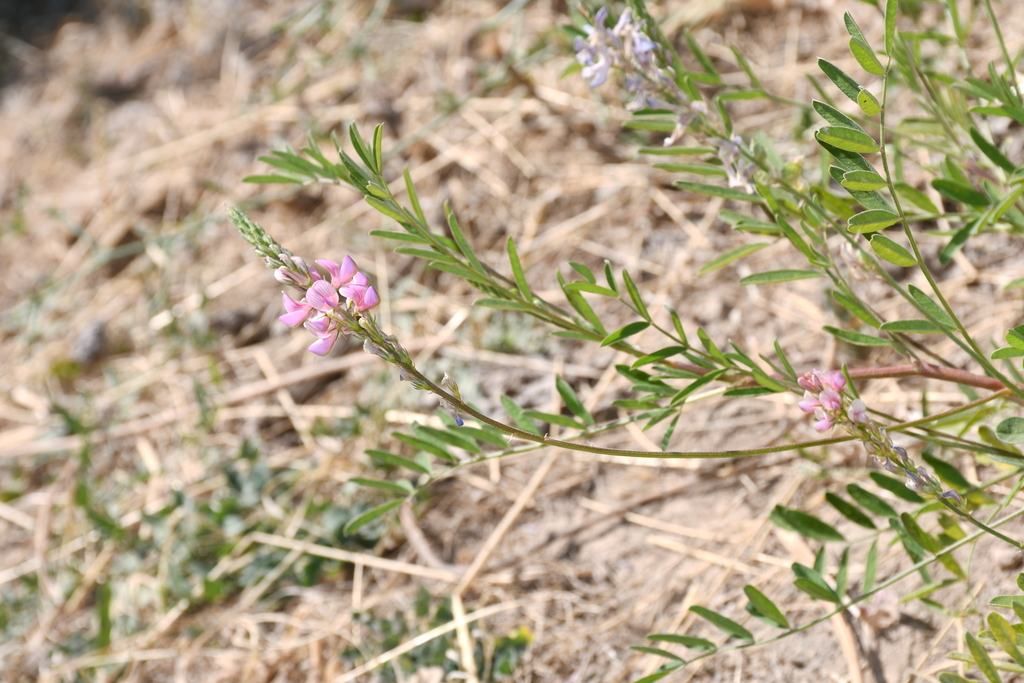
- Perennial; plant 30–50 cm high; stems erect, branching; stipules ovate-acuminate, brown; lower leaves long-petioled, with 6–12 pairs of elliptic to oblong-linear leaflets, 10–30 mm long and 2–5 mm wide, upper leaves with lanceolate-linear to linear leaflets. Peduncles three to four times as long as leaves; racemes elongate and tuftlike [?[ sub anthesis; bracts 2–3 mm long; calyx teeth subulate, one and a half to two and a half times as long as tube, rarely as long; corolla bright, violet-pink, with darker bands, 8–10 mm long; standard as long as or slightly shorter than keel; pods 4–5 mm long, semiglobular, finely appressed-hairy, disc and crest with short teeth. June— July. [Flora of the USSR (Tree of Life)]
- Habitat
- Fine-earth, gravelly, stony slopes, valley of river, thickets of shrubs, subalpine meadow
- Altitudinal belts
- Low mountains, mid-mountains, high mountains
- Phenology
- Flowering Jun–Aug, fruiting Jul–Sep
- Distribution
- Saur, Tarbagatai, Dzungarian Alatau, Tian Shan, Pamir-Alai (ranges Alai, Hissar: Kandara -Kvak (? Adventive), Karategin: southern slope, Peter the Great, western Pamir: Dzhaushangoz (? Adventive), Kopet Dag
- Uses
- forage, melliferous
- Conservation
- IUCN NE