Species / Caprifoliaceae
Lonicera nummulariifolia
Caprifoliaceae · Shrub · Uzbek: tangabarg uchqat, shilvi; Russian: Жимолость монетолистная
Restoration use by landscape
Nuratau Pilot score 75 · rank 39 of 80 shortlisted · rank 44 of 640 scored
- Succession role
- Nurse / intermediate shrub
- Suited to
- Eroded slopes; Rocky slopes; Landslide-prone areas; Gullies & drainage lines; Degraded juniper woodland
- Establishment
- stratified seed or cuttings; nursery
- Why this category
- Strong: erosion control potential; Weak: grazing tolerance; -> promising but propagation/supply or field performance not proven at scale: pilot plots
- Cautions
- protect from grazing for 3-5 yrs
- Local habitat
- Forest, Shrubland, Grassland, Rocky areas · Frequent
Criteria scores
Kugitangtau Pilot score 73 · rank 57 of 100 shortlisted · rank 65 of 1 208 scored
- Succession role
- Nurse / intermediate shrub
- Suited to
- Eroded slopes; Landslide-prone areas; Gullies & drainage lines; Riparian / sai (other); Degraded juniper woodland
- Establishment
- stratified seed or cuttings; nursery
- Why this category
- Strong: erosion control potential; Weak: grazing tolerance; -> promising but propagation/supply or field performance not proven at scale: pilot plots
- Cautions
- protect from grazing for 3-5 yrs
- Local habitat
- Grassland, Rocky areas, Shrubland, Wetlands (inland) · Frequent
Criteria scores
Propagation
stratified seed or cuttings; nursery
Where it fits in the degradation matrix
- Nuratau: Degraded juniper woodland (nurse)
Planting combinations
- Nuratau: Juniper woodland (mid-mountains, above ~1,400 m) (Phase 2)
- Kugitangtau: Degraded juniper woodland (Kugitang and Baysuntau, above ~1,500 m) (Phase 2)
Planting material and suppliers
No commercial offer found in November 2026: material has to come from wild seed collection or contracted propagation. See Nurseries & supply.
Description
- Morphology
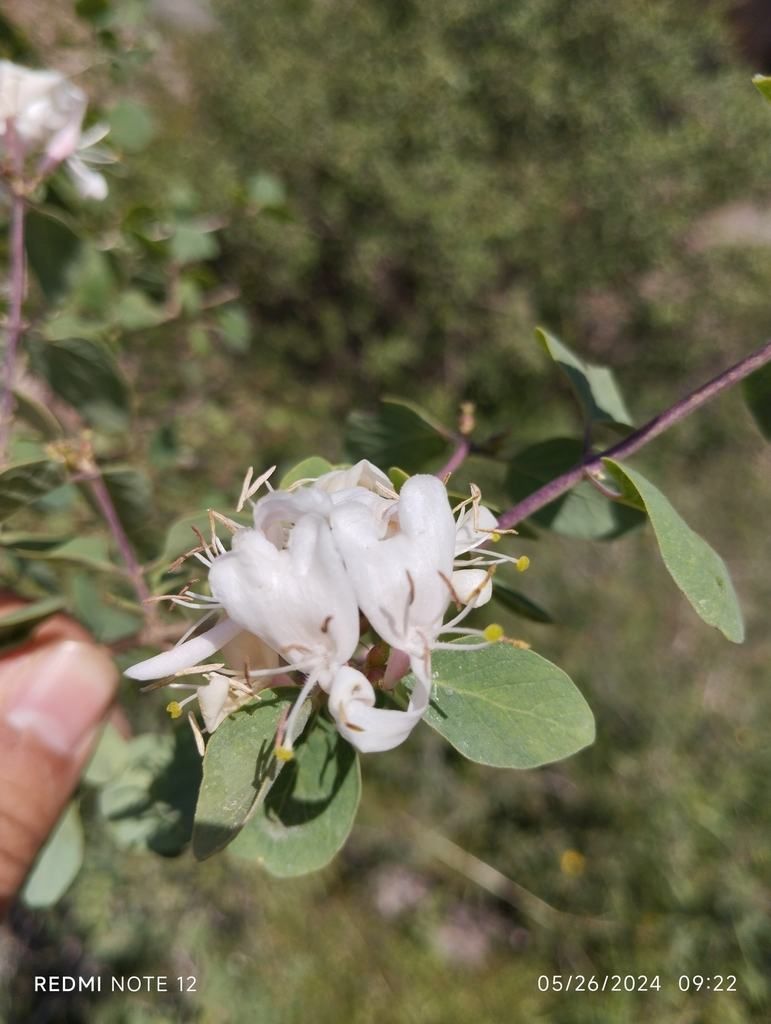
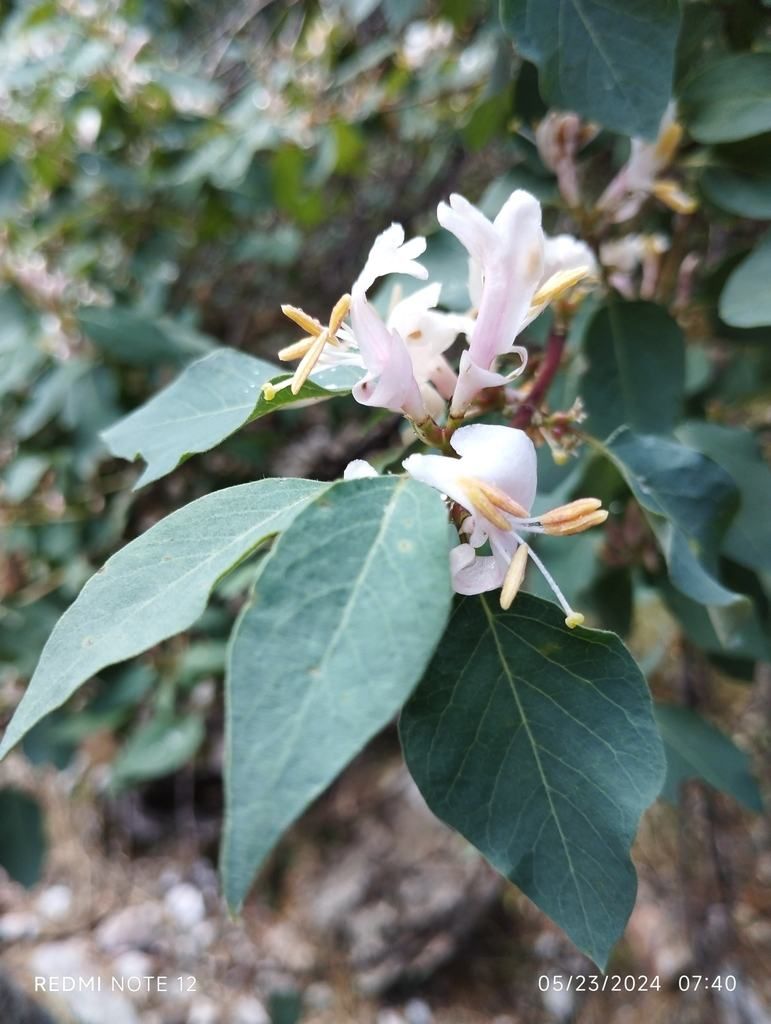
- Shrub up to 3 m tall or tree 3–5 m, rarely up to 8–10 m tall, with trunk, reaching 20 cm in thick.; branches spreading, strong, old clothed with grey bark, young shortly оттопыреннопушистые and densely set with short-stalked glands; one-year-old – brownish-yellow, 2–3-summer almost white; buds ovate, obliquely distant, 2.5–4 mm long, with 3–5 pairs hairy, along the margin downy-ciliate outer scales. Leaves 2–4.5 cm long and 1.5–2.7 cm wide, broadly -or oblong-ovate, sometimes elliptic, at the apex emarginate or obtuse, more rarely pointed, with short callose awn, with truncate, rounded or cuneate base, above matt, grey-green, with sparse down up to almost glabrous, below pale, densely hairy up to greyish-velvety-downy, under end not infrequently glabrous; petioles 4–8 mm long, longer than peduncles, hairy glandular and simple, short and long, thin spreading hairs. Peduncles in axils all, with the exception of lower, leaves of young shoots, (1)2.5–3 mm long, erect, hairy thin spreading hairs; bracts narrow, lanceolate up to filiform, shorter than ovaries, downy and glandular, at the base fused; bracteoles oblong-obovate, covering 1 / 3–1 / 2 ovary, along the margin glandular and sometimes with sparse hairs; bracteoles each flower fuse own outer margins up to middle; limb of calyx almost equal to the ovary, white, membranous, deeply incised on 5 almost equal, triangular or ovate-lanceolate, often long acute, ciliate lobes. Corolla at first pinkish-white, after flowering turning yellow, 17–23 mm long, outside densely and small velvety-downy, with tube below middle with hump-like изгибом, inside hairy, in 1.5–2 times more short, than upper lip, incised on 1 / 3 on broad, obtuse, diverging lobes, from which outermost a little longer than middle. Anthers attached at upper margin of tube, with filaments, at the base downy and large (up to 5 mm long), narrow anthers, not longer than the half of upper lips. Style hairy, equal or a little longer than the stamen. Ovary free, upward narrowed (бутылкообразные), at the top glandular. Fruits whitish, transparent (at drying sometimes turning brown), with 2–3 large, 4.5–5 mm long, black-violet, roundish-ellipsoid, flat seeds. [Flora of Uzbekistan (Tree of Life)]
- Habitat
- Fine-earth, gravelly, stony slopes, rocks, gorge, valley of river, among woody-shrubby vegetation
- Altitudinal belts
- Low mountains, mid-mountains, high mountains
- Phenology
- Flowering May–Jun, fruiting Aug–Jan
- Distribution
- Tian Shan (ranges Trans-Ili Alatau, Kyrgyz Alatau, Talas Alatau, mountains in middle course of river Naryn, ranges Karatau, Karzhantau, Ugam, Pskem, Sandalash, Chatkal, Kurama, Mogoltau, Fergana, Uzun-akhmat, Ataynak), Pamir-Alai (ranges Alai, Nurata, Turkestan, Zarafshan, Hissar, Kugitang, Peter the Great, Darvaz, western Pamir: Vanch, Ishkashim, Shakhdarin), Kopet Dag, Badkhyz
- Uses
- medicinal, melliferous, ornamental
- Conservation
- IUCN LC