Species / Brassicaceae
Parrya nuratensis
Brassicaceae · Subshrub · Uzbek: butasimon parriya, butasimon neuroloma; Russian: Нервоплодник кустарниковый
Restoration use by landscape
Nuratau Research score 70 · rank 73 of 80 shortlisted · rank 103 of 640 scored
- Succession role
- Pioneer (ground cover)
- Suited to
- Eroded slopes; Rocky slopes; Degraded juniper woodland
- Establishment
- seed (protocol to confirm)
- Why this category
- Strong: drought tolerance, biodiversity value; Weak: grazing tolerance, climate resilience; endemic: Nuratau, Aktau; -> key data gaps (propagation, seed, conservation): research/ex-situ trials first
- Cautions
- protect from grazing for 3-5 yrs
- Local habitat
- Shrubland, Grassland, Rocky areas · Occasional
Criteria scores
Propagation
seed (protocol to confirm)
Planting material and suppliers
No commercial offer found in November 2026: material has to come from wild seed collection or contracted propagation. See Nurseries & supply.
Description
- Morphology
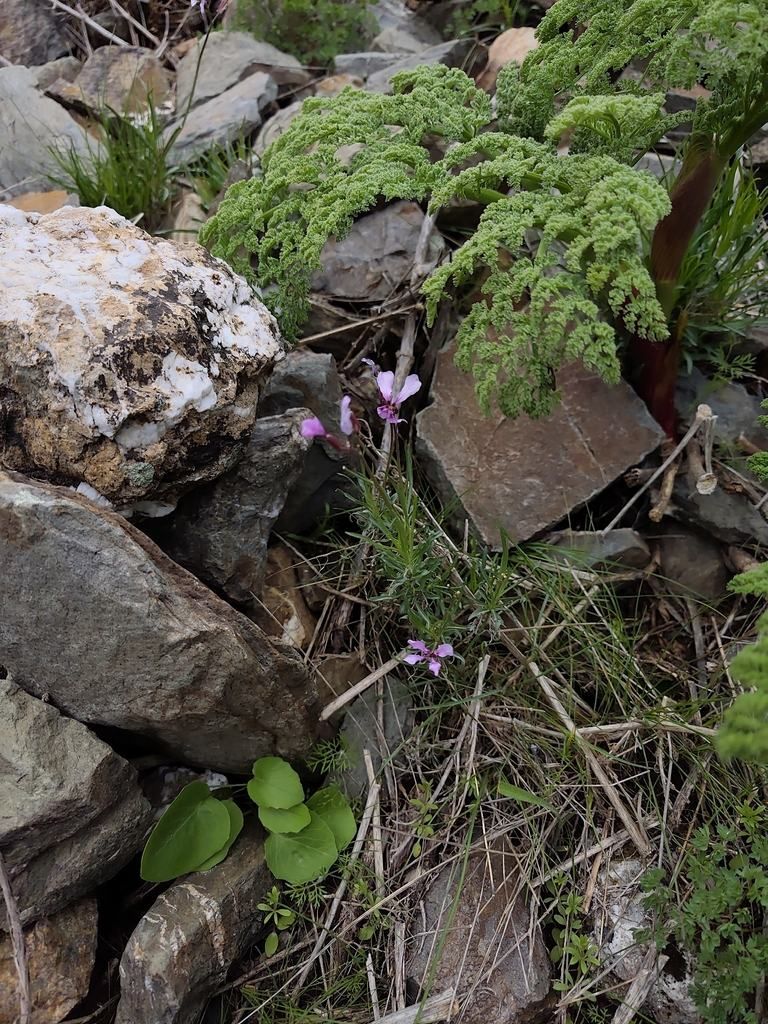
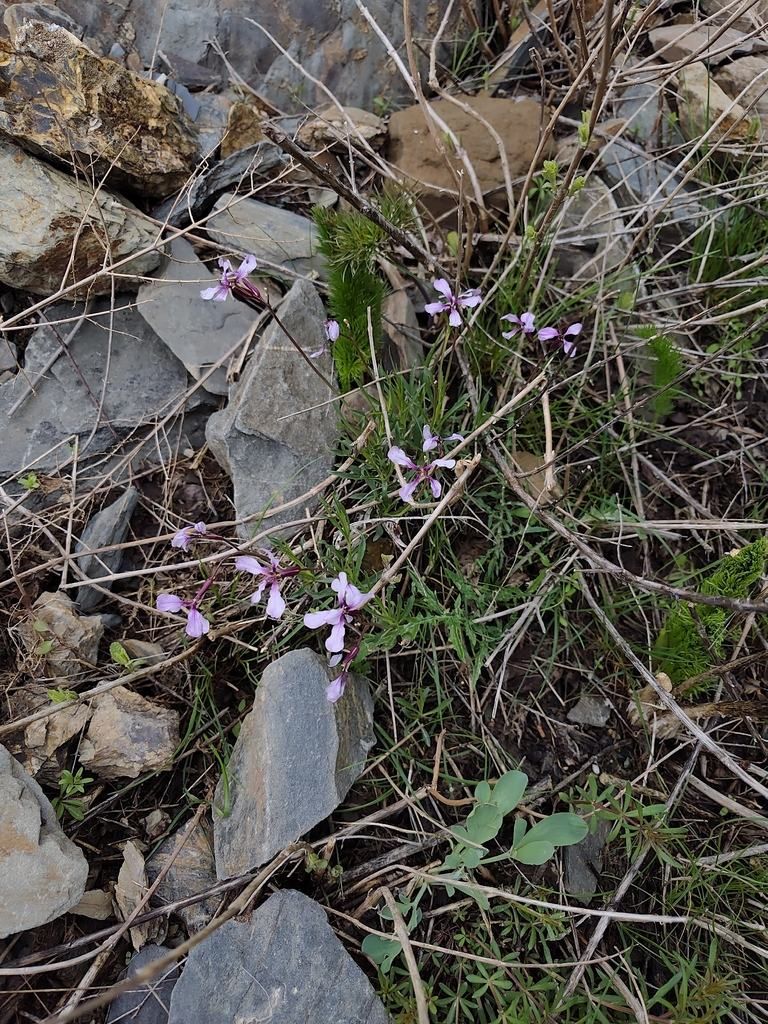
- Shrub, nearly completely glabrous, small and low, branching; branches leafless, annual branchlets leafy; leaves deciduous, linear-oblong or rarely linear-lanceolate or oblong, entire or slightly dentate (var.subintegra Rgl. et Schmalh.), sometimes ciliate- and glandular-pubescent. Floriferous stems longer than radical leaves, ending in a 3-flowered or rarely 1- or 2flowered raceme; pedicels shorter than flowers, in fruit 19-24 mm long; calyx saccate, purple, 9-11 mm long; petals obcordate, light red, 20-28 mm long, claw nearly as long as calyx, anthers linear-oblong; siliques linear-oblong, style short, stigma shortly 2-lobed. May—July. [Flora of the USSR (Tree of Life)]
- Habitat
- On stony and gravelly slopes and screes, on rocks, in dwarf juniper woodlands, кузинниках and rose gardens, at spots of snow in middle (more rarely) and upper belts of mountains
- Phenology
- Flowering May–Jun, fruiting Aug
- Distribution
- Pamir-Alai (ranges Turkestan: pass Shaybek; Nuratau; Zarafshan; Hissar: upper reaches of river Yagnob; Karategin: river Sarbo; Peter the Great)
- Conservation
- IUCN NE; endemic to Nuratau, Aktau; endemic: Nuratau, Aktau