Species / Poaceae
Hordeum bulbosum
Poaceae · Perennial · Uzbek: piyoz arpa; Russian: Ячмень луковичный
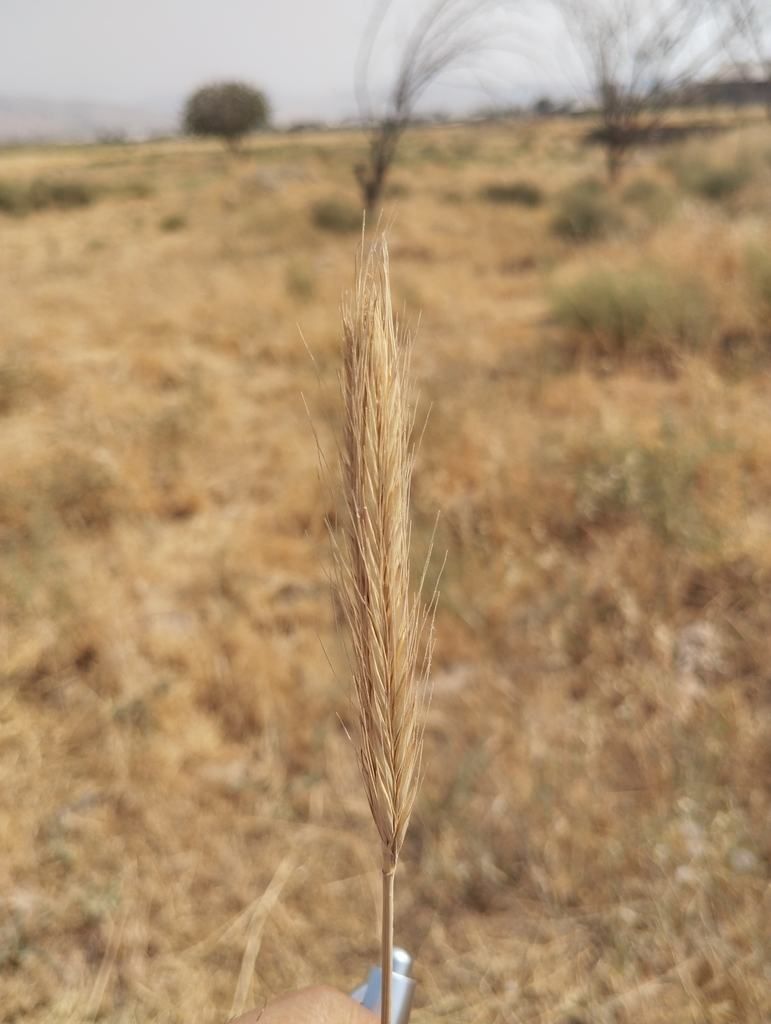
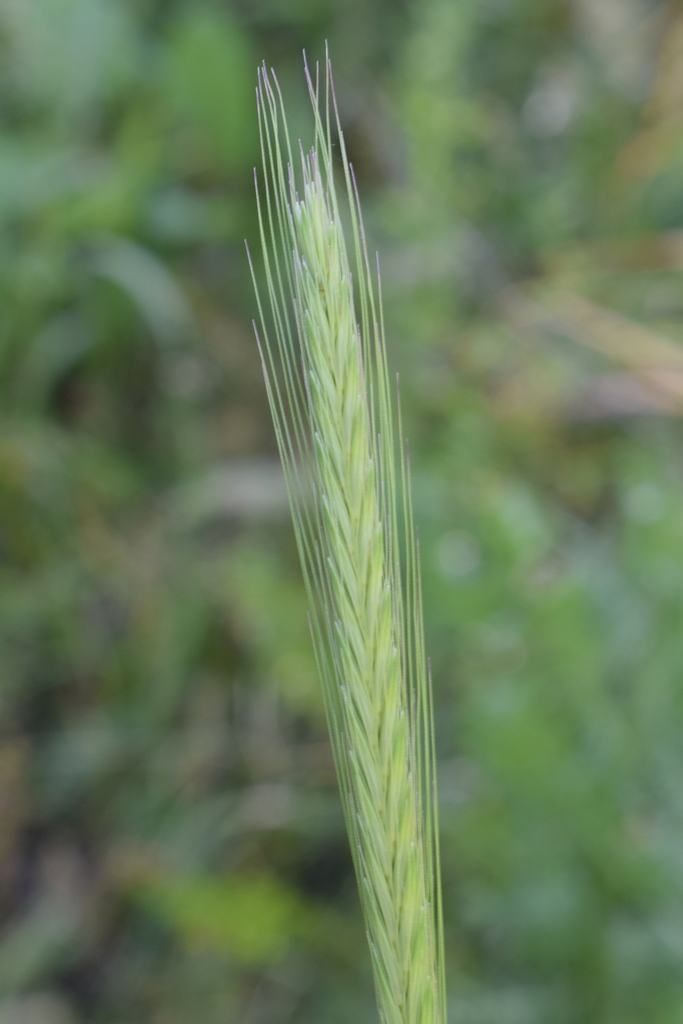
Restoration use by landscape
Nuratau Pilot score 77 · rank 17 of 80 shortlisted · rank 19 of 640 scored
- Succession role
- Pioneer (ground cover)
- Suited to
- Eroded slopes; Rocky slopes; Gullies & drainage lines; Overgrazed rangelands; Degraded juniper woodland; Degraded pistachio–almond woodland
- Establishment
- seed or rhizome/sprig division
- Why this category
- Strong: ecological suitability, climate resilience; Weak: biodiversity value; -> promising but propagation/supply or field performance not proven at scale: pilot plots
- Local habitat
- Forest, Shrubland, Grassland, Rocky areas, Artificial terrestrial · Dominant
Criteria scores
Kugitangtau Pilot score 72 · rank 76 of 100 shortlisted · rank 88 of 1 208 scored
- Succession role
- Pioneer (ground cover)
- Suited to
- Eroded slopes; Gullies & drainage lines; Overgrazed rangelands; Degraded juniper woodland
- Establishment
- seed or rhizome/sprig division
- Why this category
- Strong: climate resilience; Weak: biodiversity value; -> promising but propagation/supply or field performance not proven at scale: pilot plots
- Local habitat
- Artificial terrestrial, Forest, Grassland, Rocky areas, Wetlands (inland) · Frequent
Criteria scores
Propagation
seed or rhizome/sprig division
Where it fits in the degradation matrix
- Nuratau: Gullies & drainage lines (pioneer)
Planting combinations
- Nuratau: Juniper woodland (mid-mountains, above ~1,400 m) (Phase 1)
- Nuratau: Eroded and landslide-prone slopes (Phase 1)
- Nuratau: Gullies, sai and drainage lines (Phase 1)
- Kugitangtau: Gullies, sai and Sherabad river margins (Phase 1)
Planting material and suppliers
No commercial offer found in November 2026: material has to come from wild seed collection or contracted propagation. See Nurseries & supply.
Rangeland use
- Grazing tolerance
- Medium
- Forage value
- High in spring; hay
- Recovery
- Medium. Bulbs survive the summer drought
- Management
- Moister aspects and gully banks
Description
- Morphology
- Perennial. Culms bulbous at the base (to 1.5cm in diameter), glabrous, smooth, 50-130cm tall; leaves linear, flat, 0.3-0. 7cm broad, scaberulou's, sometimes sparsely covered with long, white hairs on the upper surface. Spikes linear, dense, compressed, very brittle, 6-13cm long, 0.6-0.9cm broad; rachis joints reduced in length, hispid on the angles; lateral spikelets borne on pedicels to 1.5 mm long, sterile, with a staminate floret and unequal glumes, one of the glumes setaceous, not dilated at the base and very gradually prolonged into a slender awn, amounting to 1.5 -2. 7 cm in total length, the other glume narrowly linear-lanceolate at the base, gradual-ly tapering into an awn slightly longer than itself, the length including awn 1.3-2 cm; glumes of the central spikelet equal, both lanceolately dilated at the base, attenuate at the summit into a slender awn, this slightly exceeding the body of the glume, total length amounting to 1.2-1. [Flora of the USSR (Tree of Life)]
- Habitat
- Oases, valley of river, loess, fine-earth, gravelly, stony slopes
- Altitudinal belts
- Plain, foothills, low mountains, mid-mountains
- Phenology
- Flowering and fruiting May–Jun
- Distribution
- Western Tian Shan, Chu-Ili mountains, Pamir-Alai, Badkhyz, Kopet Dag
- Uses
- food, forage
- Conservation
- IUCN LC