Species / Poaceae
Melica persica
Poaceae · Perennial · Uzbek: kulrang melika, Gogenaker melikasi, tengsiztangachali melika, Jakemont melikasi; Russian: Перловник сероватый, Перловник Гогенакера, Перловник неравночешуйный, Перловник Жакемонта
Restoration use by landscape
Nuratau Pilot score 72 · rank 62 of 80 shortlisted · rank 70 of 640 scored
- Succession role
- Pioneer (ground cover)
- Suited to
- Eroded slopes; Rocky slopes; Degraded juniper woodland
- Establishment
- seed or rhizome/sprig division
- Why this category
- Strong: drought tolerance; Weak: biodiversity value; -> promising but propagation/supply or field performance not proven at scale: pilot plots
- Local habitat
- Shrubland, Grassland, Rocky areas · Frequent
Criteria scores
Propagation
seed or rhizome/sprig division
Planting material and suppliers
No commercial offer found in November 2026: material has to come from wild seed collection or contracted propagation. See Nurseries & supply.
Description
- Morphology
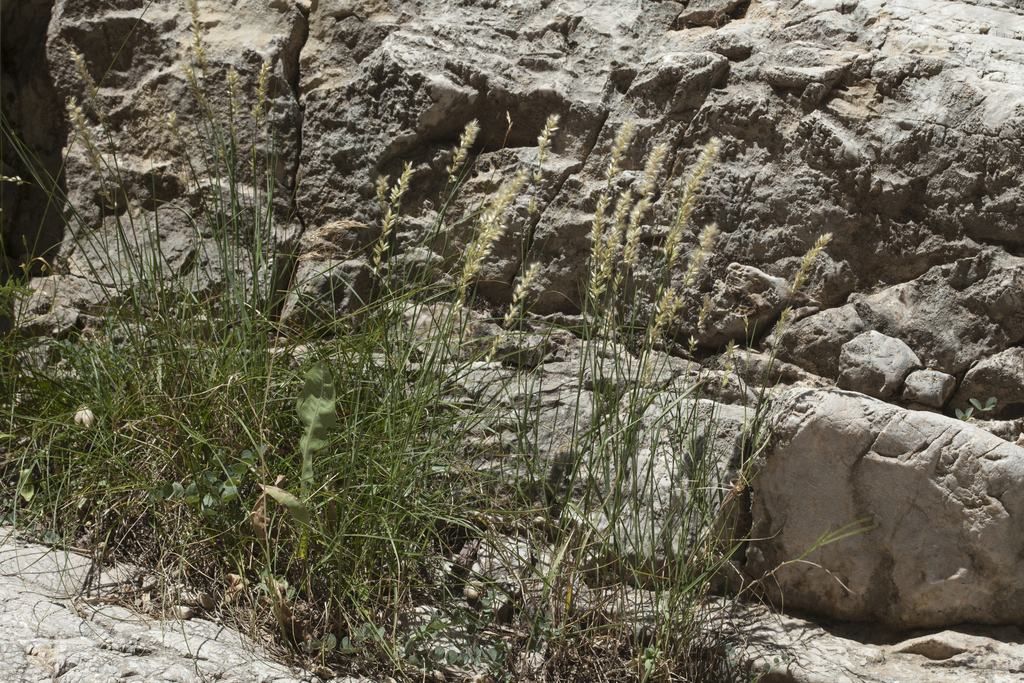
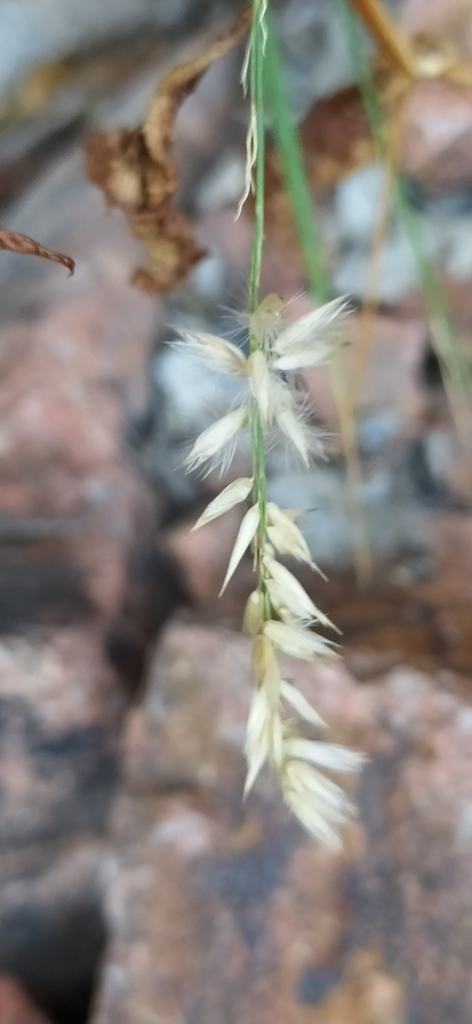
- Perennial. Culms 15-50 (-75) cm tall, rather copiously clothed with short and soft or scabrous hairs; leaves (sheaths and both sides of blades) densely clothed with soft reflexed hairs (rarely leaves short- and roughpubescent); ligule very short, occasionally to 2.5 mm long on upper leaves. Panicle loose, almost 1- sided, or dense, to 15 cm long; spikelets 8 -10 mm long; glumes oblong-lanceolate, acute, pale or rather purplish; lower glume 1/3 as long as the upper. May. [Flora of the USSR (Tree of Life)]
- Habitat
- Gravelly, stony slopes, rocks, outcrops of limestones
- Altitudinal belts
- Mid-mountains, high mountains
- Phenology
- Flowering May (Flora of the USSR)
- Distribution
- Tian Shan, Pamir-Alai
- Conservation
- IUCN NE