Species / Amaranthaceae
Camphorosma monspeliaca
Amaranthaceae · Subshrub · Uzbek: Marsel kamforosmasi; Russian: Камфоросма марсельская
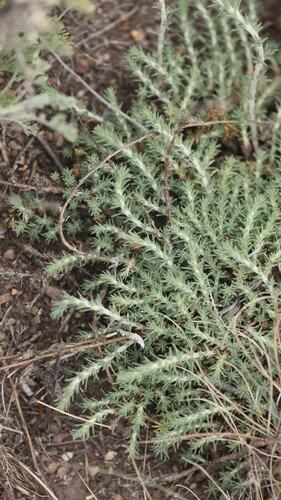
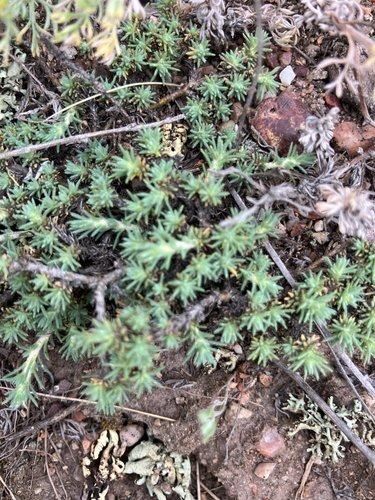
Restoration use by landscape
Kugitangtau Pilot score 73 · rank 53 of 100 shortlisted · rank 61 of 1 208 scored
- Succession role
- Pioneer (ground cover)
- Suited to
- Eroded slopes; Overgrazed rangelands
- Establishment
- direct seeding; seed islands
- Why this category
- Strong: climate resilience; -> promising but propagation/supply or field performance not proven at scale: pilot plots
- Local habitat
- Artificial terrestrial, Desert, Grassland, Rocky areas, Wetlands (inland) · Occasional
Criteria scores
Propagation
direct seeding; seed islands
Planting material and suppliers
No commercial offer found in November 2026: material has to come from wild seed collection or contracted propagation. See Nurseries & supply.
Description
- Morphology
- Undershrub, 25–80 cm high, cespitose, the woody branches with clusters of leaves; annual shoots arising at the base of branches, ascending, simple or short -branched at the ends, whitish with short crisp tangled hairs; leaves subulate, 2–6 mm long, often heavily hairy, with clusters of reduced branchlets in the axils; flowers solitary incompact spiciform inflorescences, the subtending bracteoles the length of the flowers; perianth 2–2.5 mm long, rounded-oval, hairy, the 4 teeth subequal, straight, half as long as the tube; seed round, blackish-brown, flat, ca. 1 mm in diameter, diffusely glandular. July— September. (Plate V, Figure 3). [Flora of the USSR (Tree of Life)]
- Habitat
- Sandy deserts, solonchaks, saline-alkaline place, takyrs, stony, gravelly slopes, pebble beds, bank of water bodies, outcrops of variegated rocks, dry watercourse bed
- Altitudinal belts
- Plain, foothills, low mountains, mid-mountains
- Phenology
- Flowering and fruiting Jul–Sep
- Distribution
- Throughout Central Asia
- Uses
- essential oil, forage, medicinal
- Conservation
- IUCN NE