Species / Polygonaceae
Atraphaxis virgata
Polygonaceae · Shrub · Uzbek: xivchinsimon tuyasingren; Russian: Курчавка прутьевидная
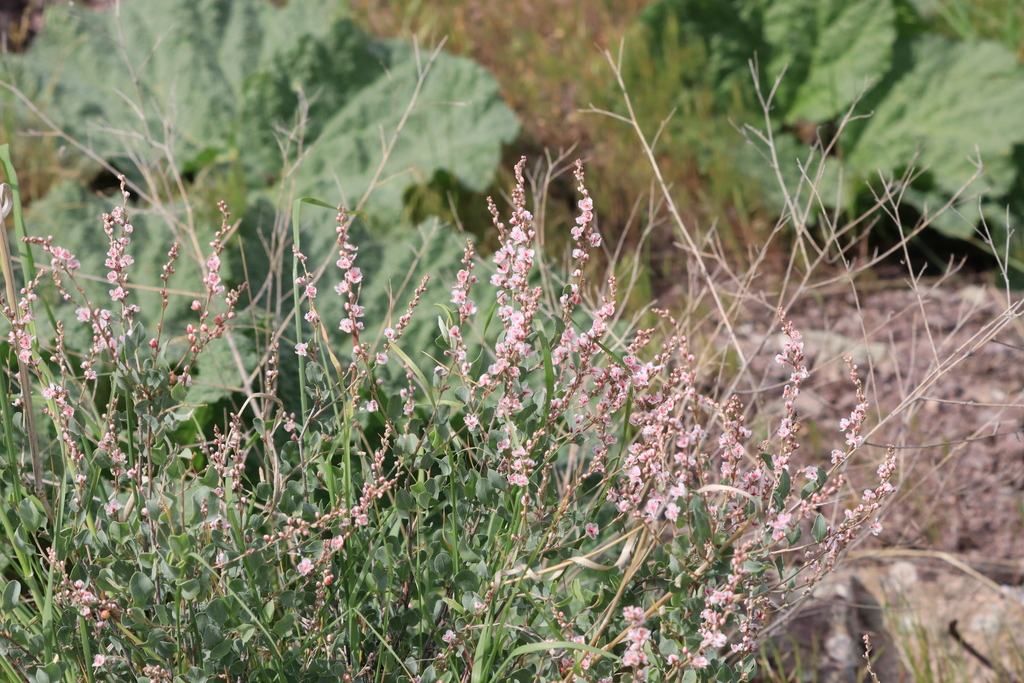
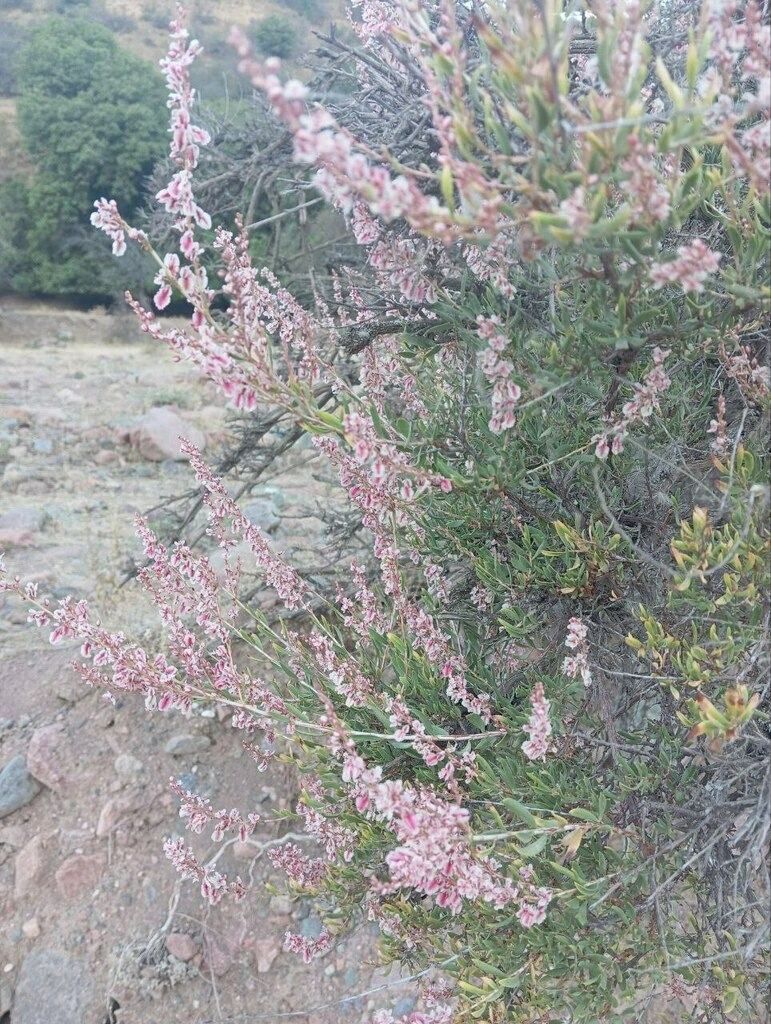
Restoration use by landscape
Nuratau Pilot score 81 · rank 9 of 80 shortlisted · rank 10 of 640 scored
- Succession role
- Nurse / intermediate shrub
- Suited to
- Eroded slopes; Rocky slopes; Landslide-prone areas; Gullies & drainage lines; Degraded pistachio–almond woodland
- Establishment
- seed or cuttings; nursery
- Why this category
- Strong: erosion control potential, climate resilience; -> promising but propagation/supply or field performance not proven at scale: pilot plots
- Local habitat
- Forest, Shrubland, Grassland, Rocky areas · Frequent
Criteria scores
Propagation
seed or cuttings; nursery
Where it fits in the degradation matrix
- Nuratau: Eroded slopes (nurse)
- Nuratau: Rocky slopes (nurse)
- Nuratau: Landslide-prone areas (nurse)
- Nuratau: Gullies & drainage lines (nurse)
- Nuratau: Degraded pistachio–almond woodland (nurse)
Planting material and suppliers
No commercial offer found in November 2026: material has to come from wild seed collection or contracted propagation. See Nurseries & supply.
Description
- Morphology
- Shrub, 1–2 m high; stem stout; branches spreading, almost straight or slightly flexuous, long, slender, obtusish and unarmed, covered with dark brownish -gray bark, the persistent epidermis splitting longitudinally into fibers; current year's herbaceous branchlets of second order very long, straight or slightly flexuous, slender, strongly projecting in all directions, forking at the ends and terminated by leaves or a loosely paniculate cluster of floriferous branchlets, furrowed, whitish or grayish, quite glabrous; ocreae short -cylindric, 2–3 mm long, always shorter than the internodes, in lower part brownish, in upper part membranaceous and almost pellucid, with 2 distinct rather thick nerves, deeply cleft on one side into 2 triangular -lanceolate slenderly awned teeth; leaves grayish-green, thick fleshy, rather large especially on branchlets of the current year, 12–30mm long and 5–12 mm broad, oblong -elliptic or oblong-obovate, narrowed at base to a short and broad petiole, obtusely acuminate or rounded at apex, terminating in a whitish cartilaginous spinule 0.5–2 mm long, with f. [Flora of the USSR (Tree of Life)]
- Habitat
- Stony, gravelly, fine-earth slopes, pebble beds, dry watercourse bed
- Altitudinal belts
- Plain, foothills, low mountains, mid-mountains
- Phenology
- Flowering and fruiting May–Jun
- Distribution
- Zaisan basin, Balkhash deserts, Betpakdala, Muyunkum, valley of river Syr Darya, Kyzylkum (northern), Tarbagatai, Dzungarian Alatau, Tian Shan, Pamir-Alai (Turkestan and Alai ranges)
- Uses
- melliferous, ornamental, tannin
- Conservation
- IUCN NE