Species / Rosaceae
Rosa maracandica
Rosaceae · Shrub · Uzbek: pastak namatak; Russian: Шиповник карликовый
Restoration use by landscape
West Tian Shan Immediate score 77 · rank 19 of 79 shortlisted · rank 25 of 1 194 scored
- Succession role
- Nurse / intermediate shrub
- Suited to
- Gullies & drainage lines; Riparian / sai (other); Degraded walnut–fruit and broadleaf woodland (other); Degraded juniper woodland; Degraded pistachio–almond woodland
- Establishment
- stratified seed, root suckers, cuttings; nursery
- Why this category
- Strong: erosion control potential; Weak: drought tolerance; -> routine propagation and available material: use now
- Cautions
- needs moist sites
- Local habitat
- Rocky areas, Grassland, Wetlands (inland) · Frequent
Criteria scores
Kugitangtau Pilot score 72 · rank 82 of 100 shortlisted · rank 95 of 1 208 scored
- Succession role
- Nurse / intermediate shrub
- Suited to
- Gullies & drainage lines; Riparian / sai (other); Degraded juniper woodland; Degraded pistachio–almond woodland
- Establishment
- stratified seed, root suckers, cuttings; nursery
- Why this category
- Strong: erosion control potential; Weak: drought tolerance; -> promising but propagation/supply or field performance not proven at scale: pilot plots
- Cautions
- needs moist sites
- Local habitat
- Rocky areas, Grassland, Wetlands (inland) · Occasional
Criteria scores
Propagation
stratified seed, root suckers, cuttings; nursery
Where it fits in the degradation matrix
- West Tian Shan: Riparian / sai (other) (nurse)
Planting material and suppliers
Available for procurement now. Boysun SFE: 10,000 rosehip seedlings at 10,000 UZS and 160 kg of seed at 110,000 UZS per kg. Burchmulla private nurseries: 200,000 rosehip seedlings at 15,000 UZS (Table 7.5). Platform price for R. canina: seedling 10,000 UZS, seed 8,000 UZS per kg (Table 7.4) Action: Confirm the species of each lot and the origin of the seed before purchase
| Supplier | Material | Quantity | Price | Source |
|---|---|---|---|---|
| Boysun SFE | Seedling (Rosehip (na'matak)) | 10 000 pcs | 10 000 UZS per piece | Table 7.5 |
| Boysun SFE | Seed (Rosehip seed) | 160 kg | 110 000 UZS per kg | Table 7.5 |
Description
- Morphology
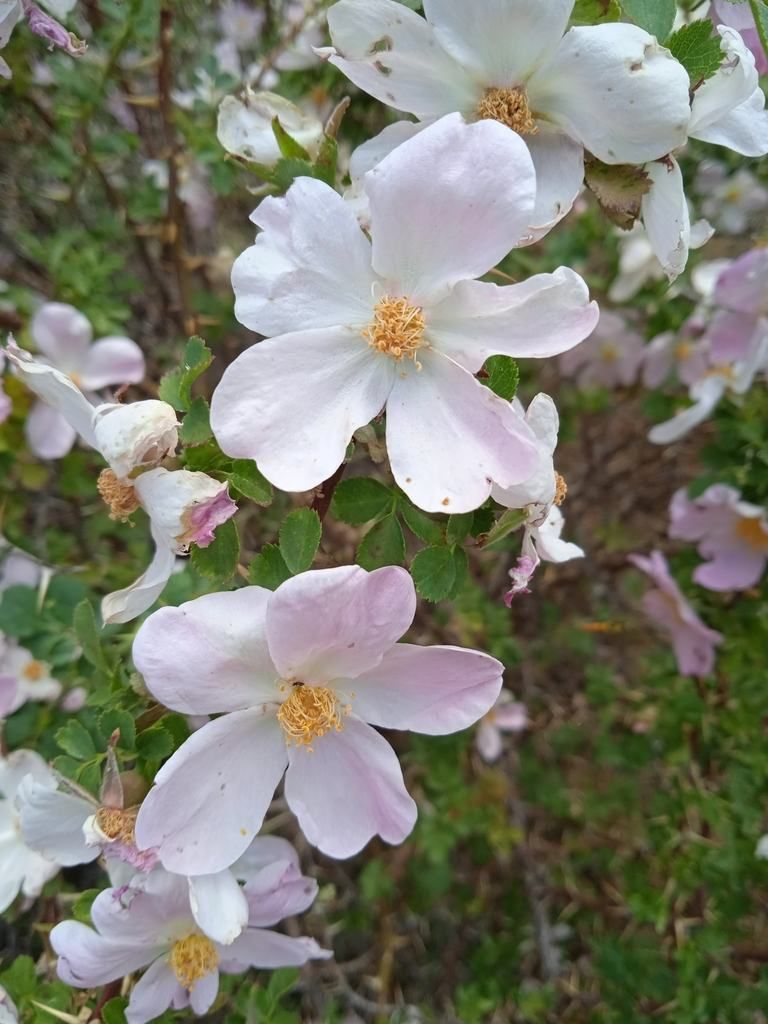
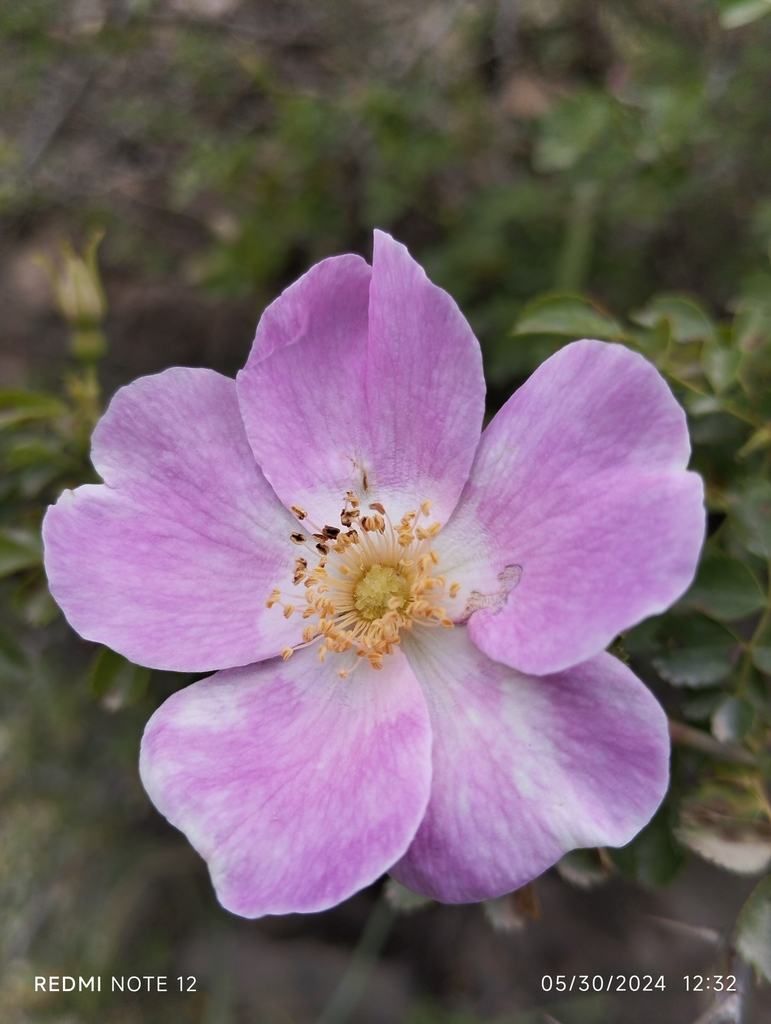
- Shrub, divaricate, with flexuous or erect, glaucous, glabrous branches; prickles numerous, remote, equal, in pairs on flower -bearing branches, strong, erect, slightly directed upward, flattened at base, markedly longer than leaflets, straw yellow; petioles unarmed, glabrous or pubescent, often - glandular; stipules linear, short, acute, with slightly divergent auricles and glandular margins; leaflets 5–7, small, orbicular, coriaceous, glaucescent, tapering at base, truncate or rounded at apex, nearly glandular-biserrate-bidentate, often more or less finely glandular beneath. Flowers solitary or mm on short pedicels, 5–6 long, generally glabrous, rarely puberulent, sometimes glandular; bracts reduced; hypanthia ovoid, glabrous or glandular-prickly; sepals narrowly lanceolate, with appendage, entire, glabrescent or pubescent, glandular -margined, directed upward in fruit, closing; corolla white (or pale pink?); style densely villous, free, forming a rather compact head; fruit 1–1.5 cm long, subsessile (pedicels 2'mm long), ovate -urceolate or ovate -oblong, bright red, rather fleshy. [Flora of the USSR (Tree of Life)]
- Habitat
- Stony, gravelly slopes, rocks, pebble beds, valley of river, thickets of shrubs, juniper woodlands
- Altitudinal belts
- Foothills, low mountains, mid-mountains
- Phenology
- Flowering Jun–Jul, fruiting Aug–Oct
- Distribution
- Western Tian Shan (ranges Karatau, Talas Alatau, Pskem, Ugam, Chatkal, Fergana, Kurama, Mogoltau), Pamir-Alai (ranges Turkestan, Hissar, Darvaz, Peter the Great, foothills of southern Tajikistan: Rengentau, Gardani-ushti, Gazimaylik, Sarsaryak and Karatau, Babatag, Kugitang)
- Uses
- medicinal, melliferous, ornamental
- Conservation
- IUCN NE