Species / Rosaceae
Pyrus regelii
Rosaceae · Shrub · Uzbek: Regel noki, ayiqmurut; Russian: Груша Регеля
Restoration use by landscape
West Tian Shan Pilot score 73 · rank 53 of 79 shortlisted · rank 66 of 1 194 scored
- Succession role
- Nurse / intermediate shrub
- Suited to
- Eroded slopes; Rocky slopes; Landslide-prone areas; Gullies & drainage lines; Degraded walnut–fruit and broadleaf woodland (other)
- Establishment
- stratified seed; nursery seedlings
- Why this category
- Strong: erosion control potential; Weak: grazing tolerance; -> promising but propagation/supply or field performance not proven at scale: pilot plots
- Cautions
- protect from grazing for 3-5 yrs
- Local habitat
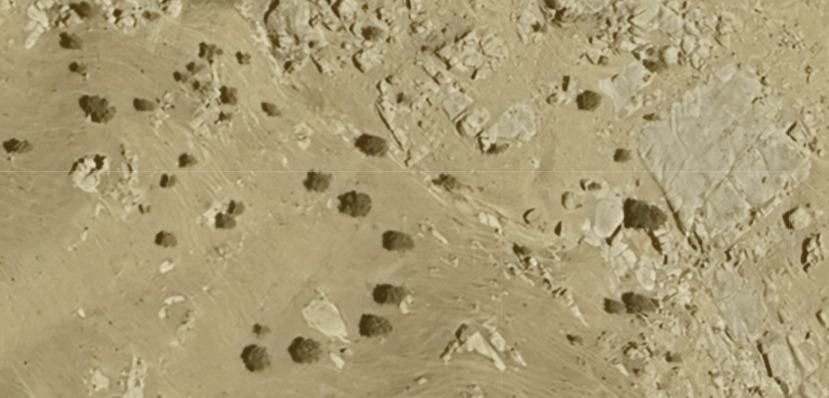
- Rocky areas, Grassland · Frequent
Criteria scores
Propagation
stratified seed; nursery seedlings
Planting material and suppliers
No commercial offer found in November 2026: material has to come from wild seed collection or contracted propagation. See Nurseries & supply.
Description
- Morphology
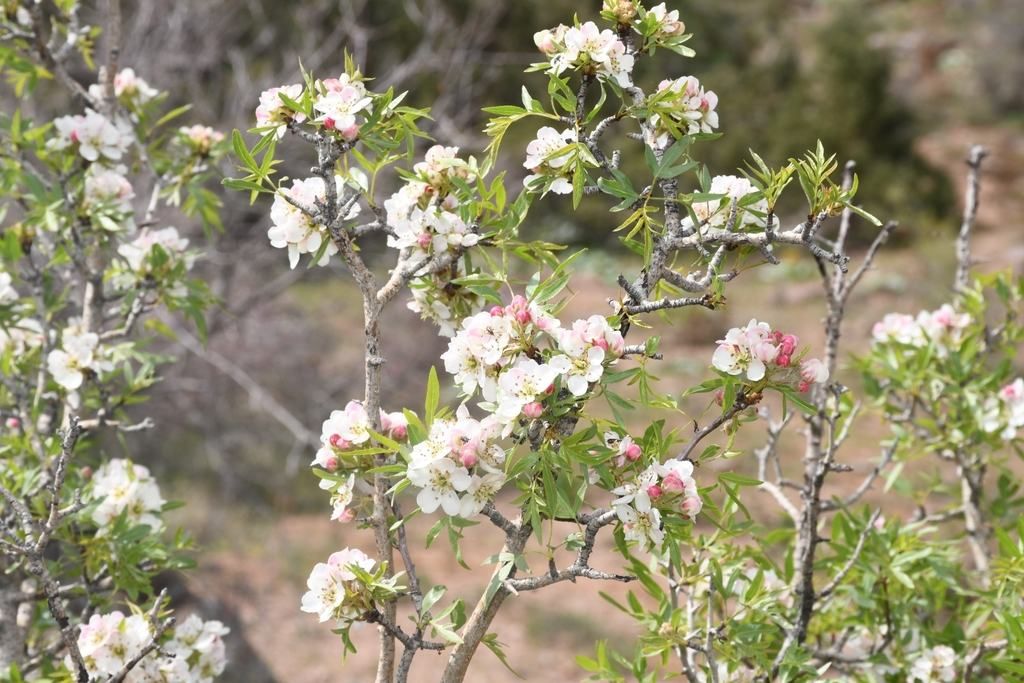
- Shrub or small tree to 10 m high, with widely spreading branches and abundant long slender spines; buds glabrous, acute, with remote, broadly triangular acuminate scales; shoots reddish brown, later gray; petioles glabrous, slender, conspicuously thickening at base, long, 2-6 cm; leaves quite.. glabrous, lustrous, light green, thin, to 8–9 cm long, pinnatisect, their sessile, more or less broadly lanceolate lobes parted or confluent, sometimes, in their turn, deeply pinnatisect, acutely serrate, acute, 2–5 cm long, 0.3— lcm broad; sometimes some or all leaves simple, more or less broadly lanceolate, 5–7 cm long, 1–2 cm broad; pedicels 2–3 cm long; corymbs many-flowered; flowers 2–2.5 cm in diameter; petals with a very short claw; calyx and receptacle lanate-pubescent, the pubescence more or less disappearing; fruiting sepals narrowly long-lanceolate, erect; fruits pyriform, sometimes flattened-globose, more or less pubescent below calyx, 2–3.5cm long and as broad. May. (Plate XXI, Figure 4). [Flora of the USSR (Tree of Life)]
- Habitat
- Fine-earth, gravelly, stony slopes, valley of river
- Altitudinal belts
- Low mountains, mid-mountains
- Phenology
- Flowering May, fruiting Sep–Oct
- Distribution
- Tian Shan, Pamir-Alai
- Uses
- forest amelioration / agroforestry, melliferous, ornamental
- Conservation
- IUCN LC