Species / Cupressaceae
Juniperus seravschanica
Cupressaceae · Tree · Uzbek: Zarafshon archasi, qizilarcha, qoraarcha; Russian: Можжевельник зеравшанский
Restoration use by landscape
West Tian Shan Research score 64 · rank 78 of 79 shortlisted · rank 257 of 1 194 scored
- Succession role
- Climax / long-term (canopy)
- Suited to
- Eroded slopes; Rocky slopes; Degraded juniper woodland
- Establishment
- seed with low viability and 2-3 yr dormancy; slow nursery cycle
- Why this category
- Strong: drought tolerance, seed; Weak: grazing tolerance, climate resilience, nursery propagation feasibility, restoration cost-effectiveness; in documented forestry/nursery use (D1); -> key data gaps (propagation, seed, conservation): research/ex-situ trials first
- Cautions
- protect from grazing for 3-5 yrs; propagation protocol to develop
- Local habitat
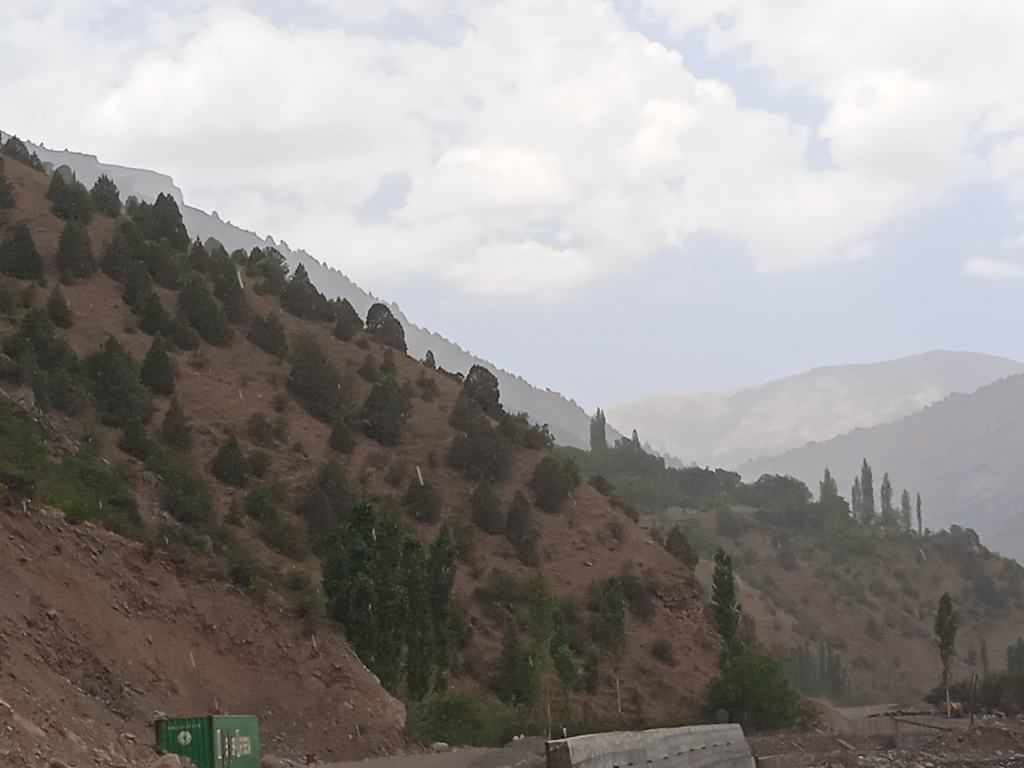
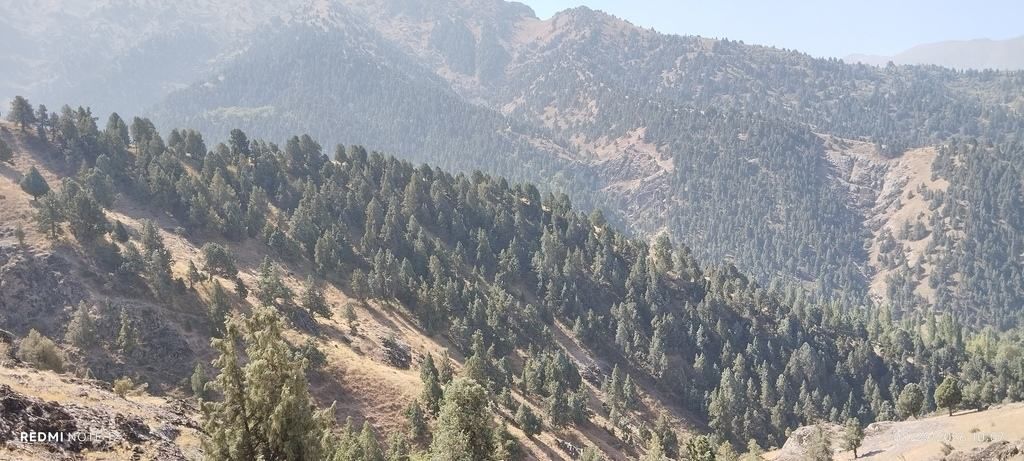
- Rocky areas, Grassland · Frequent
Criteria scores
Nuratau Research score 54 · rank 80 of 80 shortlisted · rank 423 of 640 scored
- Succession role
- Climax / long-term (canopy)
- Suited to
- Rocky slopes; Degraded juniper woodland
- Establishment
- seed with low viability and 2-3 yr dormancy; slow nursery cycle
- Why this category
- Weak: ecological suitability, grazing tolerance, climate resilience, nursery propagation feasibility, restoration cost-effectiveness; in documented forestry/nursery use (D1); -> key data gaps (propagation, seed, conservation): research/ex-situ trials first
- Cautions
- protect from grazing for 3-5 yrs; propagation protocol to develop
- Local habitat
- Forest, Shrubland, Rocky areas · Rare
Criteria scores
Kugitangtau Research score 64 · rank 96 of 100 shortlisted · rank 248 of 1 208 scored
- Succession role
- Climax / long-term (canopy)
- Suited to
- Eroded slopes; Rocky slopes; Degraded juniper woodland
- Establishment
- seed with low viability and 2-3 yr dormancy; slow nursery cycle
- Why this category
- Strong: drought tolerance, seed; Weak: grazing tolerance, climate resilience, nursery propagation feasibility, restoration cost-effectiveness; Red Data Book of Uzbekistan cat. 3; in documented forestry/nursery use (D1); G3 flag: nursery-raised material only; restricted wild collection; -> key data gaps (propagation, seed, conservation): research/ex-situ trials first
- Cautions
- protect from grazing for 3-5 yrs; propagation protocol to develop; use local provenance only; limit wild seed harvest
- Local habitat
- Grassland, Rocky areas · Frequent
Criteria scores
Propagation
seed with low viability and 2-3 yr dormancy; slow nursery cycle
Where it fits in the degradation matrix
- West Tian Shan: Degraded juniper woodland (long-term)
- Nuratau: Rocky slopes (long-term)
- Nuratau: Degraded juniper woodland (long-term)
- Kugitangtau: Eroded slopes (long-term)
- Kugitangtau: Rocky slopes (long-term)
- Kugitangtau: Degraded juniper woodland (long-term)
Planting combinations
- West Tian Shan: Degraded juniper woodland (mid and upper belts, ~1,500–2,800 m) (Phase 3)
- Nuratau: Juniper woodland (mid-mountains, above ~1,400 m) (Phase 3)
- Kugitangtau: Degraded juniper woodland (Kugitang and Baysuntau, above ~1,500 m) (Phase 3)
Planting material and suppliers
| Supplier | Material | Quantity | Price | Source |
|---|---|---|---|---|
| Smart Forestry platform (Qashqadaryo SFE) | Seedling | 37 000 UZS per piece | Table 7.4 |
Description
- Morphology
- Tree 5–10m tall, with reddish or reddish-gray bark; head dense; branchlets rather slender and relatively short, 1.5mm thick, slightly moniliform or not so, yellowish-green or glaucescent; leaves oblong, acute, with an oblong gland; fruits ca. 1.2 cm in diameter, subglobose, strongly pruinose, very hard, with a woody pericarpic layer; seeds BOW? 3, rarely 4, erect, flat or trigonous-ovaloid, 6–7.5mm long, the lateral ones (both when only 2) broad, convex and almost smooth on the back, the middle ones wedged in between them, longitudinally furrowed, or else all three seeds ovaloid, with an obtusish point; young seeds white, often distinctly marginate owing to two furrows; mature seeds dark-colored, sometimes with persistent lateral grooves and marginate. (Plate VIII, Figure 7). Forming juniper woods in lower and middle parts of the timber zone, in pure stands or mixed with J. semiglobosa. Centr. Asia: in Tadzhikistan and partly in Uzbekistan, northward to the N. slope of the Turkestan Range and the upper reaches of the Angren River, eastward to the W. [Flora of the USSR (Tree of Life)]
- Uses
- forest amelioration / agroforestry, essential oil, food, medicinal, technical
- Conservation
- IUCN LC; Red Data Book of Uzbekistan category 3