Species / Oleaceae
Fraxinus sogdiana
Oleaceae · Tree · Uzbek: Sug‘d qorashumtoli, shumtol; Russian: Ясень согдийский
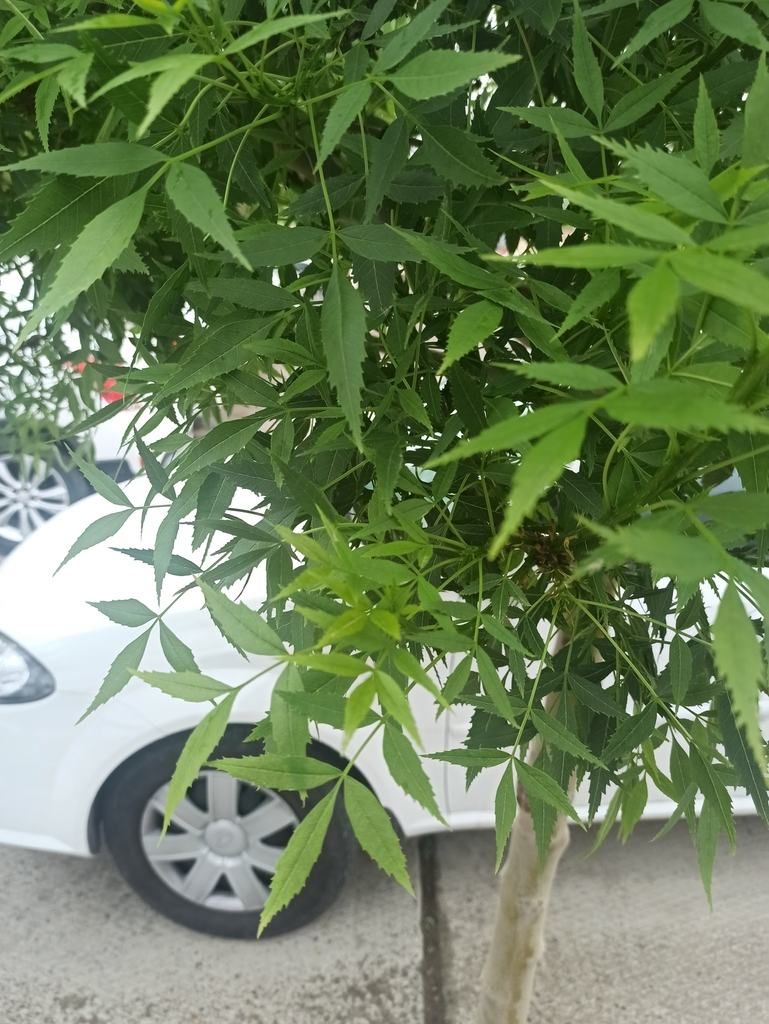
Restoration use by landscape
West Tian Shan Pilot score 70 · rank 70 of 79 shortlisted · rank 120 of 1 194 scored
- Succession role
- Climax / long-term (canopy)
- Suited to
- Eroded slopes; Gullies & drainage lines; Degraded walnut–fruit and broadleaf woodland (other)
- Establishment
- stratified seed; nursery seedlings
- Why this category
- Strong: seed; Weak: grazing tolerance; in documented forestry/nursery use (D1); -> promising but propagation/supply or field performance not proven at scale: pilot plots
- Cautions
- protect from grazing for 3-5 yrs
- Local habitat
- Grassland · Frequent
Criteria scores
Nuratau Pilot score 69 · rank 76 of 80 shortlisted · rank 118 of 640 scored
- Succession role
- Climax / long-term (canopy)
- Suited to
- Eroded slopes; Gullies & drainage lines
- Establishment
- stratified seed; nursery seedlings
- Why this category
- Strong: climate resilience; Weak: grazing tolerance; IUCN NT; in documented forestry/nursery use (D1); G3 flag: nursery-raised material only; restricted wild collection; -> promising but propagation/supply or field performance not proven at scale: pilot plots
- Cautions
- protect from grazing for 3-5 yrs; use local provenance only; limit wild seed harvest
- Local habitat
- Forest · Occasional
Criteria scores
Kugitangtau Pilot score 67 · rank 88 of 100 shortlisted · rank 169 of 1 208 scored
- Succession role
- Climax / long-term (canopy)
- Suited to
- Gullies & drainage lines; Riparian / sai (other); Degraded juniper woodland
- Establishment
- stratified seed; nursery seedlings
- Why this category
- Strong: climate resilience; Weak: drought tolerance, grazing tolerance; Red Data Book of Uzbekistan cat. 3; in documented forestry/nursery use (D1); G3 flag: nursery-raised material only; restricted wild collection; -> promising but propagation/supply or field performance not proven at scale: pilot plots
- Cautions
- needs moist sites; protect from grazing for 3-5 yrs; use local provenance only; limit wild seed harvest
- Local habitat
- Grassland, Wetlands (inland) · Occasional
Criteria scores
Propagation
stratified seed; nursery seedlings
Where it fits in the degradation matrix
- West Tian Shan: Eroded slopes (long-term)
- West Tian Shan: Degraded walnut–fruit and broadleaf woodland (other) (long-term)
- Nuratau: Eroded slopes (long-term)
- Kugitangtau: Gullies & drainage lines (long-term)
- Kugitangtau: Degraded juniper woodland (long-term)
- Kugitangtau: Riparian / sai (other) (long-term)
Planting combinations
- West Tian Shan: Degraded walnut–fruit and broadleaf woodland (northern slopes, valleys, ~1,000–2,000 m) (Phase 3)
- West Tian Shan: Gullies, sai and drainage lines (Akhangaran, Chirchik tributaries) (Phase 3)
Planting material and suppliers
No commercial offer found in November 2026: material has to come from wild seed collection or contracted propagation. See Nurseries & supply.
Description
- Morphology
- Tree up to 10 m tall with brown or reddish-brown, comparatively thin branches, dark-brown, shortly hairy buds. Leaves on fruiting twigs along 3 in whorls, on sterile – opposite, with 3–5(6) pairs leaflets with нисбегающей on petiolules of blade; petiolules 4–10 and more mm long.; leaflets glabrous, rounded, ovate, lanceolate or even narrow-lanceolate with irregularly-toothed and incised-toothed margins, with drawn out mucro, 2–5 cm long, 1–4 cm wide; rachis above flattened, weakly winged. Inflorescence lateral, leafless, short racemes emerge from axil of last year’s leaves. Flowers along 2–3 in whorls, without calyx and corolla. Stamen 2; samara narrow, lanceolate, with rounded or acute apex, 3–5 cm long and 0.5–0.8 cm wide, with persisting stigma. Nutlet smaller than samaras or equal 1 / 2 its length. [Flora of Uzbekistan (Tree of Life)]
- Habitat
- Fine-earth slopes, valley of river
- Altitudinal belts
- Plain, foothills, low mountains, mid-mountains
- Phenology
- Flowering and fruiting May–Aug
- Distribution
- Alakol depression, Balkhash deserts, valley of river Syr Darya, Amu Darya, Zeravshan, Tarbagatai, Dzungarian Alatau, Tian Shan, Pamir-Alai
- Uses
- forest amelioration / agroforestry, medicinal, ornamental, technical
- Conservation
- IUCN LC; Red Data Book of Uzbekistan category 3