Species / Oleaceae
Fraxinus raibocarpa
Oleaceae · Tree · Uzbek: egilganmeva qorashumtol; Russian: Ясень изогнутоплодный
Restoration use by landscape
Kugitangtau Research score 61 · rank 98 of 100 shortlisted · rank 350 of 1 208 scored
- Succession role
- Climax / long-term (canopy)
- Suited to
- Eroded slopes; Gullies & drainage lines; Riparian / sai (other); Degraded juniper woodland
- Establishment
- stratified seed; nursery seedlings
- Why this category
- Weak: grazing tolerance; -> key data gaps (propagation, seed, conservation): research/ex-situ trials first
- Cautions
- protect from grazing for 3-5 yrs
- Local habitat
- Rocky areas, Grassland, Wetlands (inland) · Occasional
Criteria scores
Propagation
stratified seed; nursery seedlings
Planting combinations
- Kugitangtau: Degraded juniper woodland (Kugitang and Baysuntau, above ~1,500 m) (Phase 3)
Planting material and suppliers
No commercial offer found in November 2026: material has to come from wild seed collection or contracted propagation. See Nurseries & supply.
Description
- Morphology
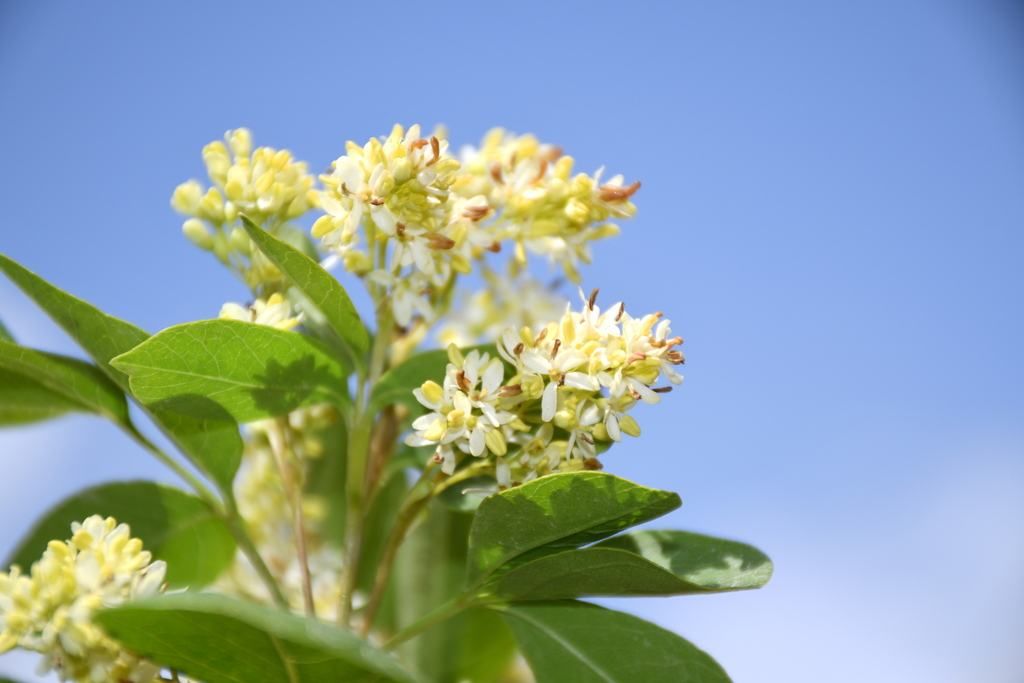
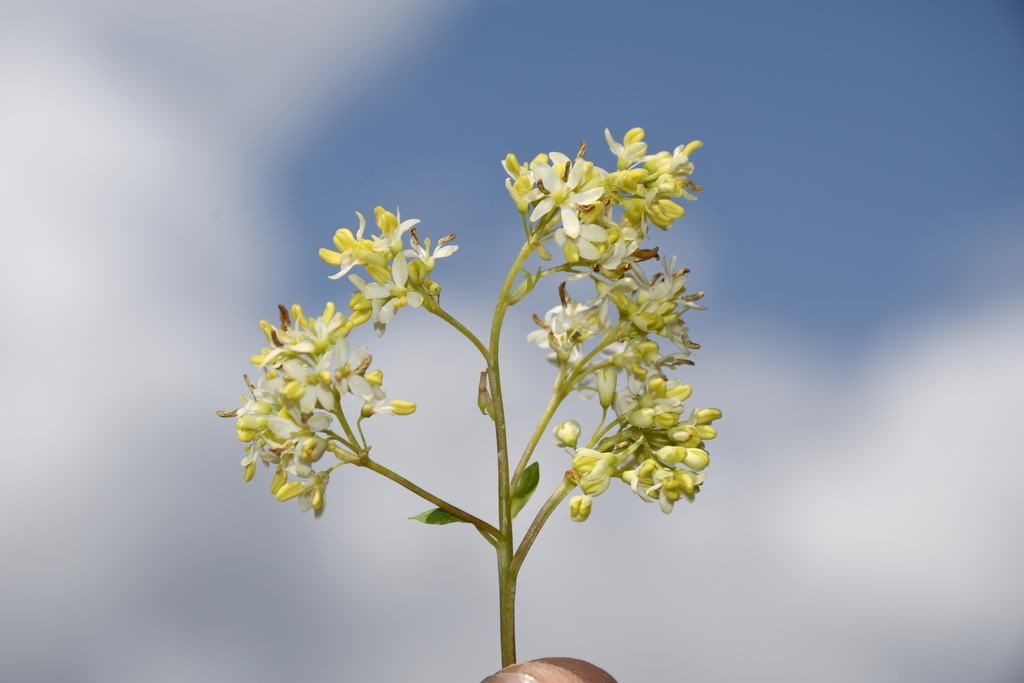
- Shrub. Leaves imparipinnate, with 1–2, rarely with 3 pairs leaflets, petiolate, 5–15 cm long, 4–10 cm wide; petiole flattened, above канальчатый, below convex; leaflets ovate or oblong-ovate, with petiolules 2–10 cm long, 1–5 cm wide, at the top blunted, more rarely acute or emarginate, upper pair almost sessile, lower – on small petiolules, terminal on long petiolule, entire, leathery, below with prominent net of vein, young below slightly hairy, above glabrous. Flowers appear after opening of leaves or simultaneously with them, bisexual. Panicle terminal, loose, branched, leafy, equal leaves or a little exceeds their. Calyx from 4 fused sepals, persisting in fruit. Corolla with tube, equal calyx, from 4 lanceolate petals 3 times longer than the calyx, deciduous. Fruit – sickle-shaped curved samara, at the top with broad, spathulate, entire, obtuse, rarely somewhat acute wing, 2.5–3 cm long, up to 1–1.4 cm wide. [Flora of Uzbekistan (Tree of Life)]
- Habitat
- Fine-earth, stony slopes, valley of river
- Altitudinal belts
- Low mountains, mid-mountains
- Phenology
- Flowering May–Jun, fruiting Jul–Jan
- Distribution
- Pamir-Alai (ranges Zarafshan, Hissar, Kugitang, Darvaz, Babatag, foothills of southern Tajikistan)
- Uses
- forest amelioration / agroforestry, ornamental, technical
- Conservation
- IUCN LC