Species / Poaceae
Agropyron cristatum
Poaceae · Perennial · Uzbek: taroq bug‘doyiq; Russian: Житняк гребенчатый
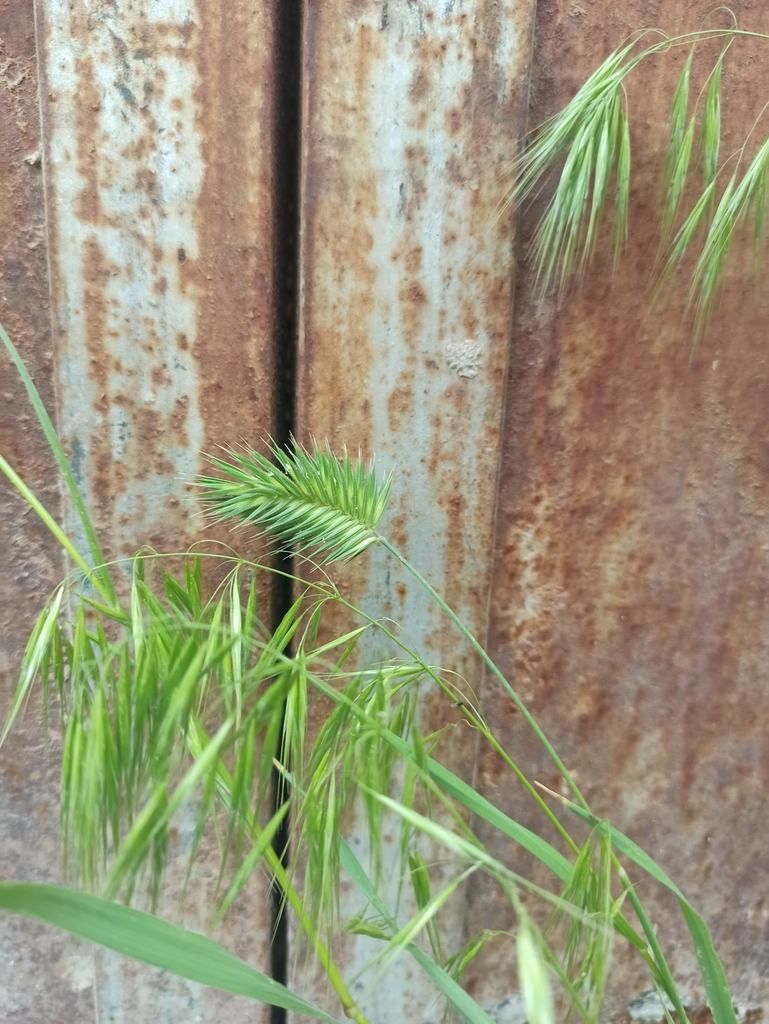
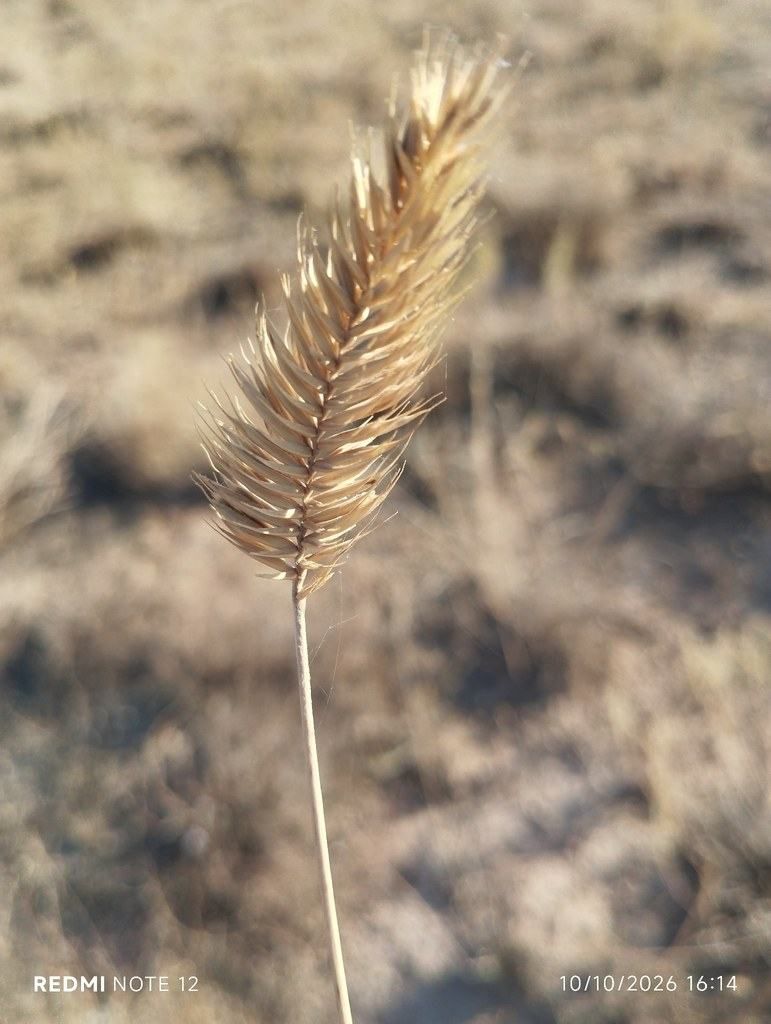
Restoration use by landscape
West Tian Shan Pilot score 78 · rank 8 of 79 shortlisted · rank 13 of 1 194 scored
- Succession role
- Pioneer (ground cover)
- Suited to
- Eroded slopes; Rocky slopes; Overgrazed rangelands; Degraded juniper woodland; Degraded pistachio–almond woodland
- Establishment
- direct seeding / drilling
- Why this category
- Strong: drought tolerance, restoration cost-effectiveness; Weak: biodiversity value; -> promising but propagation/supply or field performance not proven at scale: pilot plots
- Local habitat
- Rocky areas, Forest, Grassland, Artificial terrestrial · Occasional
Criteria scores
Nuratau Pilot score 72 · rank 61 of 80 shortlisted · rank 69 of 640 scored
- Succession role
- Pioneer (ground cover)
- Suited to
- Eroded slopes; Rocky slopes; Overgrazed rangelands; Degraded juniper woodland; Degraded pistachio–almond woodland
- Establishment
- direct seeding / drilling
- Why this category
- Strong: drought tolerance, climate resilience, restoration cost-effectiveness; Weak: ecological suitability, biodiversity value, seed; -> promising but propagation/supply or field performance not proven at scale: pilot plots
- Local habitat
- Shrubland, Grassland, Rocky areas · Rare
Criteria scores
Propagation
direct seeding / drilling
Where it fits in the degradation matrix
- West Tian Shan: Eroded slopes (pioneer)
- West Tian Shan: Rocky slopes (pioneer)
- West Tian Shan: Overgrazed rangelands (pioneer)
- West Tian Shan: Degraded juniper woodland (pioneer)
- West Tian Shan: Degraded pistachio–almond woodland (pioneer)
Planting combinations
- West Tian Shan: Degraded pistachio–almond woodland (Kurama and Chatkal foothills, ~700–1,400 m) (Phase 1)
- West Tian Shan: Overgrazed rangeland (foothill and low-mountain pasture) (Phase 1)
- West Tian Shan: Eroded and landslide-prone slopes (Akhangaran mining and road cuts, steep loess slopes) (Phase 1)
Planting material and suppliers
No commercial offer found in November 2026: material has to come from wild seed collection or contracted propagation. See Nurseries & supply.
Rangeland use
- Grazing tolerance
- High. Tolerates close grazing and trampling
- Forage value
- High. Spring and early summer; hay
- Recovery
- Medium to high. Tillers strongly and seeds readily
- Management
- Component of sown mixes once a local seed source is secured
Description
- Morphology
- Perennial. Culms 25-60 (75) cm tall, usually puberulent, more rarely glabrous, below the spikes; sheaths of lower leaves densely hairy or glabrous; leaves narrowly linear, involute or flat, with inrolled margins, (1.5) 2-5 mm broad (very rarely broader, to 9 mm), glabrous underneath, rather hairy on the upper surface. Spikes very dense, without distinct gaps between spikelets, oblong-ovoid, lobed, usually very slightly narrowed toward the top, 1.5-5 (6) cm long and 1-2 (2.3) cm broad, crested, the rachis puberulent; spikelets grayish-green or rather tinged with purple, closely appressed, 3-10-floweredi villous, 0.8-1.5 cm long; glumes ovate-lanceolate, 0.3-0.5 cm long, (without awn), abruptly narrowed into awn 2-3 mm long, asymmetrical, long-ciliate on the keel; lemmas lanceolate, 0.5-0. 7cm long, with scabrous awn 1.75-2.5 (4) long; palea bidentate mm at the summit, ciliate or long-ciliate on the keels; anthers considerably exceeding half the length of the palea, 4 mm long. June- July. (Plate XLVIIa, Figure 5, a-e). [Flora of the USSR (Tree of Life)]
- Habitat
- Loess, fine-earth, gravelly, stony slopes
- Altitudinal belts
- Plain, foothills, low mountains, mid-mountains
- Phenology
- Flowering Jun–Jul (Flora of the USSR)
- Distribution
- Betpakdala, Kazakhstan small hills, Balkhash region, valley of river or, Tarbagatai, Dzungarian Alatau, Tian Shan, Pamir-Alai (northern and eastern), Kopet Dag
- Uses
- forage, ornamental
- Conservation
- IUCN NE