Species / Lamiaceae
Ziziphora clinopodioides
Lamiaceae · Subshrub · Uzbek: xidli kiyiko‘t; Russian: Зизифора пахучковидная
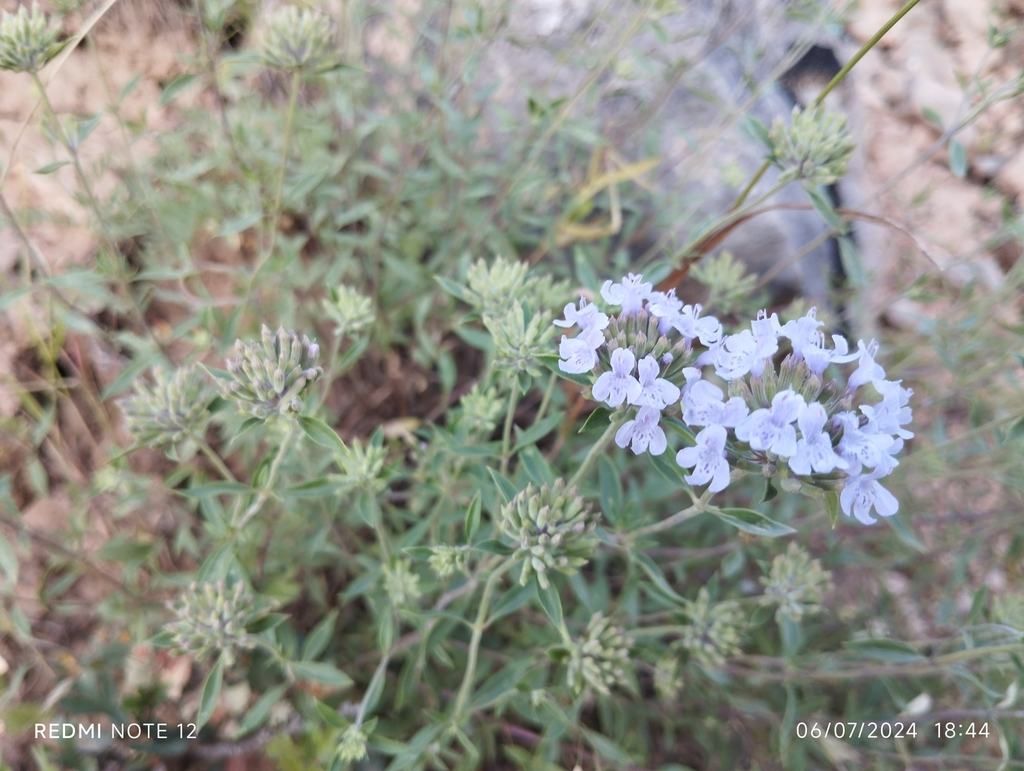
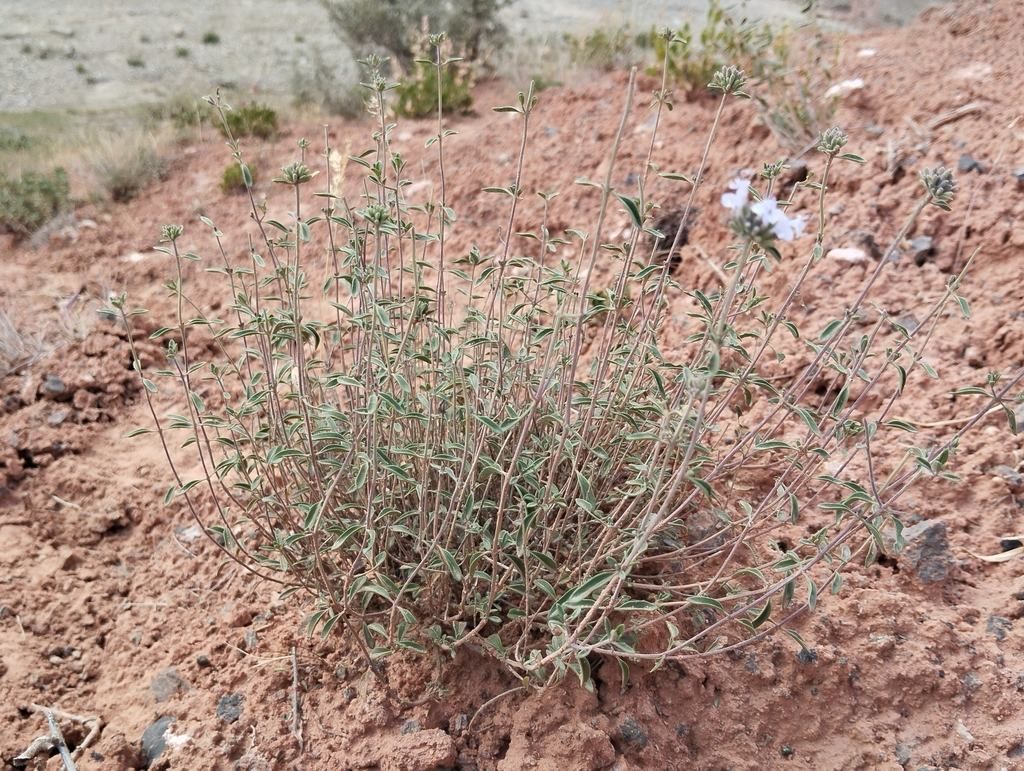
Restoration use by landscape
Nuratau Pilot score 75 · rank 38 of 80 shortlisted · rank 43 of 640 scored
- Succession role
- Pioneer (ground cover)
- Suited to
- Eroded slopes; Degraded juniper woodland
- Establishment
- seed or cuttings
- Why this category
- Strong: ecological suitability, climate resilience; Weak: grazing tolerance; -> promising but propagation/supply or field performance not proven at scale: pilot plots
- Cautions
- protect from grazing for 3-5 yrs
- Local habitat
- Shrubland, Grassland, Rocky areas · Abundant
Criteria scores
Propagation
seed or cuttings
Planting material and suppliers
No commercial offer found in November 2026: material has to come from wild seed collection or contracted propagation. See Nurseries & supply.
Description
- Morphology
- An aromatic subshrub; rhizome stout, woody, branched; stems numerous, 8–40 cm long, usually erect or rarely somewhat ascending, simple or slightly branched at base, usually more or less flexuous, hairy, the hairs short and recurved more numerous and spreading near inflorescence; leaves 6–25 mm in lower part, long, 3–12 mm broad, broadly elliptical, ovate or oblong-ovate, narrowed at base to petiole, short-acuminate at apex, entire or obscurely and remotely toothed, glandular-punctate, sparsely puberulent (mainly on the veins beneath) or mostly subglabrous, usually with 4 veins each side of midrib, slightly prominent beneath, the petiole one-fifth to one-quarter the length of blade, to 5 mm long, short-haired; floral leaves resembUng the cauline but smaller, ciliate in lower part, the lower often reflexed; inflorescences at ends of stems, capitate, subspherical, compact, 1.5–3 cm in diameter; calyx 5–7 mm long, covered outside with rather short spreading hairs (these not exceeding half the calyx diameter), mostly rubescent on one side or sometimes dark purple all over, the teeth acute. [Flora of the USSR (Tree of Life)]
- Habitat
- Stony and gravelly slopes, rocks, screes, conglomerates, riverbanks, pebble beds
- Altitudinal belts
- Foothills, low mountains, mid-mountains, high mountains
- Phenology
- Flowering Jun–Aug (Flora of the USSR)
- Distribution
- Zaisan Basin, Turgai Depression, Alakol Depression, Balkhash deserts, Syr Darya valley, Trans-Karatau Plain, Tashkent chuls, Fergana Valley, Surkhan-Sherabad Valley, Saur, Tarbagatai, Dzungarian Alatau, Tian Shan (Chu-Ili Mountains, Trans-Ili Alatau, Kungey Alatau, Terskey Alatau and Ketmentau ranges, Issyk-Kul Basin, Kyrgyz Alatau, Talas Alatau and Ichkeletau ranges, mountains along the middle course of the Naryn River, Karatau, Susamyrtau, Karzhantau, Ugam, Pskem, Chatkal, Kurama, Fergana, Uzun-Akhmat, Atoynak and Mogoltau ranges), Pamir-Alai (Alai, Trans-Alai, Turkestan, Nuratau, Zeravshan, Hissar, Karategin, Vakhsh, Peter the First, Khazratishoh, Darvaz, Babatag and Kugitang ranges, Alai Valley, low mountains of Southern Tajikistan), Kopet Dag
- Uses
- essential oil, food, medicinal, melliferous
- Conservation
- IUCN NE