Species / Tamaricaceae
Tamarix ramosissima
Tamaricaceae · Shrub · Uzbek: sershox yulg‘un; Russian: Гребенщик многоветвистый
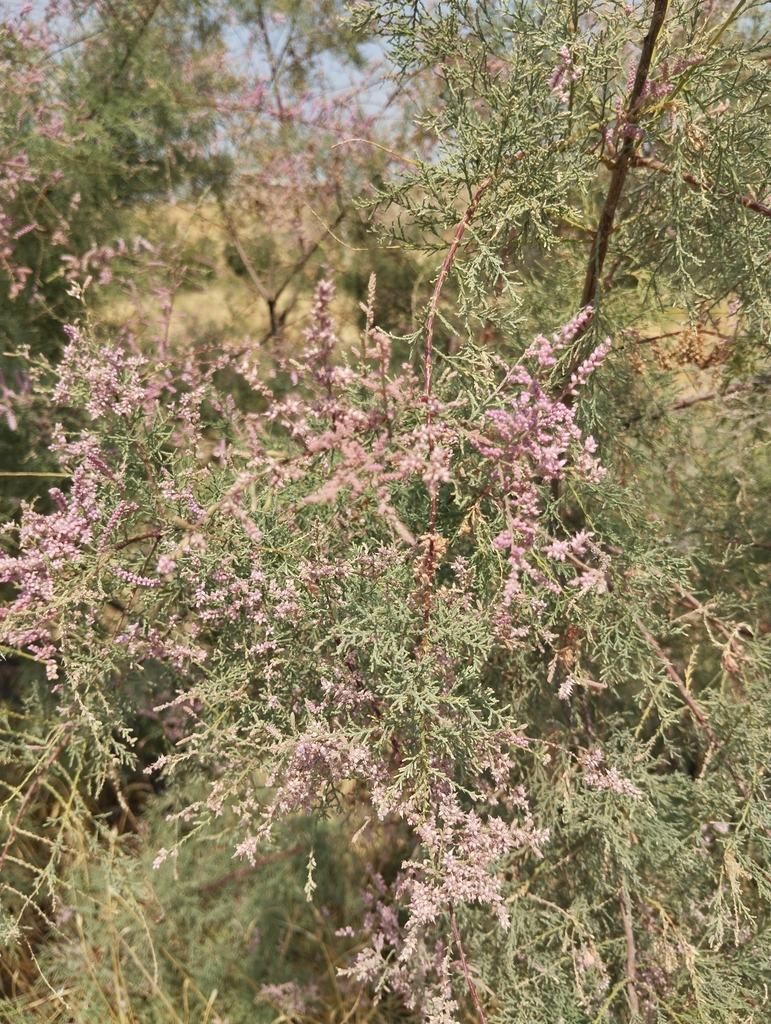
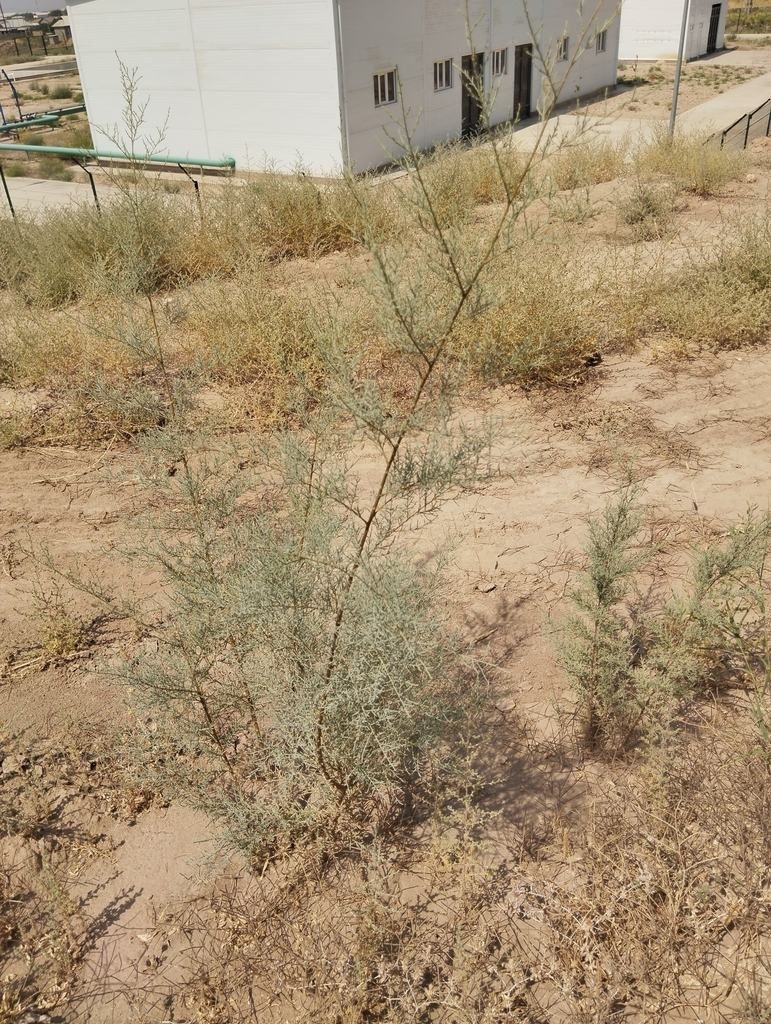
Restoration use by landscape
Kugitangtau Immediate score 81 · rank 11 of 100 shortlisted · rank 11 of 1 208 scored
- Succession role
- Pioneer (riparian stabiliser)
- Suited to
- Gullies & drainage lines; Riparian / sai (other)
- Establishment
- hardwood cuttings / poles
- Why this category
- Strong: erosion control potential, climate resilience, nursery propagation feasibility, restoration cost-effectiveness; Weak: drought tolerance, grazing tolerance; -> routine propagation and available material: use now
- Cautions
- needs moist sites; protect from grazing for 3-5 yrs
- Local habitat
- Artificial terrestrial, Desert, Grassland, Wetlands (inland) · Frequent
Criteria scores
Propagation
hardwood cuttings / poles
Where it fits in the degradation matrix
- Kugitangtau: Gullies & drainage lines (pioneer)
- Kugitangtau: Riparian / sai (other) (pioneer)
Planting material and suppliers
Cuttings or seed to be collected from local stands. No supplier found Action: Collect cuttings in winter 2026–2027 on the same river system
Description
- Morphology
- Shrub or small tree, 1–3 m high, with reddish bark; leaves ovate or deltoid-cordate, 2–5 mm long, 1–2 mm broad, acute, semiamplexicaul; racemes 3–5 cm long, 3–5 mm broad, or elongated, 6–8 cm long (var. ode s - Sana (Bge.) Schm.). or abbreviated, 0.5–1.5 cm long, 3–4 mm broad (var. brachysta chy s Bge.), on peduncles 0.2–1 cm long, in diffuse or fairly dense panicles; bracts ovate -oblong or lanceolate, 1.5–2 mm long, acute or more or less elongated, linear-subulate (var. odessana (Bge.) Schm.), 1.5–2.8 mm long, exceeding calyx (including pedicel); pedicels 0.5–0.7 mm long, shorter than calyx; flowers 5-merous; calyx 0.7–1mm long; sepals ovate, 0.5–0.7 mm long, 0.3–0.5 mm broad, more or less acuminate, narrowly scarious-margined; petals obovate, pink, scarlet, violet or white (var. [Flora of the USSR (Tree of Life)]
- Habitat
- Banks of water bodies, saline places, solonchaks, wastelands, fallows
- Altitudinal belts
- Plain, foothills, low mountains
- Phenology
- Flowering May
- Distribution
- Throughout Central Asia
- Uses
- forest amelioration / agroforestry, dye, melliferous, ornamental
- Conservation
- IUCN LC