Species / Salicaceae
Salix wilhelmsiana
Salicaceae · Shrub · Uzbek: Vilgelm toli; Russian: Ива Вильгельмса
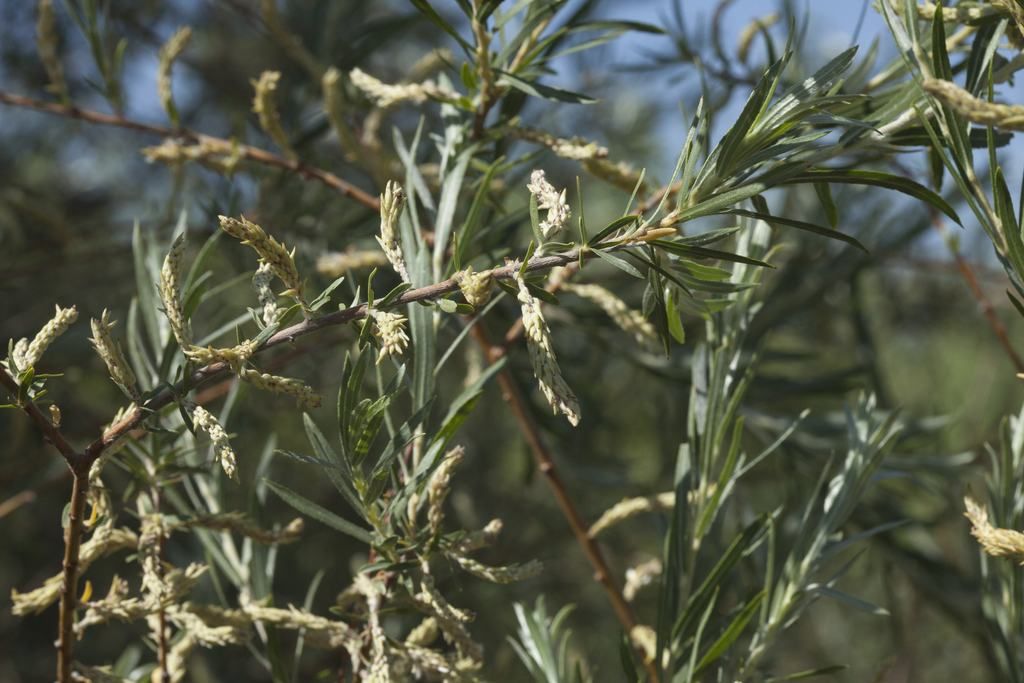
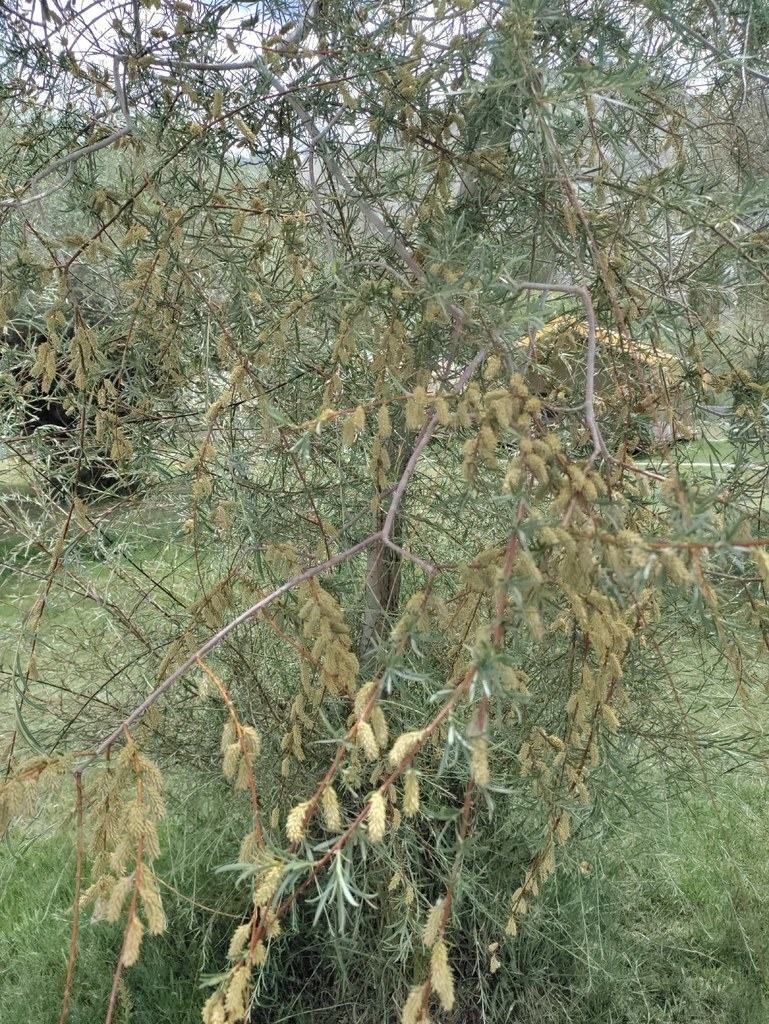
Restoration use by landscape
Nuratau Immediate score 73 · rank 58 of 80 shortlisted · rank 66 of 640 scored
- Succession role
- Pioneer (riparian stabiliser)
- Suited to
- Gullies & drainage lines; Riparian / sai (other)
- Establishment
- hardwood cuttings / poles
- Why this category
- Strong: erosion control potential, climate resilience, nursery propagation feasibility, restoration cost-effectiveness; Weak: ecological suitability, drought tolerance, grazing tolerance; in documented forestry/nursery use (D1); -> routine propagation and available material: use now
- Cautions
- needs moist sites; protect from grazing for 3-5 yrs
- Local habitat
- Forest, Wetlands (inland)
Criteria scores
Kugitangtau Immediate score 75 · rank 38 of 100 shortlisted · rank 46 of 1 208 scored
- Succession role
- Pioneer (riparian stabiliser)
- Suited to
- Gullies & drainage lines; Riparian / sai (other)
- Establishment
- hardwood cuttings / poles
- Why this category
- Strong: erosion control potential, climate resilience, nursery propagation feasibility, restoration cost-effectiveness; Weak: ecological suitability, drought tolerance, grazing tolerance; in documented forestry/nursery use (D1); -> routine propagation and available material: use now
- Cautions
- needs moist sites; protect from grazing for 3-5 yrs
- Local habitat
- Desert, Wetlands (inland) · Occasional
Criteria scores
Propagation
hardwood cuttings / poles
Where it fits in the degradation matrix
- Nuratau: Riparian / sai (other) (pioneer)
- Kugitangtau: Riparian / sai (other) (pioneer)
Planting combinations
- Nuratau: Gullies, sai and drainage lines (Phase 2)
Planting material and suppliers
Available for procurement now. Tashkent Botanical Garden: 1,000 seedlings at 16,000–55,000 UZS; cuttings at 10,000 UZS (Table 7.6) Action: Cuttings from local stands are preferred on restoration sites
| Supplier | Material | Quantity | Price | Source |
|---|---|---|---|---|
| Tashkent Botanical Garden | seedlings 1 000 pcs at 16 000–55 000 UZS; cuttings at 10 000 UZS | stock 17 Sep 2026, prices to 31 Dec 2026 | Table 7.6 |
Description
- Morphology
- A shrub or small tree to 6–7 m high; branches very slender, long, virgate, rather wide apart along the stem and on its lower part, arising at nearly a right angle or suspended; branches and branchlets grayish-brown, pubescent or silky-pilose, rarely glabrate; buds ovoid, obtuse, at the tip pubescent; stipules none; petioles 1–2 mm long, dilated at base, glabrous or pubescent; leaves closely approximate; blades sublinear or narrowly linear -lanceolate, narrowed at both ends, entire or rarely glandular -serrulate, 2–6 cm long and 0.4–0.8 cm broad, at first densely and later sparsely silky -pilose and lustrous on both sides, finally often glabrous above; midrib prominent beneath; lateral veins less evident, at an angle of 10–15°; catkins closely covering the branches of the preceding year; staminate subsessile; pistillate borne on a short stalk, subtended by 2–5 small silky bracts, in flower 2–3 cm long, cylindric, slender, upright, dense, in fruit to 0.8 cm thick, subcoaetaneous or serotinous; scales ovate, flat or the staminate navicular, mostly subacute, lurid or greenish-yellow, at . [Flora of the USSR (Tree of Life)]
- Habitat
- Bank of river, sandy alluvia, pebble beds
- Altitudinal belts
- Plain, foothills, low mountains, mid-mountains, high mountains
- Phenology
- Flowering Jun (Flora of the USSR)
- Distribution
- Balkhash deserts, Muyunkum, lower reaches of river Amu Darya, valley. River Syr Darya, Dzungarian Alatau (excluding districts eastern river Lepsa), Tian Shan, Pamir-Alai
- Uses
- forest amelioration / agroforestry, melliferous, ornamental, tannin, technical
- Conservation
- IUCN LC