Restoration use by landscape
West Tian Shan Immediate score 76 · rank 25 of 79 shortlisted · rank 33 of 1 194 scored
- Succession role
- Pioneer (riparian stabiliser)
- Suited to
- Gullies & drainage lines; Riparian / sai (other)
- Establishment
- hardwood cuttings / poles
- Why this category
- Strong: climate resilience, nursery propagation feasibility, restoration cost-effectiveness; Weak: drought tolerance, grazing tolerance; -> routine propagation and available material: use now
- Cautions
- needs moist sites; protect from grazing for 3-5 yrs
- Local habitat
- Forest, Wetlands (inland) · Frequent
Criteria scores
Nuratau Immediate score 74 · rank 46 of 80 shortlisted · rank 52 of 640 scored
- Succession role
- Pioneer (riparian stabiliser)
- Suited to
- Gullies & drainage lines; Riparian / sai (other)
- Establishment
- hardwood cuttings / poles
- Why this category
- Strong: nursery propagation feasibility, restoration cost-effectiveness; Weak: drought tolerance, grazing tolerance; -> routine propagation and available material: use now
- Cautions
- needs moist sites; protect from grazing for 3-5 yrs
- Local habitat
- Forest, Wetlands (inland), Artificial aquatic · Frequent
Criteria scores
Propagation
hardwood cuttings / poles
Where it fits in the degradation matrix
- West Tian Shan: Riparian / sai (other) (pioneer)
- Nuratau: Gullies & drainage lines (pioneer)
- Nuratau: Riparian / sai (other) (pioneer)
Planting combinations
- West Tian Shan: Gullies, sai and drainage lines (Akhangaran, Chirchik tributaries) (Phase 3)
- Nuratau: Gullies, sai and drainage lines (Phase 3)
Planting material and suppliers
Cuttings to be collected from local stands. No purchase needed. Platform price for S. alba seedlings 14,000 UZS (Table 7.4) Action: Mark local donor trees in autumn 2026; cut and plant poles in early spring 2027
Description
- Morphology
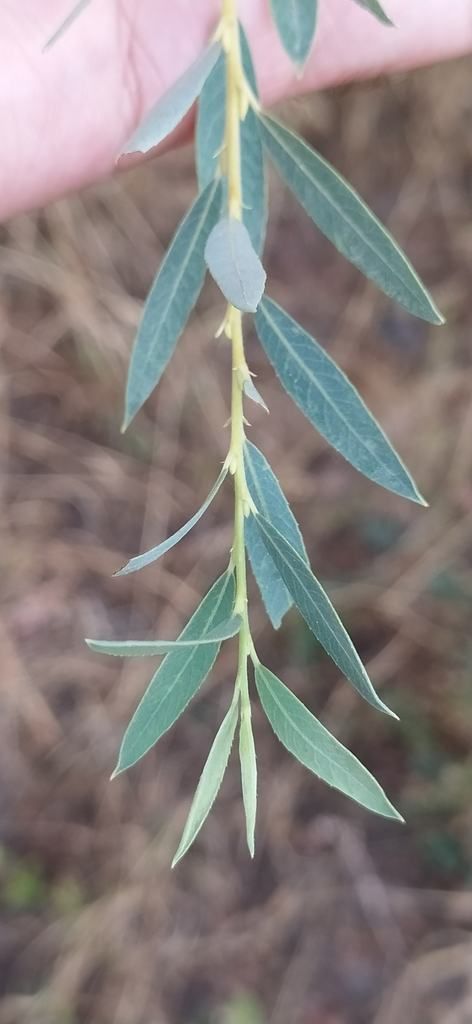
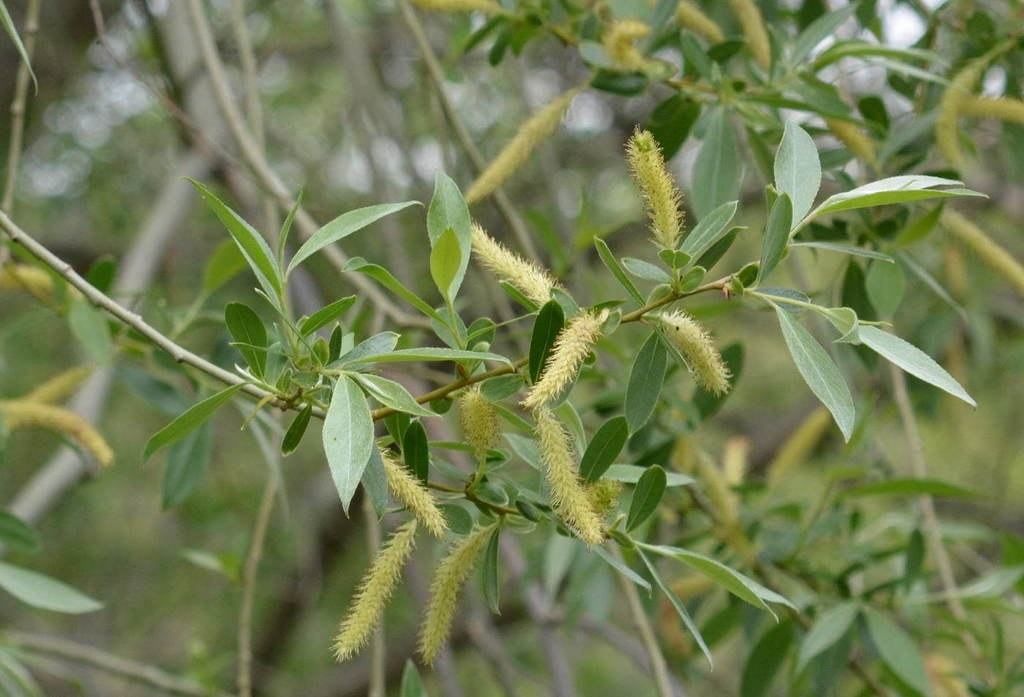
- A tall tree; annotinous branches brown or yellowish, glabrous, slightly lustrous, when young glabrous or sparsely covered with fugacious pubescence; buds at first pubescent, becoming glabrous; petioles 3–4 mm long, glabrous; stipules none; leaves initially whitish-silvery, finally glabrate, lanceolate, 5–8.5 cm long and 1.3–2 cm broad, narrowed toward base, long-tapering toward the apiculate apex, glandular -serrate on the margin, green and glabrous on both sides; midrib stramineous; lateral veins 11 or 12 pairs; leaves on lower shoots and on peduncles obovate, narrowed toward base, almost rounded at apex and short -apiculate, entire, glabrous on both sides or silky beneath; pistillate catkins 1.5–3cm long, ca. 0.5 cm thick, elongating in fruit to 4 cm, cylindric, dense, coaetaneous; staminate 3–4.5 cm long and ca. 1 cm thick, borne on a stalk with 3 or 4 leafy bracts; brachis hairy; scales yellowish; staminate ovate, refuse; pistillate large, obovate, obtusish, erose at apex; all scales pubescent at base, glabrous on the back; stamens 2, distinct, hairy at base, ca. [Flora of the USSR (Tree of Life)]
- Phenology
- Flowering May (Flora of the USSR)
- Uses
- forest amelioration / agroforestry, melliferous, ornamental
- Conservation
- IUCN LC