Species / Salicaceae
Populus alba
Salicaceae · Tree · Uzbek: oq terak, ko‘k terak; Russian: Тополь белый
Restoration use by landscape
West Tian Shan Immediate score 78 · rank 13 of 79 shortlisted · rank 18 of 1 194 scored
- Succession role
- Pioneer (riparian stabiliser)
- Suited to
- Gullies & drainage lines; Riparian / sai (other)
- Establishment
- hardwood cuttings / poles
- Why this category
- Strong: climate resilience, seed, nursery propagation feasibility, restoration cost-effectiveness; Weak: drought tolerance, grazing tolerance; in documented forestry/nursery use (D1); -> routine propagation and available material: use now
- Cautions
- needs moist sites; protect from grazing for 3-5 yrs
- Local habitat
- Forest, Wetlands (inland) · Frequent
Criteria scores
Nuratau Immediate score 73 · rank 57 of 80 shortlisted · rank 65 of 640 scored
- Succession role
- Pioneer (riparian stabiliser)
- Suited to
- Gullies & drainage lines; Riparian / sai (other)
- Establishment
- hardwood cuttings / poles
- Why this category
- Strong: climate resilience, nursery propagation feasibility, restoration cost-effectiveness; Weak: drought tolerance, grazing tolerance; in documented forestry/nursery use (D1); -> routine propagation and available material: use now
- Cautions
- needs moist sites; protect from grazing for 3-5 yrs
- Local habitat
- Forest, Wetlands (inland), Artificial aquatic, Artificial terrestrial · Occasional
Criteria scores
Kugitangtau Immediate score 75 · rank 37 of 100 shortlisted · rank 45 of 1 208 scored
- Succession role
- Pioneer (riparian stabiliser)
- Suited to
- Gullies & drainage lines; Riparian / sai (other)
- Establishment
- hardwood cuttings / poles
- Why this category
- Strong: climate resilience, nursery propagation feasibility, restoration cost-effectiveness; Weak: drought tolerance, grazing tolerance; Red Data Book of Uzbekistan cat. 2; in documented forestry/nursery use (D1); G3 flag: nursery-raised material only; restricted wild collection; -> routine propagation and available material: use now
- Cautions
- needs moist sites; protect from grazing for 3-5 yrs; use local provenance only; limit wild seed harvest
- Local habitat
- Grassland, Desert, Wetlands (inland) · Occasional
Criteria scores
Propagation
hardwood cuttings / poles
Where it fits in the degradation matrix
- West Tian Shan: Gullies & drainage lines (pioneer)
- West Tian Shan: Riparian / sai (other) (pioneer)
- Nuratau: Riparian / sai (other) (pioneer)
- Kugitangtau: Gullies & drainage lines (pioneer)
- Kugitangtau: Riparian / sai (other) (pioneer)
Planting combinations
- West Tian Shan: Gullies, sai and drainage lines (Akhangaran, Chirchik tributaries) (Phase 3)
- Nuratau: Gullies, sai and drainage lines (Phase 3)
- Kugitangtau: Gullies, sai and Sherabad river margins (Phase 3)
Description
- Morphology
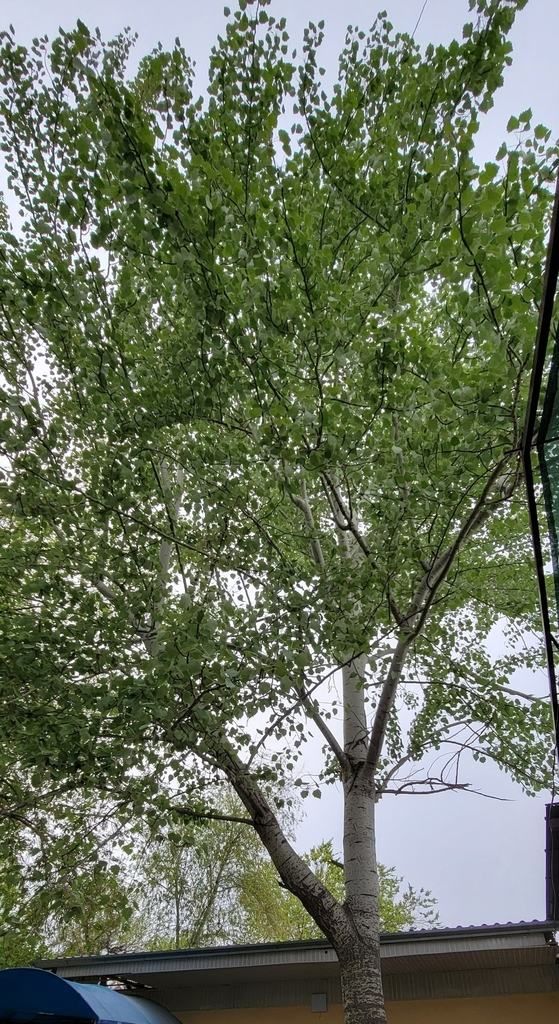
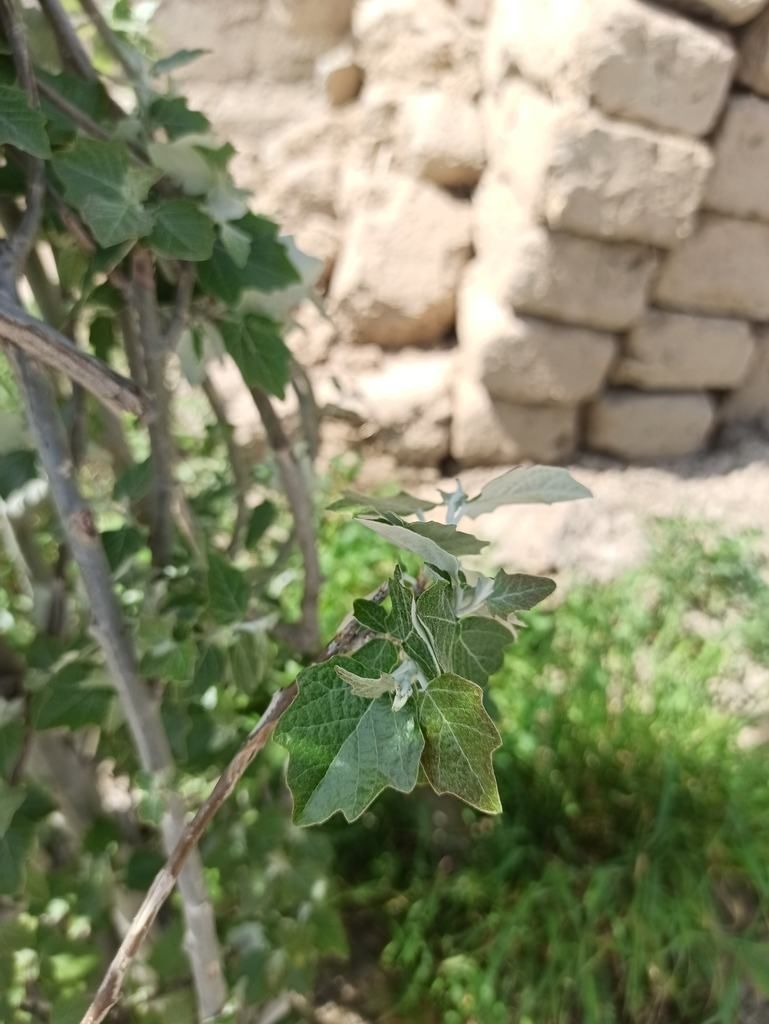
- A tree 18–35 high, with a wide head; bark very light-colored, m smooth when young; that of old trees greenish-gray, shallowly fissured; young branches white -tomentose; winter buds pubescent, rarely glabrous with ciliate margins; leaves of shoots deltoid, straight at base, with 2 very small lobes at the angles, toothed above, the lower surface white, with profuse flocculent pubescence; leaves of branches orbicular, slightly truncate at base, sharp-toothed, very irregular, the gray flocculent pubescence persistent till fall; staminate catkins stout, 3–7 cm long; scales ferruginous, elliptic to cuneate -elliptic, irregularly toothed or subentire, moderately villous ciliate; stamens 6–8 (3–30); anthers initially light purple, becoming yellow; fruiting catkins 10–12 cm long, the rachis sparingly covered with soft hairs; ovary oblong-conical, short-stipitate; disk membranous, oblique; stigmas 2, pinkish-red, the narrow lobes cruciately spreading; capsule glabrous. March — May (flowers appearing with the leaves). [Flora of the USSR (Tree of Life)]
- Habitat
- Valley of river, bank of irrigation ditches
- Altitudinal belts
- Plain, foothills, low mountains
- Distribution
- Throughout Central Asia
- Uses
- forest amelioration / agroforestry, medicinal, melliferous, ornamental, tannin, technical
- Conservation
- IUCN LC; Red Data Book of Uzbekistan category 2