Species / Lamiaceae
Phlomis thapsoides
Lamiaceae · Perennial · Uzbek: sigirquyruqkabi qo‘ziquloq; Russian: Зопник коровяковидный
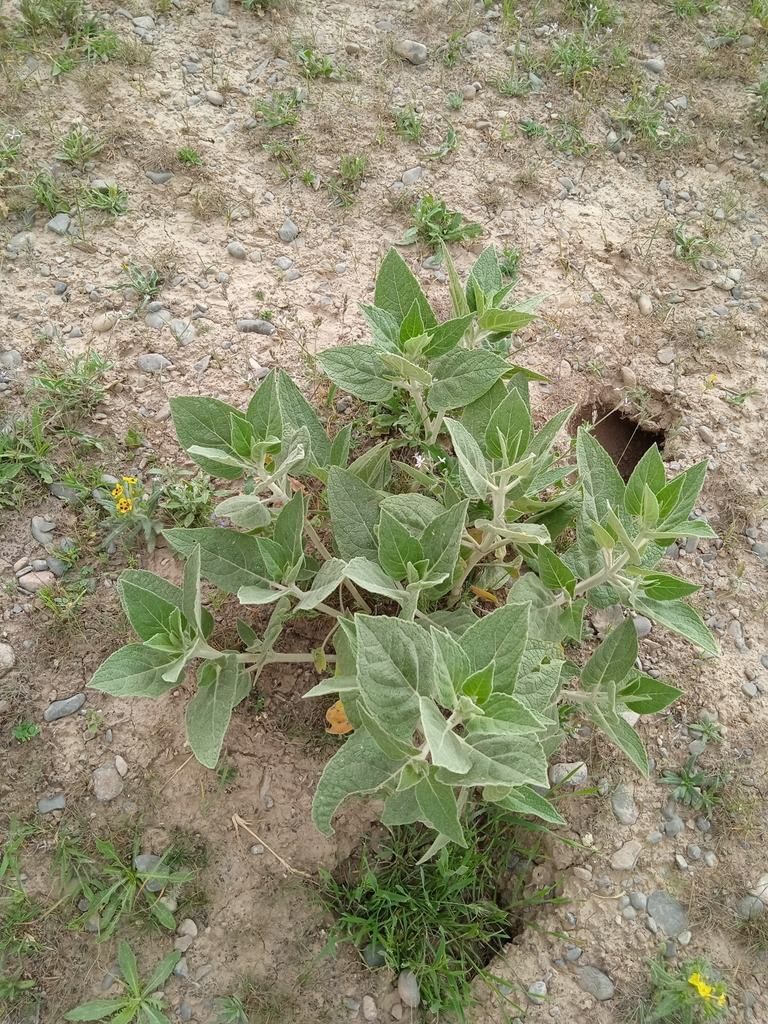
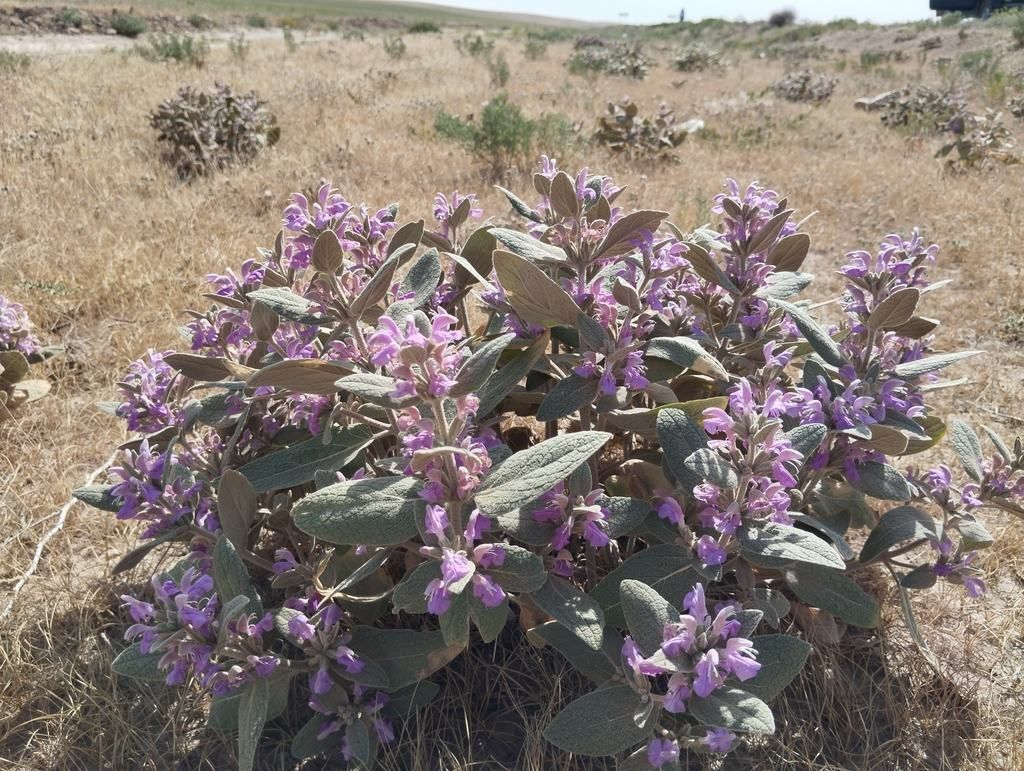
Restoration use by landscape
Nuratau Pilot score 74 · rank 48 of 80 shortlisted · rank 54 of 640 scored
- Succession role
- Pioneer / companion (forb)
- Suited to
- Rocky slopes; Overgrazed rangelands; Degraded pistachio–almond woodland
- Establishment
- seed or cuttings
- Why this category
- Strong: ecological suitability, drought tolerance; Weak: biodiversity value; -> promising but propagation/supply or field performance not proven at scale: pilot plots
- Local habitat
- Desert, Shrubland, Grassland, Rocky areas · Abundant
Criteria scores
Propagation
seed or cuttings
Planting material and suppliers
No commercial offer found in November 2026: material has to come from wild seed collection or contracted propagation. See Nurseries & supply.
Description
- Morphology
- Perennial, 30–60 cm high; stems stout, erect, strongly branched in upper part, floccose-pubescent with stellate hairs; cauhne leaves cordate-ovate, coarsely dentate, acuminate, 7–12cm long and 3–6 cm broad; floral leaves compound, entire, 5–7 cm long and 3-3.5 cm broad, the uppermost 2.5–3 cm long and 1.5 cm broad, the upper side light green, rugose, scabrous, sparsely hairy, the lower side prominently veined, white with closely appressed monoradial hairs; petioles of cauline leaves 1.5–4 cm long, mm long; inflorescence of 5 or 6 subdistant 2–8-flowered those of floral leaves 5–8 14–18 mm long, whorls; bracts connate at base in 2's, rarely in 3's, thick, acuminate, equahng the calyx; calyx 10–16 mm long, densely covered with hairs as on bracts, the teeth equal, acuminate; brevisubulata M. Pop. (in herb.) calyx 11–12mm in var. [Flora of the USSR (Tree of Life)]
- Habitat
- Foothill plains, loess, fine-earth, gravelly, stony slopes, outcrops of variegated rocks
- Altitudinal belts
- Plain, foothills, low mountains
- Phenology
- Flowering Jun–Jul, fruiting Jul–Aug
- Distribution
- Pamir-Alai (ranges Malguzar, Turkestan -western part, Nuratau -mountains Khobduntau and Karakchitau, range Zarafshan, Zirabulak-ziadin mountains, ranges Hissar, Kugitang, Babatag)
- Uses
- dye, essential oil, forage, melliferous
- Conservation
- IUCN NE