Species / Rosaceae
Malus sieversii
Rosaceae · Tree · Uzbek: Sivers olmasi, yovvoyi olma; Russian: Яблоня Сиверса
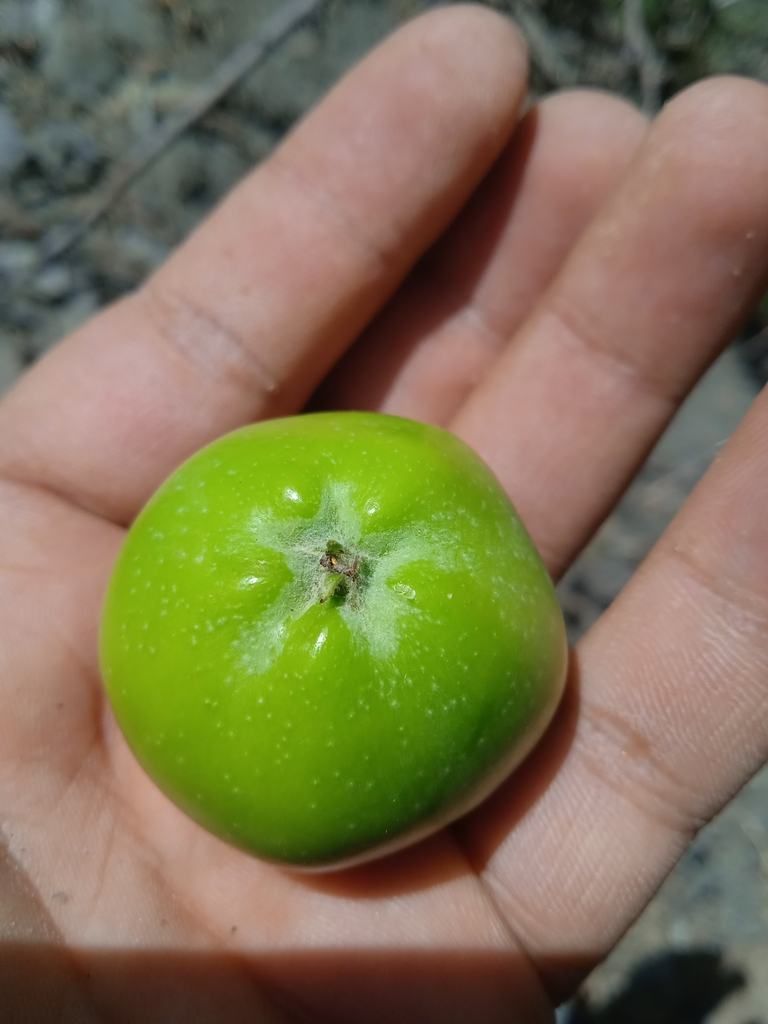
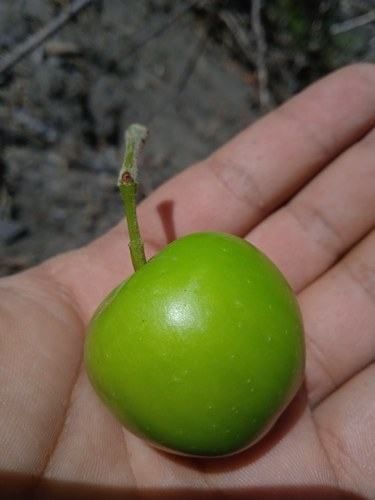
Restoration use by landscape
West Tian Shan Pilot score 70 · rank 67 of 79 shortlisted · rank 113 of 1 194 scored
- Succession role
- Climax / long-term (canopy)
- Suited to
- Gullies & drainage lines; Degraded walnut–fruit and broadleaf woodland (other)
- Establishment
- stratified seed; nursery seedlings
- Why this category
- Strong: biodiversity value; Weak: grazing tolerance, seed; IUCN VU; G3 flag: nursery-raised material only; restricted wild collection; -> promising but propagation/supply or field performance not proven at scale: pilot plots
- Cautions
- protect from grazing for 3-5 yrs; use local provenance only; limit wild seed harvest; risk of cultivar/orchard or non-local material – wild local provenance only; pilot first
- Local habitat
- Rocky areas, Grassland · Frequent
Criteria scores
Nuratau Pilot score 70 · rank 70 of 80 shortlisted · rank 97 of 640 scored
- Succession role
- Climax / long-term (canopy)
- Suited to
- Gullies & drainage lines; Degraded juniper woodland
- Establishment
- stratified seed; nursery seedlings
- Why this category
- Strong: biodiversity value; Weak: grazing tolerance, seed; IUCN VU; G3 flag: nursery-raised material only; restricted wild collection; -> promising but propagation/supply or field performance not proven at scale: pilot plots
- Cautions
- protect from grazing for 3-5 yrs; use local provenance only; limit wild seed harvest; risk of cultivar/orchard or non-local material – wild local provenance only; pilot first
- Local habitat
- Forest, Shrubland, Rocky areas · Frequent
Criteria scores
Kugitangtau Research score 61 · rank 99 of 100 shortlisted · rank 356 of 1 208 scored
- Succession role
- Climax / long-term (canopy)
- Suited to
- Gullies & drainage lines
- Establishment
- stratified seed; nursery seedlings
- Why this category
- Strong: biodiversity value; Weak: drought tolerance, grazing tolerance, seed; Red Data Book of Uzbekistan cat. 1; IUCN VU; G3 hold: conservation-only (ex-situ/reintroduction), no bulk wild seed collection; -> key data gaps (propagation, seed, conservation): research/ex-situ trials first
- Cautions
- needs moist sites; protect from grazing for 3-5 yrs; use local provenance only; limit wild seed harvest; risk of cultivar/orchard or non-local material – wild local provenance only; pilot first
- Local habitat
- Artificial terrestrial, Grassland, Rocky areas, Wetlands (inland) · Occasional
Criteria scores
Propagation
stratified seed; nursery seedlings
Where it fits in the degradation matrix
- West Tian Shan: Gullies & drainage lines (long-term)
- West Tian Shan: Degraded walnut–fruit and broadleaf woodland (other) (long-term)
- Nuratau: Gullies & drainage lines (long-term)
- Nuratau: Degraded juniper woodland (long-term)
Planting combinations
- West Tian Shan: Degraded walnut–fruit and broadleaf woodland (northern slopes, valleys, ~1,000–2,000 m) (Phase 3)
Planting material and suppliers
| Supplier | Material | Quantity | Price | Source |
|---|---|---|---|---|
| Smart Forestry platform (Qashqadaryo SFE) | Seedling | 17 200 UZS per piece | Table 7.4 |
Description
- Morphology
- Small or often rather large tree with spreading crown, divaricate branches, and robust annotinous shoots; leaves mostly large, of variable shape, mostly ovate with rounded base, crenate-serrate, with persistent pubescence on both sides (much less strong above), short-petioled; flowers large, white or pink, usually darker on the outside, with rather short or short white-tomentose pedicels; hypanthium and calyx densely tomentose; fruits usually large, more than 3cm in diameter, short-stalked. April — May. [Flora of the USSR (Tree of Life)]
- Habitat
- Inhabited settlements, orchards (in crop), fine-earth slopes, valley of river (feral)
- Altitudinal belts
- Plain, foothills, low mountains
- Phenology
- Flowering Apr–May, fruiting Jul–Nov
- Distribution
- In middle Asia everywhere is cultivated
- Uses
- dye, food, forage, melliferous, ornamental, technical
- Conservation
- IUCN VU; Red Data Book of Uzbekistan category 1