Species / Ephedraceae
Ephedra equisetina
Ephedraceae · Shrub · Uzbek: Qirqbo‘g‘imsimon zog‘oza; Russian: Хвойник хвощевый
Restoration use by landscape
West Tian Shan Pilot score 75 · rank 28 of 79 shortlisted · rank 36 of 1 194 scored
- Succession role
- Nurse / intermediate shrub
- Suited to
- Eroded slopes; Rocky slopes; Landslide-prone areas; Degraded juniper woodland; Degraded pistachio–almond woodland
- Establishment
- seed or division; nursery
- Why this category
- Strong: drought tolerance, erosion control potential; Weak: grazing tolerance; -> promising but propagation/supply or field performance not proven at scale: pilot plots
- Cautions
- protect from grazing for 3-5 yrs
- Local habitat
- Rocky areas, Grassland · Frequent
Criteria scores
Nuratau Pilot score 75 · rank 33 of 80 shortlisted · rank 36 of 640 scored
- Succession role
- Nurse / intermediate shrub
- Suited to
- Eroded slopes; Rocky slopes; Landslide-prone areas; Degraded juniper woodland; Degraded pistachio–almond woodland
- Establishment
- seed or division; nursery
- Why this category
- Strong: drought tolerance, erosion control potential; Weak: grazing tolerance; -> promising but propagation/supply or field performance not proven at scale: pilot plots
- Cautions
- protect from grazing for 3-5 yrs
- Local habitat
- Shrubland, Grassland, Rocky areas · Frequent
Criteria scores
Propagation
seed or division; nursery
Where it fits in the degradation matrix
- Nuratau: Rocky slopes (nurse)
- Nuratau: Degraded juniper woodland (nurse)
Planting combinations
- West Tian Shan: Degraded juniper woodland (mid and upper belts, ~1,500–2,800 m) (Phase 2)
- Nuratau: Juniper woodland (mid-mountains, above ~1,400 m) (Phase 2)
Planting material and suppliers
No commercial offer found in November 2026: material has to come from wild seed collection or contracted propagation. See Nurseries & supply.
Description
- Morphology
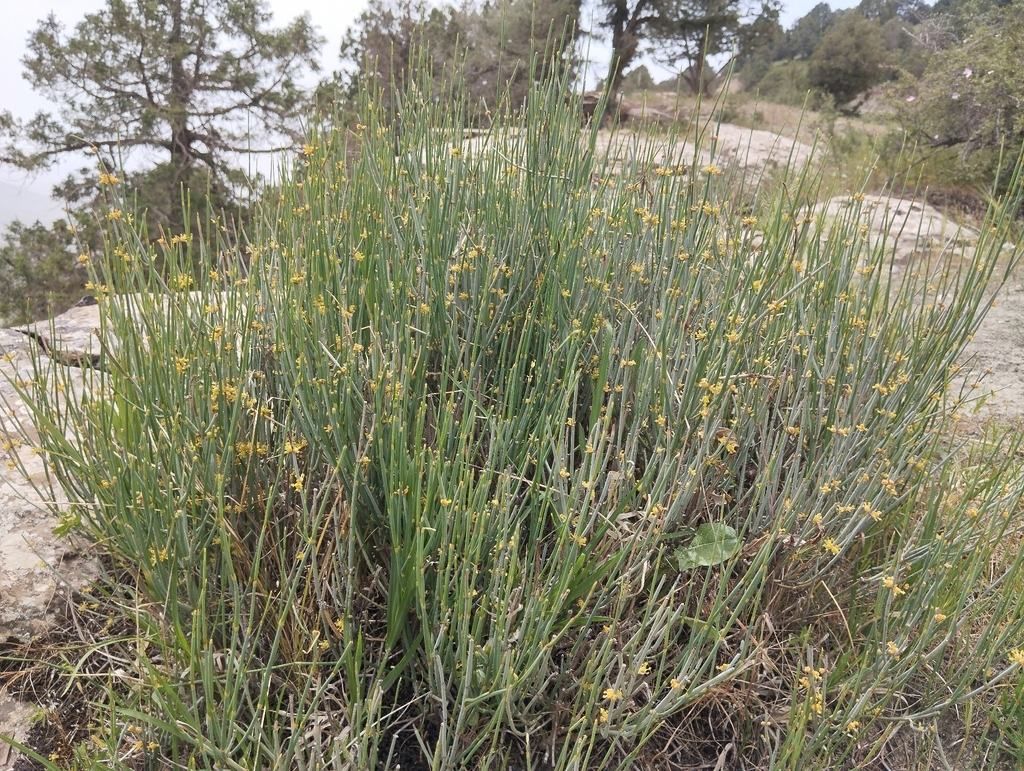
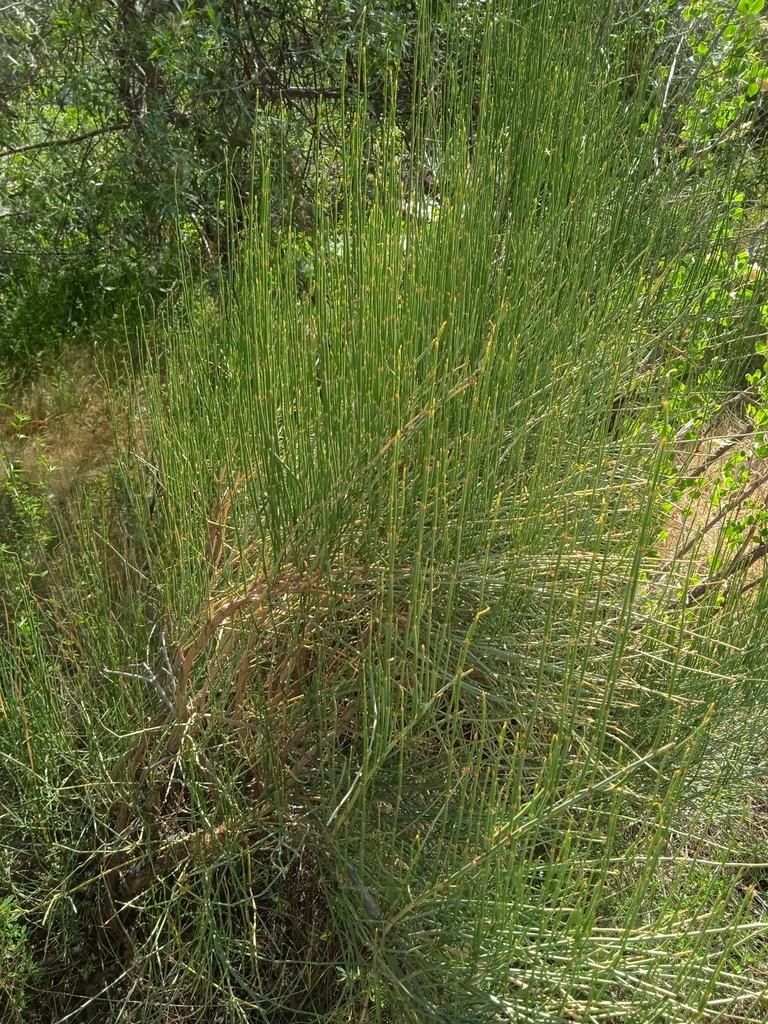
- Shrub to 1–1.5m tall, with a thick gray stem and stout branches; branchlets straight, strict, smooth, finely sulcate, 1.5–2mm in diameter, with internodes to 2cm long; leaves in pairs, rudimentary, almost scarious, connate through one-third or more, shortly triangular above; staminate cones solitary or in twos or threes, disposed along the branchlets, 2–1-flowered, 4—-5mm long, subspherical; outer bracts rounded-ovate, obtusish, connate through one-third, thin, narrowly marginate; inner bracts round, longer; staminal column scarcely exserted; anthers 6–8, subsessile, very rarely with short filaments; ovulate cones borne, like the staminate, on stalks 1-2 mm long, 1-flowered; bracts 2 or 3 pairs, the lower broadly ovate, narrowly scarious-margined, connate through one-third; inner bracts connate through one-third; tubillus straight or slightly curved, entire or lobed; fruit globose, 6–7 mm long, red, fleshy; seeds round, convex on both faces, 4~6mm long. Fl. June; fr. June. [Flora of the USSR (Tree of Life)]
- Habitat
- On stony and fine-earth slopes and screes in the high foothills and in the lower, middle and upper mountain belts; more rarely on residual hills in the plain
- Phenology
- Flowering Apr–Jun, fruiting Jun–Sep
- Distribution
- Zaisan Basin (Kaldzhir River valley), Ili deserts (Muyun-Kara-Kira-Kum), Kyzylkum, Tarbagatai, Dzungarian Alatau, Tian Shan, Pamir-Alai (excluding the Pamir and Shugnan), Kopet Dag, Greater Balkhan
- Uses
- alkaloid, medicinal
- Conservation
- IUCN NE