Species / Convolvulaceae
Convolvulus hamadae
Convolvulaceae · Subshrub · Uzbek: saxro pechagi, partek; Russian: Вьюнок пустыни
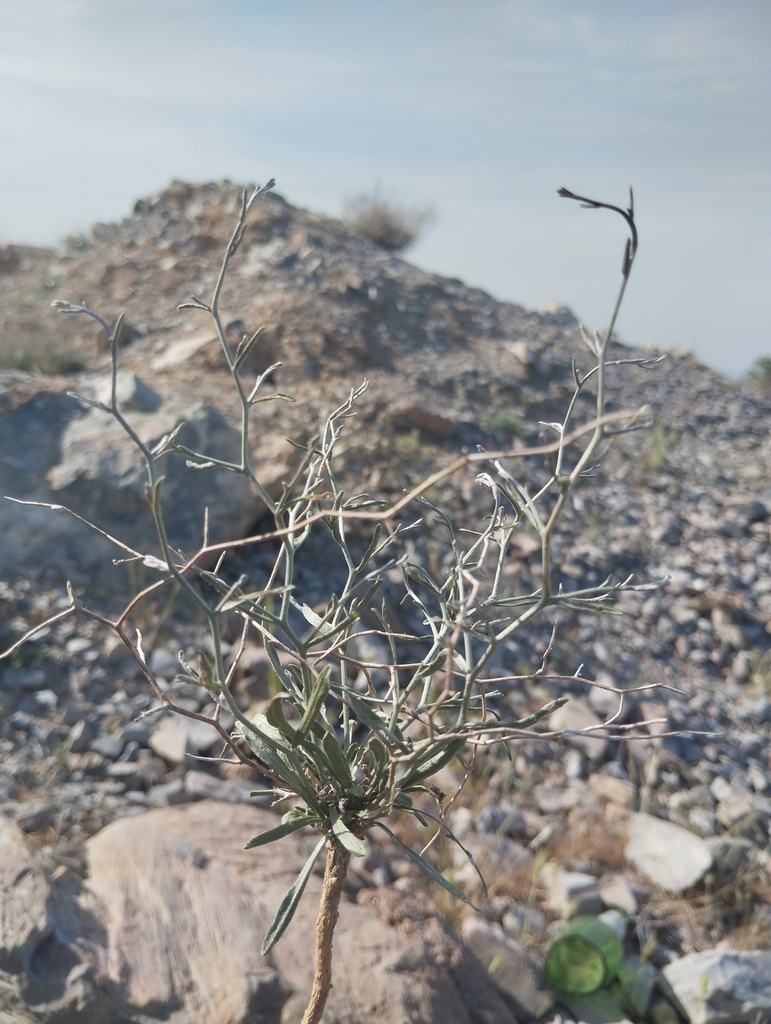
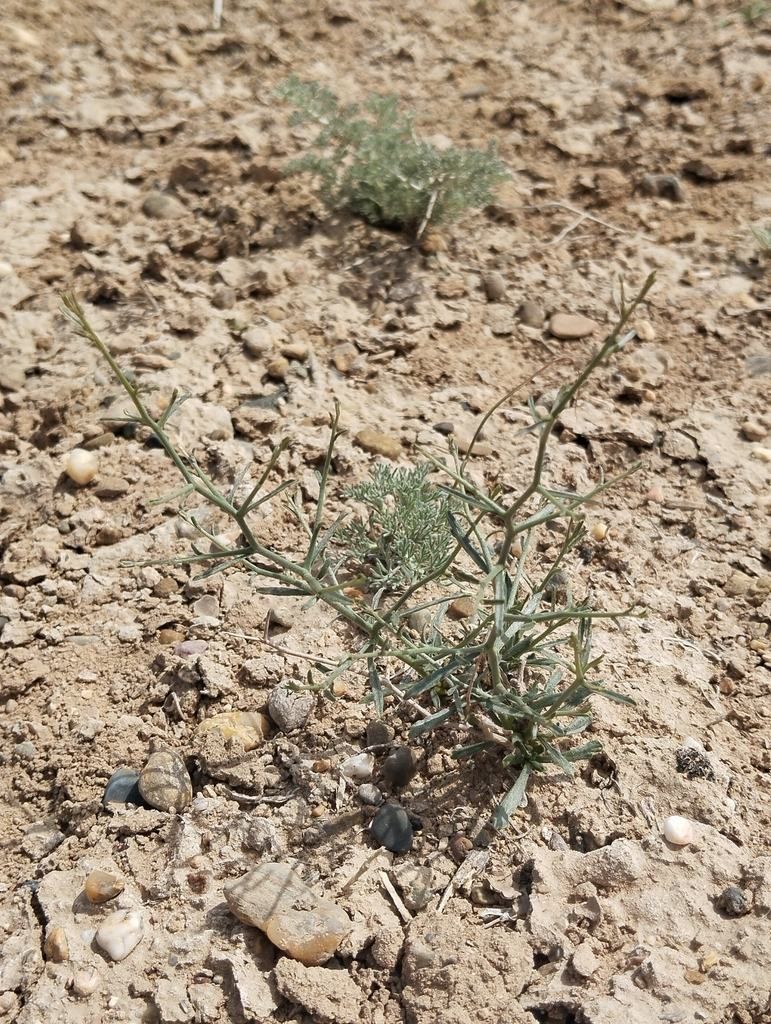
Restoration use by landscape
Nuratau Pilot score 72 · rank 66 of 80 shortlisted · rank 75 of 640 scored
- Succession role
- Pioneer (ground cover)
- Suited to
- Eroded slopes; Rocky slopes; Overgrazed rangelands; Degraded pistachio–almond woodland
- Establishment
- seed; little propagation experience
- Why this category
- Strong: drought tolerance; Weak: nursery propagation feasibility, restoration cost-effectiveness; -> promising but propagation/supply or field performance not proven at scale: pilot plots
- Cautions
- propagation protocol to develop
- Local habitat
- Desert, Shrubland, Rocky areas · Frequent
Criteria scores
Propagation
seed; little propagation experience
Planting material and suppliers
No commercial offer found in November 2026: material has to come from wild seed collection or contracted propagation. See Nurseries & supply.
Description
- Morphology
- Perennial; stem 10-45 cm high, divaricately branching (branches and especially branchlets often diverging at a rightor nearly at a right angle), with more or less dense short closely appressed, rarely more or less spreading hairs. Sepals elliptic or oblong-elliptic, acute or acutish, ca, 3—-4mm long, with more or less dense and rather long semiappressed hairs; corolla 8–1lmm long. Other characters as in C. subsericeus Schrenk. June— August (September). [Flora of the USSR (Tree of Life)]
- Habitat
- Sandy, clayey, gravelly deserts, residual low mountains, pebble beds, outcrops of variegated rocks, loess, fine-earth, gravelly, stony slopes
- Altitudinal belts
- Plain, foothills
- Phenology
- Flowering Jun–Jul, fruiting Jul–Sep
- Distribution
- Muyunkum, Kyzylkum, Karakum, Zauzboy, valley of river Syr Darya, Amu Darya, Zeravshan, Pre-Karatau foothill plain, Fergana valley, Karshi steppe, Surkhan-Sherabad valley, Tian Shan (ranges Karatau, Chatkal, Fergana), Pamir-Alai (ranges Alai, Nurata, Zarafshan, Hissar, Zirabulak-ziadin mountains, Kugitang, Babatag, valley of river Vakhsh, Kafirnigan)
- Uses
- forage, melliferous
- Conservation
- IUCN NE