Species / Fabaceae
Astragalus pterocephalus
Fabaceae · Shrub · Uzbek: qanotbosh astragal; Russian: Астрагал крылатоголовый
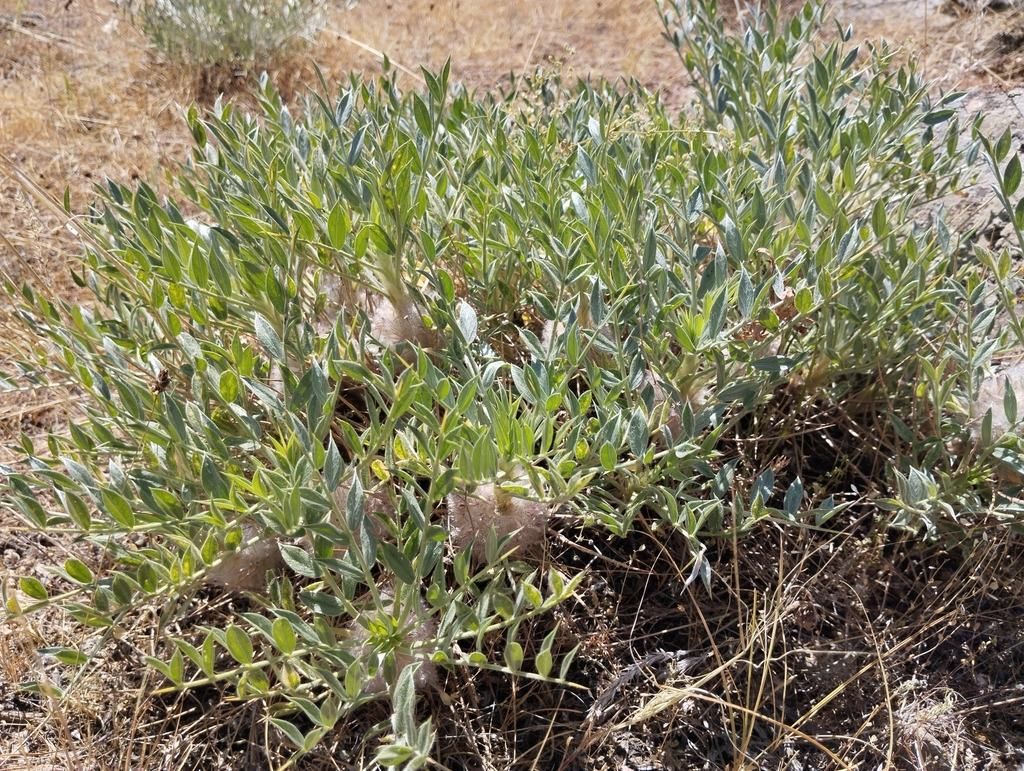
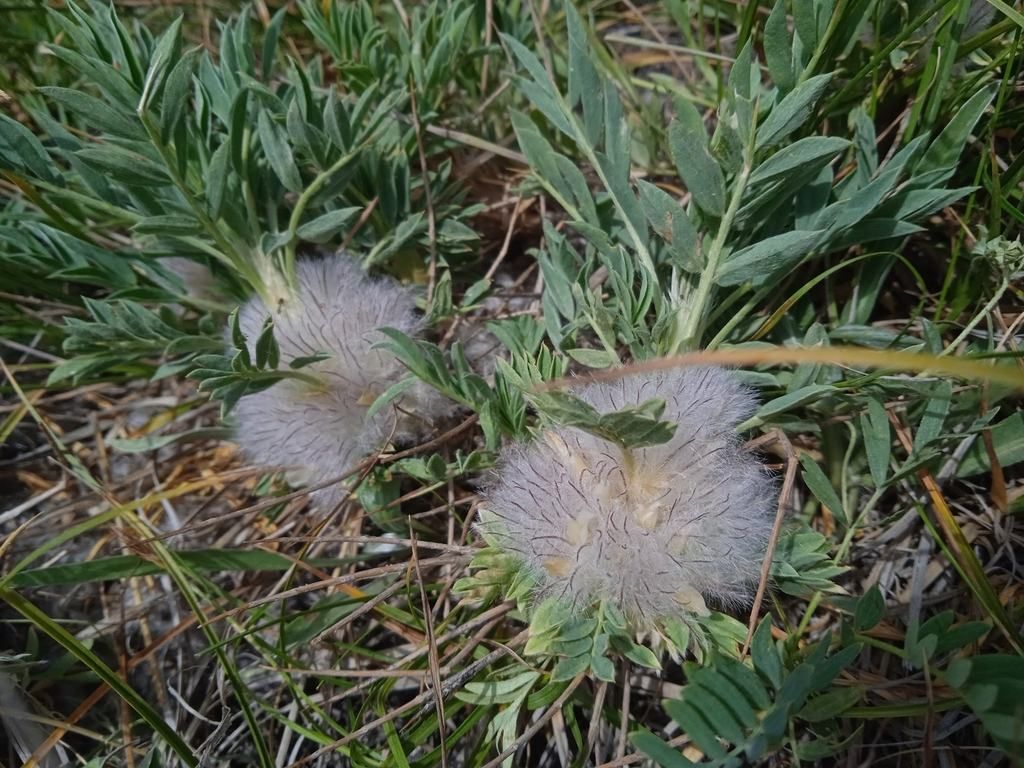
Restoration use by landscape
Nuratau Pilot score 73 · rank 53 of 80 shortlisted · rank 60 of 640 scored
- Succession role
- Nurse / intermediate shrub
- Suited to
- Eroded slopes; Rocky slopes; Landslide-prone areas; Degraded pistachio–almond woodland
- Establishment
- scarified seed; nursery or direct seeding
- Why this category
- Strong: drought tolerance, erosion control potential; Weak: grazing tolerance; -> promising but propagation/supply or field performance not proven at scale: pilot plots
- Cautions
- protect from grazing for 3-5 yrs
- Local habitat
- Shrubland, Grassland, Rocky areas · Occasional
Criteria scores
Kugitangtau Pilot score 75 · rank 32 of 100 shortlisted · rank 35 of 1 208 scored
- Succession role
- Nurse / intermediate shrub
- Suited to
- Eroded slopes; Rocky slopes; Landslide-prone areas; Degraded pistachio–almond woodland
- Establishment
- scarified seed; nursery or direct seeding
- Why this category
- Strong: drought tolerance, erosion control potential; Weak: grazing tolerance; -> promising but propagation/supply or field performance not proven at scale: pilot plots
- Cautions
- protect from grazing for 3-5 yrs
- Local habitat
- Rocky areas, Grassland, Forest · Frequent
Criteria scores
Propagation
scarified seed; nursery or direct seeding
Planting material and suppliers
No commercial offer found in November 2026: material has to come from wild seed collection or contracted propagation. See Nurseries & supply.
Description
- Morphology
- A branched shrub, up to lm tall, sometimes pulvinate; branches spiny; spines 5-7 cm long, straight, thick, slightly divergent, often turning black; stipules ca. 1.5 cm long, lanceolate, acute, membranous, almost translucent, profusely nerved, covered with silky hairs outside in lower part; leaflets 4-5 pairs, oblong-lanceolate, 15-17 mm mm long, ca. 3-4 (5) broad, green, sparsely appressed -hairy on both sides; flowers 10-12 in the leaf axils, in a spherical inflorescence 3-5 cm in diam., borne at the base of current year's shoots; bracts oblong -lanceolate, ca. 15 mm long, translucent, yellowish, 1 -nerved, glabrous, ciliate -margined; calyx 18-25 mm long, not splitting, densely covered with long hairs, the slender purple teeth about twice the length of the tube, covered with long spreading hairs; standard ca. [Flora of the USSR (Tree of Life)]
- Habitat
- Stony, gravelly, fine-earth slopes, rocks, screes, juniper woodlands, couch-grass-mixed-herb community
- Altitudinal belts
- Low mountains, mid-mountains, high mountains
- Phenology
- Flowering Jun–Jul, fruiting Aug–Sep
- Distribution
- Western Tian Shan (ranges Karatau, Talas Alatau, Chatkal: Bashkyzylsay -Sukok, Mogoltau, Fergana), Pamir-Alai (ranges Alai, Turkestan, Zarafshan, Hissar, Kugitang)
- Conservation
- IUCN NE