Species / Asteraceae
Artemisia oliveriana
Asteraceae · Subshrub · Uzbek: kechki shuvoq; Russian: Полынь поздняя
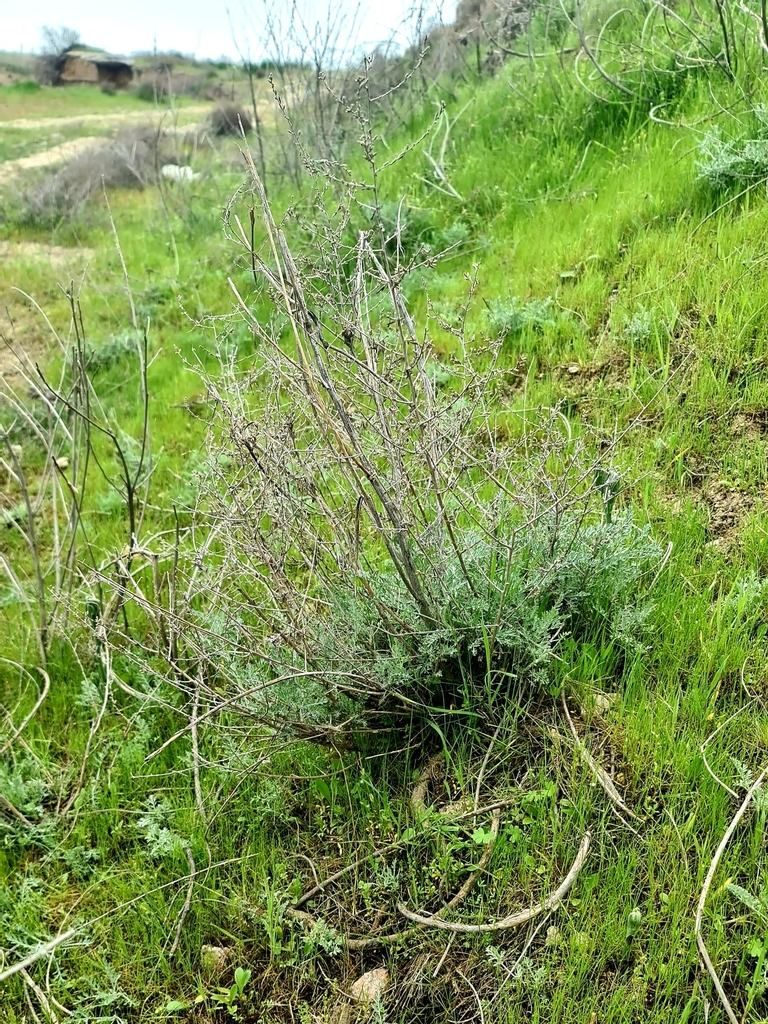
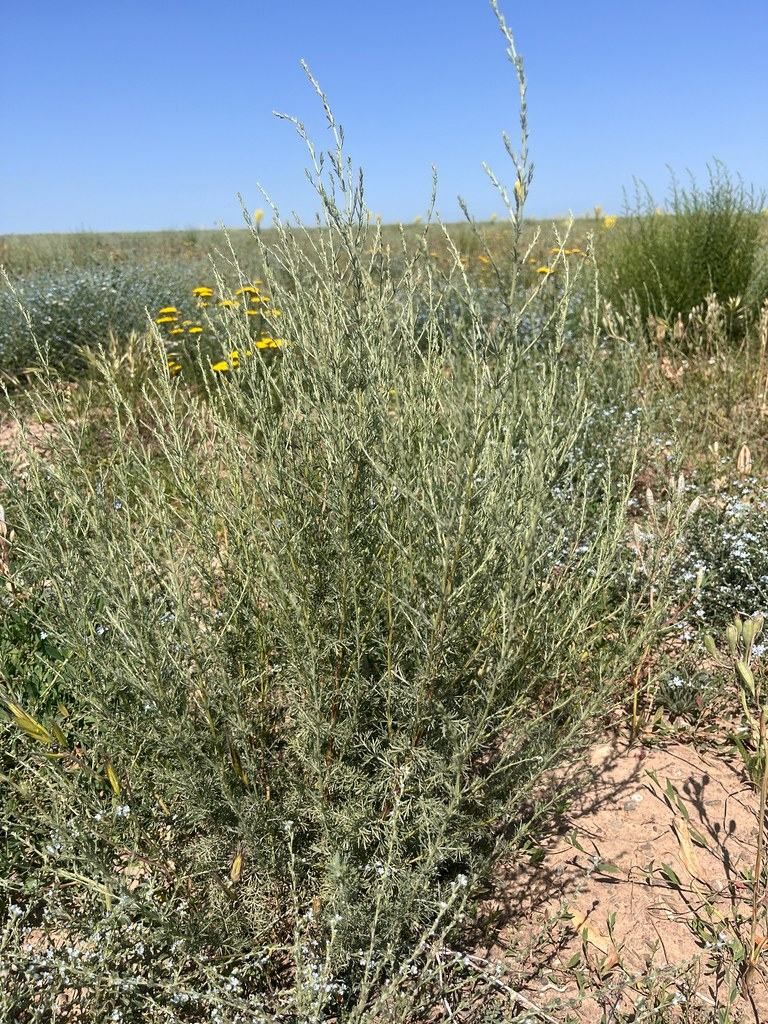
Restoration use by landscape
Nuratau Immediate score 83 · rank 6 of 80 shortlisted · rank 6 of 640 scored
- Succession role
- Pioneer (ground cover)
- Suited to
- Eroded slopes; Rocky slopes; Overgrazed rangelands; Degraded juniper woodland; Degraded pistachio–almond woodland
- Establishment
- direct seeding (fine seed, surface sow in winter)
- Why this category
- Strong: ecological suitability, climate resilience; -> routine propagation and available material: use now
- Local habitat
- Desert, Forest, Shrubland, Grassland, Rocky areas, Artificial terrestrial · Dominant
Criteria scores
Kugitangtau Immediate score 78 · rank 18 of 100 shortlisted · rank 20 of 1 208 scored
- Succession role
- Pioneer (ground cover)
- Suited to
- Eroded slopes; Overgrazed rangelands
- Establishment
- direct seeding (fine seed, surface sow in winter)
- Why this category
- Strong: climate resilience; -> routine propagation and available material: use now
- Local habitat
- Rocky areas, Grassland, Desert, Wetlands (inland), Artificial terrestrial · Frequent
Criteria scores
Propagation
direct seeding (fine seed, surface sow in winter)
Where it fits in the degradation matrix
- Nuratau: Eroded slopes (pioneer)
- Nuratau: Rocky slopes (pioneer)
- Nuratau: Overgrazed rangelands (pioneer)
- Nuratau: Degraded juniper woodland (pioneer)
- Nuratau: Degraded pistachio–almond woodland (pioneer)
- Kugitangtau: Eroded slopes (pioneer)
- Kugitangtau: Overgrazed rangelands (pioneer)
Planting material and suppliers
Wild seed collection needed. No commercial seed found Action: Collect seed in October–November and surface-sow in winter
Description
- Morphology
- Perennial. Plant 35-65 cm high, grayish in early vegetative phase from dense arachnoid hairs, later weakly hairy or almost glabrous. Tap root woody, with short, perennial, woody shoots and annual, rather short, non-flowering shoots with rosette of leaves of early summer growth. [Flora of the USSR (Tree of Life)]
- Habitat
- Valley of river, bank of irrigation ditches, dry watercourse bed, takyrs, solonchaks, foothill plains, clayey, gravelly deserts, residual low mountains, pebble beds, loess, fine-earth, gravelly slopes
- Altitudinal belts
- Plain, foothills, low mountains, mid-mountains
- Phenology
- Flowering Sep–Oct
- Distribution
- Kazakhstan мелкосолочник, Balkhash deserts, Betpakdala, Muyunkum, valley of river Chu, or, Syr Darya, Amu Darya, Zeravshan, Trans-Karatau plain, Kyzylkum, Fergana valley, Tashkent chul, Mirzachul, Karshi steppe, Karakum, south-west-Turkmen lowland, Dzungarian Alatau, Tian Shan (Chu-Ili mountains, ranges Trans-Ili, Kyrgyz, Kungey, Terskey, Talas Alatau, Ketmentau, Karatau, Mogoltau, Pskem, Chatkal, Kurama, Fergana, Atoynok), Pamir-Alai (ranges Turkestan, Zarafshan, Zirabulak-ziadin mountains, foothills of southern Tajikistan), Kopet Dag
- Uses
- essential oil, forage, medicinal
- Conservation
- IUCN NE