Species / Sapindaceae
Acer platanoides
Sapindaceae · Tree · Uzbek: Turkiston zarangi; Russian: Клен туркестанский
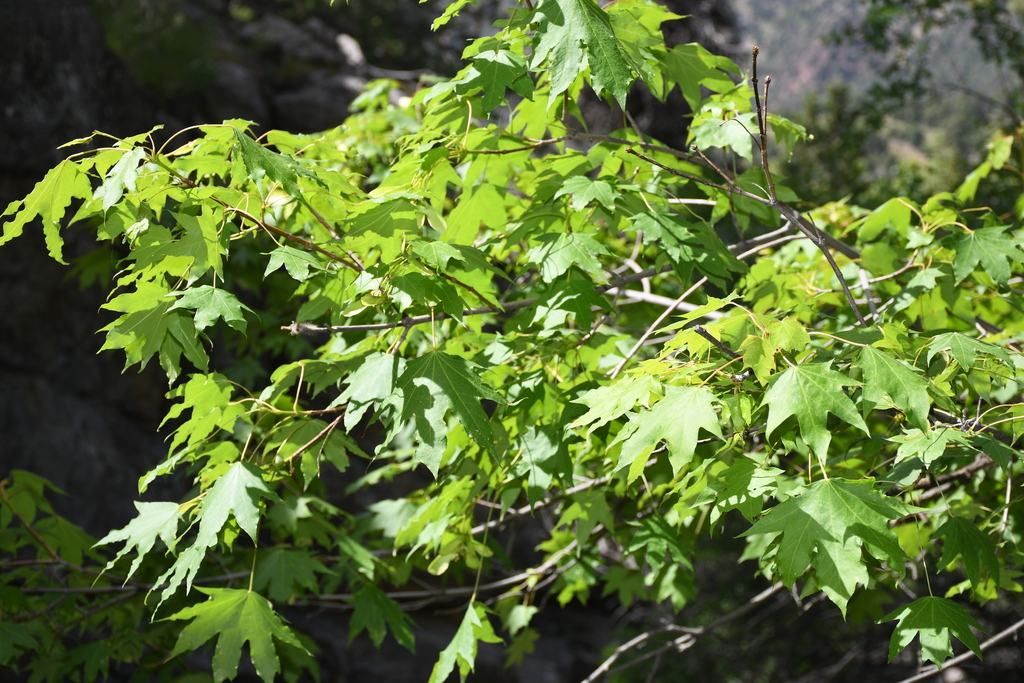
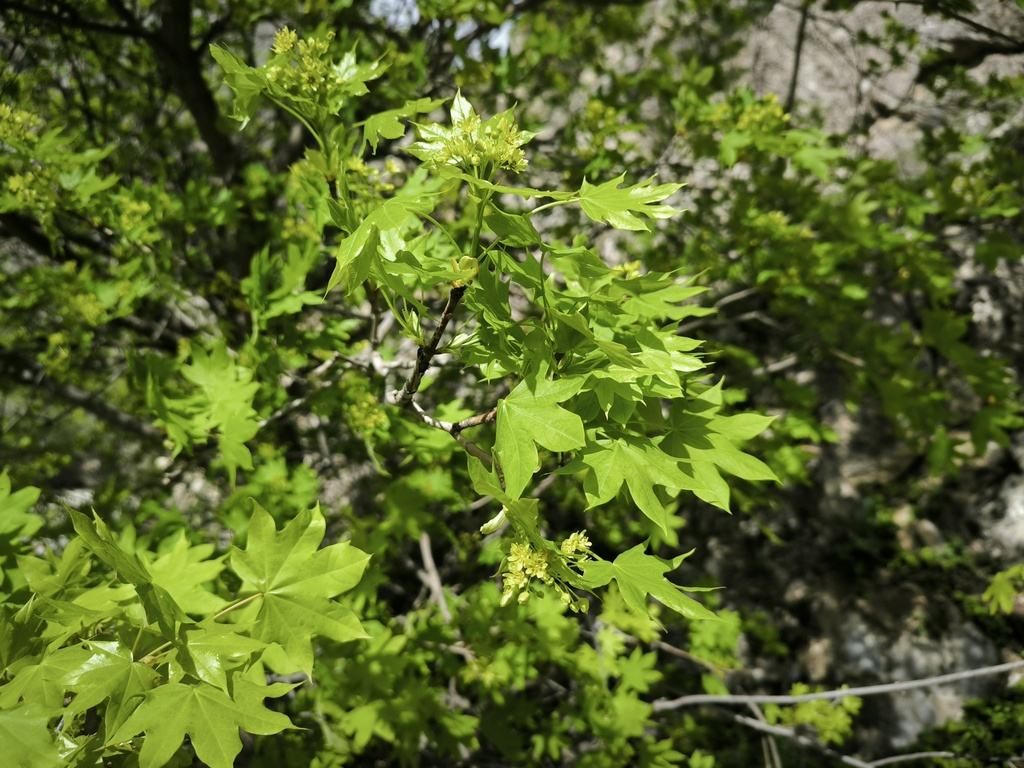
Restoration use by landscape
Kugitangtau Pilot score 66 · rank 91 of 100 shortlisted · rank 201 of 1 208 scored
- Succession role
- Climax / long-term (canopy)
- Suited to
- Eroded slopes; Gullies & drainage lines; Riparian / sai (other); Degraded juniper woodland
- Establishment
- stratified seed; nursery seedlings
- Why this category
- Weak: grazing tolerance; -> promising but propagation/supply or field performance not proven at scale: pilot plots
- Cautions
- protect from grazing for 3-5 yrs
- Local habitat
- Rocky areas, Grassland, Forest, Wetlands (inland) · Frequent
Criteria scores
Propagation
stratified seed; nursery seedlings
Where it fits in the degradation matrix
- Kugitangtau: Eroded slopes (long-term)
- Kugitangtau: Gullies & drainage lines (long-term)
- Kugitangtau: Degraded juniper woodland (long-term)
- Kugitangtau: Riparian / sai (other) (long-term)
Planting material and suppliers
No commercial offer found in November 2026: material has to come from wild seed collection or contracted propagation. See Nurseries & supply.
Description
- Morphology
- Trees, up to 20 mhigh, sometimes up to 30 m, with dense broad crown and dark brownish-gray to nearly black bark, longitudinally splitting when adult; leaves 5–12(18) cm long, 8–13(22) cm wide, dark green above, slightly paler and shiny beneath, glabrous or hairy along nerves beneath and bearded at an their angles, orbicular, broadly cordate at base, rarely truncate or broadly cuneate and if so only on short shoots, usually 5-lobed, rarely 3-, or 7-lobed, upper lobes subequal, the lower much smaller, all largely incised-dentate, teeth and apices thin-mucronate. Flowers large, greenish-yellow, opening before leaves; sepals obovate, obtuse; petals slightly narrower than and nearly as long as sepals, tapering to claw; samaras up to 4 cm long, with wings diverging at an obtuse angle or spreading. Fl. May, Fr. September. [Flora of the USSR (Tree of Life)]
- Habitat
- Fine-earth, gravelly, stony slopes, valley of river
- Altitudinal belts
- Low mountains, mid-mountains
- Phenology
- Flowering May–Jun, fruiting Jul–Sep
- Distribution
- Tian Shan (Ketmen-tyubin district, ranges Chatkal:, -eastern part. Ataynok, Uzun-akhmat, Fergana); Pamir-Alai (ranges Alai, Turkestan, Zarafshan, Hissar, Karategin, Peter the Great, Darvaz, Vanch, Vakhsh, Sarsarak, Sanglok, Surkho, Lyulichan, Tyrli)
- Uses
- forest amelioration / agroforestry, ornamental, technical
- Conservation
- IUCN LC